How AI Inventory Cuts Stock by 35% and Boosts Profit
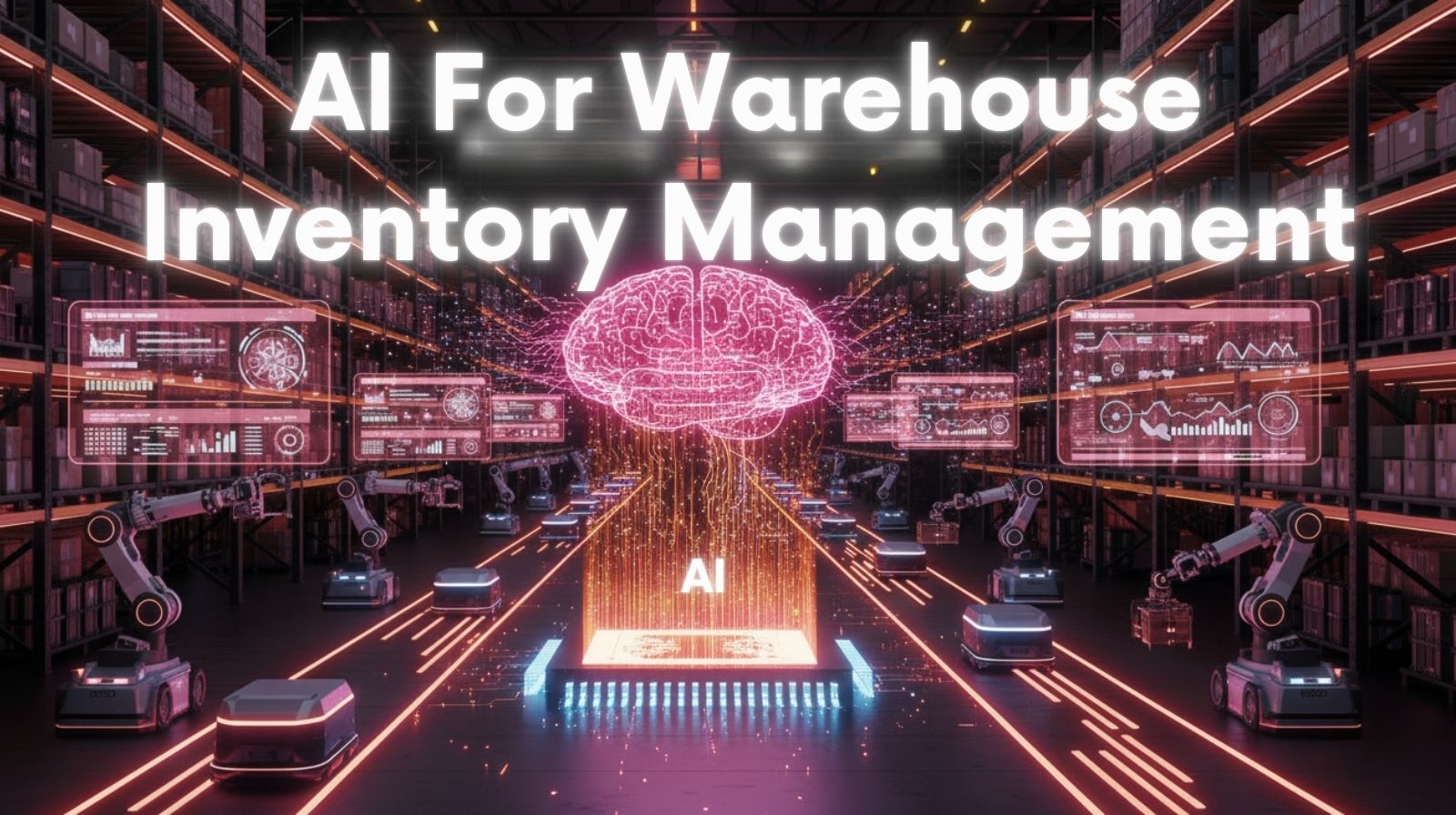
In the fast-paced world of e-commerce and logistics, your warehouse inventory is the heartbeat of your business.
But let's be honest: are you still running on guesswork? Are you losing sleep over unexpected stockouts or mountains of dead stock? If your inventory process feels more like a frantic game of catch-up than a well-oiled machine, it's time to meet your new secret weapon: Artificial Intelligence (AI).
AI is no longer just a futuristic concept, it's the tool that's completely changing how warehouses operate, making them smarter, faster, and far more profitable.
Why AI is the Inventory Manager You Always Needed
Think about traditional inventory management. You look at past sales data, account for seasonality, and then you hope you ordered the right amount. AI replaces that hope with predictive accuracy.
Here’s why AI is rapidly becoming the gold standard:
- Humans are great, but data is overwhelming: The volume of data in a modern warehouse, from sales figures and shipping times to weather patterns and social media trends, is too much for any human team to process manually.
- AI handles complexity: AI systems use Machine Learning (ML) to analyze millions of data points, spotting patterns and predicting future outcomes with a precision that’s simply impossible with traditional methods.
- It reduces the two biggest headaches: AI directly combats both stockouts (running out of popular items) and overstocking (too much inventory gathering dust).
Related Guide: This is part of our larger strategy on operational efficiency. Read the comprehensive guide on AI for Supply Chain & Logistics.
The Key Aspects of AI in Warehouse Inventory
So, how does this smart technology actually work? AI revolutionizes inventory management across four core areas:
1. Crystal-Ball Demand Forecasting
This is the killer feature. Instead of just looking at last year's sales, AI's predictive power analyzes far more:
- Historical Sales: Yes, it looks at the past, but it weighs different time periods and trends.
- External Factors: Think competitor activity, upcoming holidays, local weather (if relevant), and even shifts in economic sentiment.
- Promotions: Did a recent marketing campaign spike demand? AI learns and factors that in for future campaigns.
The result? AI forecasts demand not just for your warehouse, but often down to a specific SKU (stock-keeping unit) and even a location, telling you exactly what to stock, where to put it, and when. This means you order the right amount at the perfect time, maximizing sales and minimizing waste.
2. Autonomous and Real-Time Inventory Tracking
Forget clipboards and manual barcode scans. AI uses advanced technology to create a "digital twin" of your warehouse inventory in real-time.
- Computer Vision: Cameras and sensors powered by AI watch the warehouse floor, automatically logging when items are moved or placed on shelves. They can even detect damage!
- IoT & RFID: Connected devices and Radio-Frequency Identification (RFID) tags track assets and goods continuously, updating stock counts automatically.
The Benefit: You have 100% real-time visibility. You always know exactly what you have and where it is, dramatically improving order picking speed and accuracy.
3. Smart Replenishment and Reordering
The system doesn't just predict; it acts. AI-driven systems take the guesswork out of ordering by automating the process:
- Dynamic Safety Stock: Instead of a fixed safety stock number, AI adjusts it based on current risk factors (like known supplier delays or a sudden demand surge).
- Automated Purchase Orders: When stock drops below the intelligently calculated reorder point, the AI system can automatically generate a purchase order for the exact quantity needed, even choosing the most cost-effective supplier based on current pricing and reliability data.
- Prevents Overstocking: By predicting demand accurately, AI ensures you don't over-order items that are about to slow down, freeing up valuable capital and warehouse space.
4. Optimized Warehouse Layout and Operations
AI doesn't just manage the inventory numbers; it manages the movement of that inventory to save time and money.
- Dynamic Slotting: AI continuously re-evaluates the warehouse layout. It places the most frequently ordered items (fast-movers) closest to the packing/shipping areas, while less popular items are slotted further away. This saves pickers significant walking time.
- Optimized Picking Paths: For human or robotic pickers, the AI calculates the absolute fastest, most efficient route through the warehouse to fulfill a batch of orders. This reduces labor costs and speeds up order fulfillment.
The Technology Behind the Magic: 3 Core AI Tools
AI isn't one single piece of software; it's an umbrella of smart technologies working together. For inventory management, three technologies stand out as the true game-changers:
1. Machine Learning (ML) for Predictive Analytics
The Concept: Machine Learning is the foundation of AI-powered forecasting. It involves using complex algorithms that learn from vast amounts of data without being explicitly programmed for every scenario.
How it Works in Inventory:
- The Learning Process: An ML model is fed years of historical sales, promotional calendars, pricing, supplier lead times, and external factors (like holidays or economic news).
- The Prediction: It identifies hidden, non-obvious patterns (e.g., "Product X always sells 30% more when local weather is above 25°C and a competitor runs a TV ad").
The Result: It creates highly accurate, short-term and long-term demand forecasts for every single product, telling you when to reorder and how much to keep as dynamic safety stock. This is the ultimate tool for avoiding stockouts and excess inventory.
2. Computer Vision (CV) for Real-Time Tracking
The Concept: Computer Vision gives machines the ability to "see" and interpret visual information from cameras, just like human eyes.
How it Works in Inventory:
- Automated Audits: Cameras installed in forklifts, on warehouse ceilings, or on autonomous drones continuously monitor shelves and racks.
- Object Recognition: CV algorithms instantly identify items, read barcodes/labels (using Optical Character Recognition - OCR), and count stock levels.
The Result: Inventory counts are performed automatically and continuously (often called cycle counting), providing 100% real-time accuracy. This eliminates manual errors, speeds up auditing, and instantly flags misplaced or missing items.
3. Robotics & Autonomous Mobile Robots (AMRs)
The Concept: This technology uses AI to power physical machines (robots) that perform tasks independently, navigating and operating intelligently within the warehouse.
How it Works in Inventory:
- Picking & Sorting: AI-guided robotic arms use Computer Vision to identify, pick, and place items of various shapes and sizes with near-perfect accuracy, dramatically speeding up fulfillment.
- Transport (AMRs): AMRs are not fixed to magnetic tapes like older robots; they use AI and sensors to dynamically map the floor, avoid human workers and obstacles, and transport inventory (like pallets or totes) along the most efficient, shortest path to the next workstation.
The Result: This automation reduces labor costs, eliminates errors in picking and packing, and ensures 24/7 operational capability and faster fulfillment times.
Core AI Technologies in Warehouse Inventory Management
| Technology | Core Function | Inventory Management Benefit |
|---|---|---|
| Machine Learning (ML) | Predictive Analytics & Learning | Accurate Demand Forecasting (Prevents stockouts/overstocking) |
| Computer Vision (CV) | Visual Recognition & Tracking | Real-Time Inventory Accuracy (Eliminates manual errors & speeds up audits) |
| Robotics (AMRs) | Autonomous Physical Movement | Faster Order Fulfillment (Reduces labor time and cost) |

Conclusion: The Competitive Necessity
The integration of AI in warehouse inventory management is no longer a luxury; it’s a competitive necessity. Your warehouse is full of untapped data. AI is the key to unlocking its massive potential. By reducing costly errors, preventing stockouts, and automating the most time-consuming tasks, AI directly impacts your bottom line. It allows your human team to stop chasing inventory problems and start focusing on strategic business growth.
Frequently Asked Questions (FAQs)
The biggest benefit is the ability to move from reactive to predictive inventory management. This drastically increases Demand Forecasting accuracy, which in turn minimizes both costly stockouts (lost sales) and financial strain from overstocking (excess inventory carrying costs).
Traditional forecasting relies heavily on historical averages and simple seasonal adjustments. Machine Learning (ML) Inventory uses complex algorithms to identify non-linear relationships and incorporate hundreds of external variables (like economic news, weather, and market trends) to generate a far more precise, dynamic, and reliable forecast.
The most common challenge is data quality and readiness. AI and ML models require a large, clean, and consistent dataset to function accurately. Companies often struggle with fragmented or inconsistent data across different legacy systems, which must be addressed before implementation.
Computer Vision Warehouse systems provide continuous, automated cycle counting. By using cameras to constantly monitor shelves and log item movement, they eliminate the need for manual checks, ensuring Supply Chain Visibility is always 100% accurate and up-to-the-second. This makes misplaced items a rarity and drastically speeds up auditing.
Sources and References
- AI in Inventory Management: Top Use Cases You Need To Know - SmartDev
- How AI in Inventory Management Revolutionizes Modern Business Operations- Space Technologies
- From Chaos to Control: How Predictive Analytics Transforms Inventory Management
- The Best Examples Of AI In Logistics That Will Shock You - WebOsmotic
- Taking the guesswork out of demand forecasting – a deep-dive into the predictive power of machine learning- The AI Journal
- Inventory Intelligence: How AI is Transforming Supply Chains
- How machine learning is reshaping the future of demand forecasting? - Birlasoft
- How AI is reshaping the logistics industry - Express Computer