Forward Deployed Engineer Demand Is Up 800%
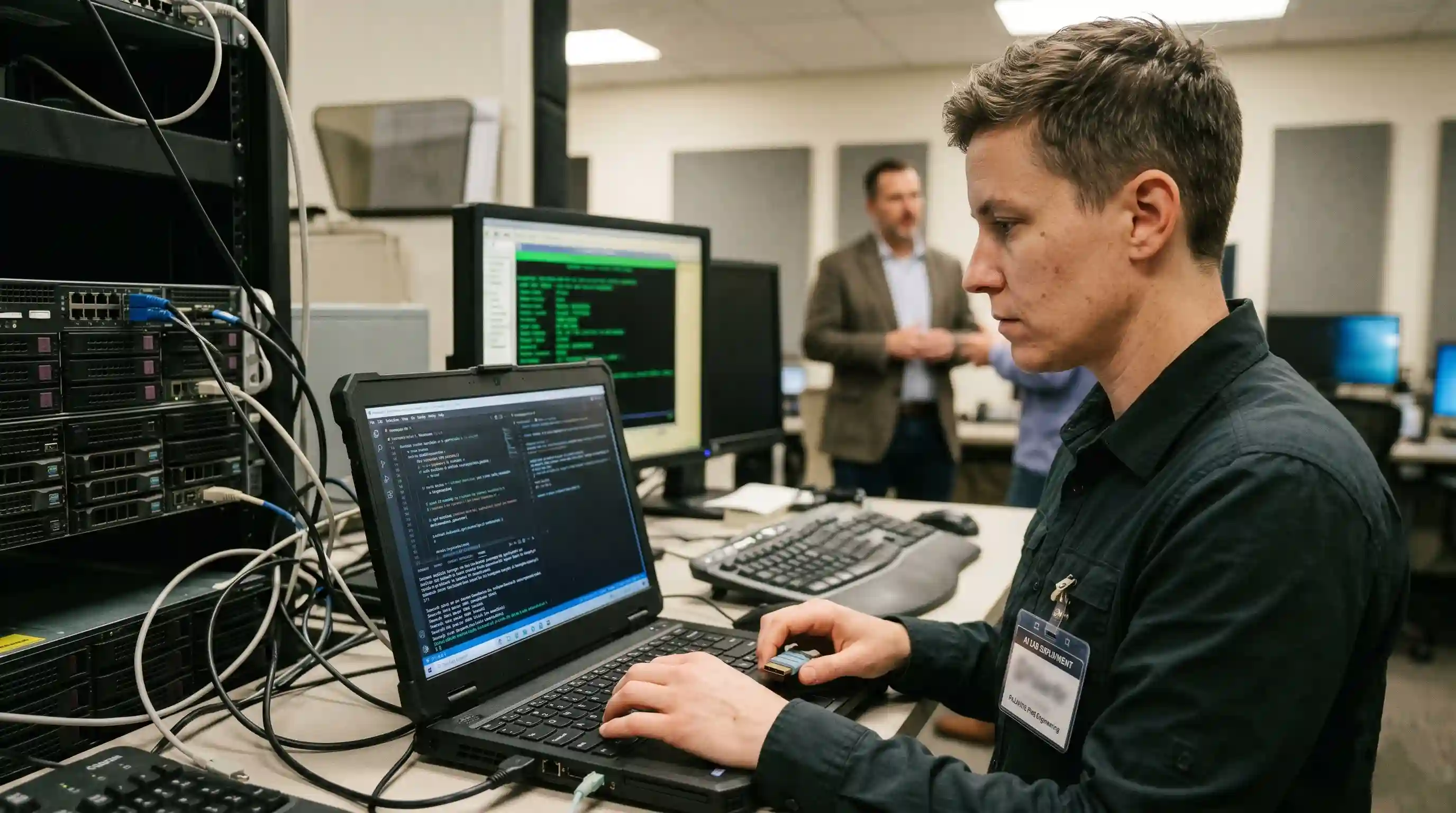
- Massive Demand Spike: Demand for Forward Deployed Engineers (FDEs) has scaled by roughly 800% as companies shift from pilot projects to full production.
- Premium Salaries: Top AI labs are routinely offering baseline salaries around $238K to secure top-tier implementation talent.
- The Reallocation Mirror: This surge acts as the exact counter-narrative to standard layoffs, matching an environment where agentic AI job postings are up 280%.
- GCC Upgrade Blueprint: Tech professionals in Indian Global Capability Centres have a direct, highly lucrative upgrade path out of exposed maintenance roles.
Forward deployed engineer demand jumped ~800% while other roles were cut. See why labs pay $238K for it—and how to qualify from a GCC role.
As documented in our core AI Layoffs 2026 Tracker, the engineering narrative is radically splitting.
While traditional boilerplate coding seats contract, the market is aggressively redirecting capital toward elite delivery roles.
Top-tier AI labs and software hyperscalers are desperate for engineers who can embed directly into enterprise environments to bridge the gap between model APIs and legacy systems.
The Vertical Demand Curve: Why FDE is the New Enterprise Standard
Enterprise software deployment has completely shifted past the point of simple API integrations.
Organizations are discovering that making autonomous agents work inside a legacy corporate framework is a complex engineering challenge.
Why Has Forward Deployed Engineer Demand Surged in 2026?
The massive spike in demand is driven by the reality of corporate implementation. Companies have realized that off-the-shelf foundation models fail when exposed to chaotic, real-world corporate data systems.
Organizations do not need more developers sitting at home writing isolated code; they require engineers who can step into a client's environment, audit data pipelines, and customize model behavior in real time.
This urgent operational pressure explains why the forward deployed engineer demand metric has broken sector records.
How Fast is the FDE Job Market Growing Globally?
The market is scaling at an extraordinary pace, driven by a global enterprise race to secure autonomous workflows. This hiring surge represents the "growth" side of the current tech cycle, moving completely out of sync with legacy IT contractions.
The trend is directly mirrored by a broader market shift, including an environment where agentic AI job postings have risen by 280% year-on-year.
To understand the foundational skills underlying this growth, explore the comprehensive Forward Deployed AI Engineer core manual.
Demystifying the FDE Role: Scope, Action, and Compensation
The term "Forward Deployed" originates from defense and heavy data sectors, but its application in the AI era represents a distinct technical shift.
What Does a Forward Deployed Engineer Actually Do?
An FDE acts as a hybrid professional: one part deep systems developer, one part enterprise solutions architect, and one part client-facing advisor.
They do not work on isolated internal products. Instead, they embed directly inside client operations to build custom context architectures, set up local vector databases, and design real-time verification guardrails.
This hands-on, highly context-dependent work serves as an essential enterprise AI delivery role framework.
FDE vs. Solutions Engineer: What's the Difference?
While a standard solutions engineer focuses on delivering high-level technical sales presentations and building basic product demonstrations, an FDE is a core product builder.
FDEs possess the deep technical capabilities required to rewrite code on site, optimize distributed cluster layouts, and debug complex multi-agent execution loops directly within production pipelines.
They own the ultimate engineering outcome rather than the initial sales cycle.
How Much Do Forward Deployed Engineers Earn?
Because this position requires an exceptional mix of advanced software engineering skills and sharp client-facing communication, compensation has broken traditional pay scales.
Baseline compensation packages regularly hover around the $238K mark at leading global organizations. In elite hubs, total compensation packages can scale significantly higher when performance bonuses are integrated.
To view detailed market compensation tracking data across various labs, read our guide on Forward Deployed Engineer salaries at OpenAI and Anthropic.
The Corporate Landscape: Who is Hiring and Where?
The race to secure forward deployed talent is being led by a small group of high-capital foundation labs and specialized enterprise platforms.
Which Companies Hire Forward Deployed Engineers Today?
The primary drivers of this hiring market are enterprise hyperscalers and top-tier foundation model laboratories.
The fde role openai palantir pipeline has become a primary recruitment track for securing elite technical talent.
These firms realize that their long-term enterprise revenue depends entirely on having engineers on the ground who can make their model ecosystems indispensable to fortune 500 legacy clients.
Is the FDE Role Safe From AI Automation Long-Term?
Yes, the FDE position represents one of the most structurally secure career tracks in modern technology.
Because the role is deeply tied to changing human corporate dynamics, physical meetings, and messy, un-documented client software environments, it cannot be replaced by an automated model.
AI tools accelerate the speed at which an FDE can write integration code, which simply allows them to handle larger enterprise deployments.
The Indian GCC Opportunity: Qualifying for the Surge
For technical professionals working within Indian Global Capability Centres, the global rise of the FDE model offers a major career opportunity.
Can an Indian GCC Engineer Become an FDE?
Absolutely, but it requires a conscious shift away from a cost-arbitrage mindset to focus entirely on high-value capability delivery.
Indian technical hubs are perfectly positioned to supply this talent as global operations shift their focus.
Engineers working in centers that handle global software infrastructure can pivot directly into international deployment tracks, a trend outlined in our market analysis of GCC Jobs & AI in India: Which Centres Survive.
What Skills Do Forward Deployed Engineers Need?
To secure these premium roles, technical professionals must expand their expertise far past standard language frameworks.
Core technical requirements include:
- Advanced mastery of real-world data pipeline orchestration and context architecture.
- Complete comfort with distributed system deployment tools and container networks.
- Deep knowledge of model evaluation protocols and security guardrail design.
- Strong relational communication skills and an ability to navigate complex client politics.
What's the Fastest Path Into an FDE Role?
The most reliable transition path requires taking immediate ownership of deployment tasks within your current team.
Stop focusing purely on writing isolated code blocks and start mastering the entire integration lifecycle.
Volunteering for client-facing implementations and designing end-to-end automation architectures will quickly build the portfolio you need.
Discover the exact 90-day upskilling blueprint in our guide, Reskilling for Agentic AI: A 90-Day Plan.
Conclusion & Next Steps
The technical labor landscape is delivering a clear warning: doing isolated, repetitive programming work carries intense long-term career risk.
True professional safety and high compensation belong exclusively to engineers who bridge the gap between advanced models and real-world implementation.
If you want to protect your career from upcoming disruption cycles, you must actively move your focus toward deployment engineering.
Take control of your career path today by checking out our comprehensive guide on Reskilling for Agentic AI: A 90-Day Plan. Step out of isolated code-writing and move into high-value field deployment.

Frequently Asked Questions (FAQ)
Demand has spiked by roughly 800% because global organizations are struggling to integrate raw AI models into complex, legacy enterprise workflows. Companies urgently require skilled engineers on site who can customize data pipelines and ensure stable, real-world performance.
Leading artificial intelligence laboratories and enterprise platforms frequently offer baseline salaries around $238K for skilled FDE talent. Total compensation packages can climb significantly higher based on equity options and custom project delivery incentives.
An FDE embeds directly within client organizations to manage the end-to-end deployment of advanced software systems. They write custom integration code, build secure data retrieval pathways, manage model evaluation metrics, and align system outputs with corporate objectives.
The hiring market is led by top-tier foundation model creators and enterprise platforms, with firms like Palantir, OpenAI, and Anthropic establishing primary FDE talent tracks. Hyperscale cloud providers are also expanding their field engineering divisions heavily.
Yes, Indian technical professionals are well-positioned to step into global FDE roles. The shift requires moving away from routine back-end ticket maintenance to take full accountability for core product architecture and high-stakes client deployment frameworks.
FDEs require a robust mix of deep systems software engineering, data pipeline design, context orchestration, and elite technical communication. They must be as comfortable optimizing a distributed cluster as they are explaining system limitations to corporate executives.
Yes, the role is highly insulated due to its intense relational, architectural, and contextual complexity. Because it requires human negotiation and hands-on configuration within messy corporate environments, it is highly durable against automated replacement.
A solutions engineer works primarily within the pre-sales cycle to deliver presentations and construct basic initial proofs-of-concept. Conversely, an FDE is a core systems developer who builds, ships, and scales production software directly inside client systems.
With an 800% increase in demand, it stands out as one of the fastest-growing professional tracks in the tech landscape. This growth highlights a massive structural shift where corporate spending is moving away from routine maintenance toward elite implementation tracks.
The optimal path is to pivot your current technical focus toward complete systems ownership. Focus intensely on learning context engineering, data integration pipelines, and end-to-end model evaluation protocols while actively seeking out client-facing project presentation tasks.