ChatGPT Review 2025: Is It Still the Best AI Chatbot?
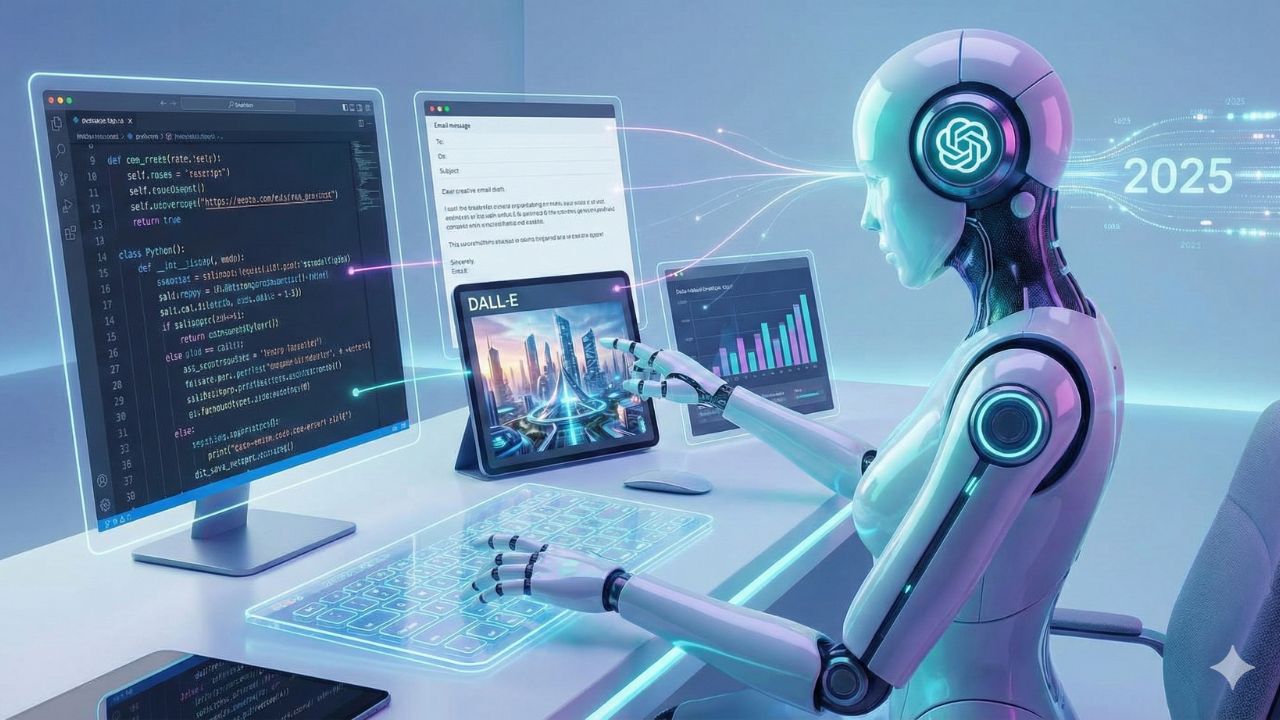
If PolyAI is the seasoned call center veteran and Claude AI is the thoughtful intellectual who reads encyclopedias for fun, ChatGPT is the brilliant, overachieving intern.
Developed by OpenAI, this ai chatbot gpt tool started the current generative revolution. But in a market flooded with specialized competitors, does it still hold the crown?
This review explores why ChatGPT is defined not by a single function, but by its multimodal versatility. It is the "Swiss Army Knife" of conversational ai: capable of writing code, drafting emails, painting pictures, and browsing the web all in one interface.
1. The Generalist: Why Breadth Matters
For most individuals and businesses, ChatGPT is the default entry point into the world of chatbot ai.
While it may not possess the massive "memory" of Claude AI or the specialized telephony infrastructure of Poly AI, it offers the widest range of integrated tools.
- Multimodality: It can generate images (via DALL-E) and write code in the same conversation thread.
- Ecosystem: It offers a vast library of "GPTs" (custom versions of the ai bot) that allow it to interact with other software.
If you need a single assistant to handle a chaotic mix of tasks—from coding a Python script to planning a vacation—this remains the industry standard.
2. The Trade-Off: Depth vs. Breadth
While ChatGPT is the most versatile ai chat tool, it faces stiff competition when tasks become highly specialized.
The Writing Gap: Robotic vs. Natural
Claude AI has emerged as a favorite for writers. While ChatGPT is a powerful drafter, its tone is often described as "robotic". Professionals often prefer Claude AI because its prose feels more "nuanced" and "introspective" out-of-the-box.
- ChatGPT: Requires human editing to achieve a specific tone.
- Claude: Delivers a more natural, human-like output.
The Memory Gap
When analyzing massive files, the best chatbot for the job might not be ChatGPT.
- ChatGPT: Has a limited context window.
- Claude AI: Boasts a standard 200,000-token window (approx. 500 pages), making it superior for analyzing entire codebases without "forgetting" details.
3. The Voice Battle: DIY vs. Enterprise
The race for the best ai chatbot isn't just about text; it's about voice.
While projects like the Tesla Optimus robot are building the physical body of the future workforce, companies like PolyAI are perfecting the voice. With the release of the OpenAI Realtime API, ChatGPT can now converse with low latency.
However, for business use, there is a critical distinction:
- ChatGPT (DIY): Provides the "bricks" to build a voice bot. Developers must code the integration and build guardrails themselves.
- Poly AI (Managed): Provides the "finished house." It is a platform designed to handle "barge-ins" (interruptions) and noisy backgrounds that often confuse standard ai chatbot systems.
4. Pricing and Business Plans
OpenAI offers a tiered structure targeting everyone from casual users to large enterprises.
| Plan | Cost | Target User | Key Features |
|---|---|---|---|
| Free | $0 | Casual User | Base models, web browsing |
| Plus | $20/mo | Power Users | Top-tier models, DALL-E, data analysis |
| Team | ~$25/mo | Small Teams | Admin console, data privacy |
| Enterprise | Custom | Large Orgs | SSO, enterprise security |
Conclusion: The Best All-Rounder
ChatGPT remains the "Ferrari" of general generative AI. It is the most feature-rich platform for users who need a little bit of everything.
However, the market has specialized:
- For Nuance: Claude AI offers better writing and memory.
- For Voice: Poly AI offers a reliable, managed solution for enterprise phone support.
Compare the Top 3 Chatbots
Not sure if ChatGPT is enough? See how it stacks up against the specialists. Read the Full ChatGPT vs. Claude vs. PolyAI Comparison.

Frequently Asked Questions (FAQ)
Sentiment AI is a complex field. While ChatGPT can detect tone, it does not have true sentience. It is prone to "hallucinations" and can invent facts. Unlike Poly AI, which uses strict guardrails for customer service, ChatGPT has a broader, less controlled knowledge base.
You can build an ai bot using the OpenAI Realtime API, but it is a "Do-It-Yourself" solution. It lacks the native telephony and noise filtering of dedicated platforms like Poly AI.
Writers often find Claude AI less "robotic." ChatGPT is great for drafting, but Claude excels at capturing a natural human tone.