Best AI Plagiarism Checkers for Research Papers: Why Standard Detectors Are Failing Students and Researchers
Quick Answer: Key Takeaways
- The "False Positive" Crisis: Standard tools like Turnitin are flagging innocent students at alarming rates, creating an academic panic.
- Beyond Probability: The best checkers now use forensic stylometry (like Pangram Labs) rather than simple word prediction probabilities.
- The "Edit" Problem: Most of the free tools cannot distinguish between AI-generated text and AI-polished text (like using Grammarly).
- Verification is Key: You need tools that provide a "Truth Score" or reasoning trace, not just a generic percentage.
The Academic Witch Hunt is Real
This deep dive is part of our extensive guide on Best AI Mode Checkers 2026: The Tools That Prove What’s Human (and What’s Not).
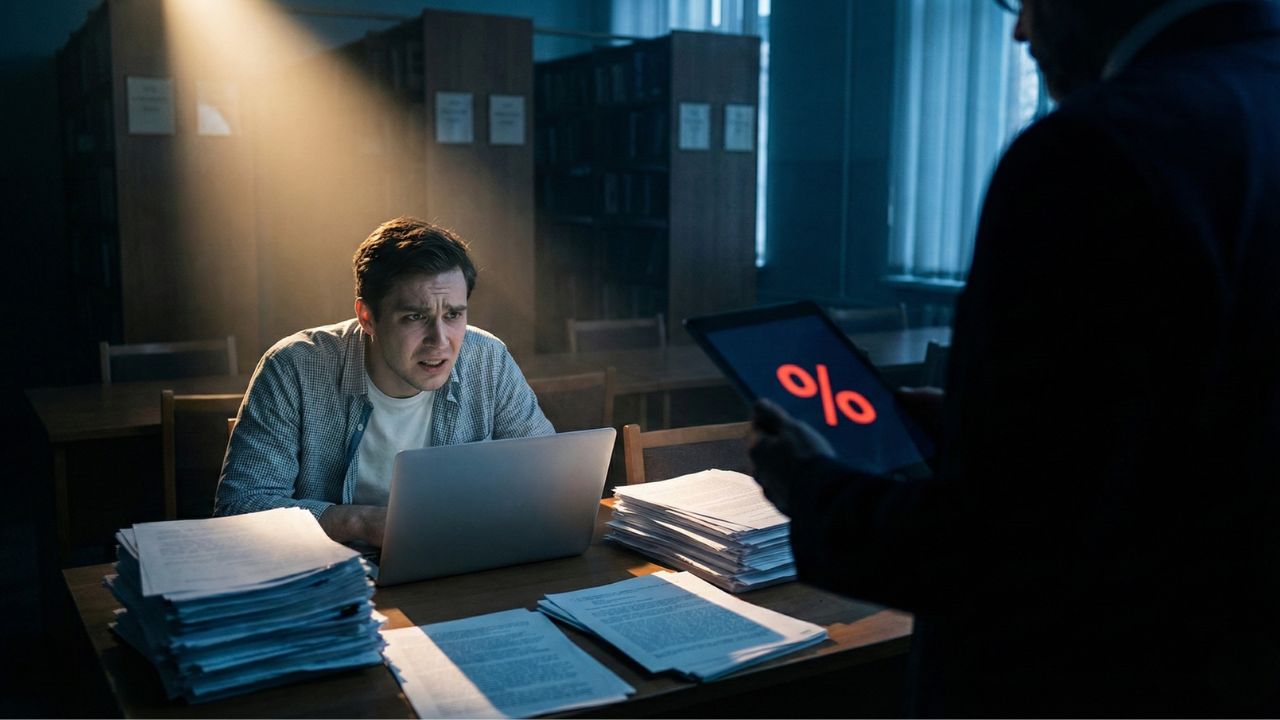
Finding the best AI plagiarism checkers for research papers isn't just about catching cheaters anymore. It is about self-defense. In 2026, the academic world is in a state of paranoia.
Professors are relying on "black box" detection tools that frequently accuse honest students of academic dishonesty. If you are a researcher or student, you cannot afford to rely on the free, ad-supported detector you found on Google.
You need professional-grade verification that understands the nuance of high-level academic writing.
Why Turnitin Is No Longer Enough?
For years, Turnitin was the gold standard. But the rise of advanced models like Gemini 3.0 and GPT-5 has exposed cracks in its armor. Turnitin’s algorithms historically look for "average" writing.
The problem? Academic writing is supposed to be formal, structured, and objective, the exact traits that standard detectors flag as "AI."
This has led to high-profile cases where students have been falsely accused, forcing them to provide Google Doc edit histories to prove their innocence. To understand how specific models like Google’s latest are bypassing these older checks, read our guide on How to Detect Gemini 3.0 Content.
Enter Pangram Labs: The New Standard?
While schools cling to legacy software, Pangram Labs has emerged as a favorite for technical verification. Unlike basic detectors that just guess, Pangram uses forensic stylometry.
It looks at the evolution of the document. It can reportedly distinguish between a student using AI to brainstorm (acceptable) versus a student using AI to write (plagiarism).
This nuance is critical. In modern research, using AI to organize data is common. Using it to hallucinate conclusions is dangerous. For a deeper look at why AI struggles with true expert-level reasoning, check the scores on the Humanity’s Last Exam Leaderboard Scores.
The Danger of "Free" Checkers
If you type "free AI detector" into a search engine, you are playing Russian Roulette with your grades. Most free tools have high false-positive rates because they are trained on generic internet text, not peer-reviewed journals.
They often flag non-native English speakers (who use more formal, rigid grammar), technical definitions (which cannot be "creative"), and properly cited quotes.
If you are submitting a thesis, rely only on tools that offer PDF certification and transparent scoring methodologies.
Conclusion
The search for the best AI plagiarism checkers for research papers is a search for fairness. Whether you are a professor grading papers or a student defending your thesis, "probability" is not enough.
You need proof. By using advanced tools like Pangram or updated premium detectors, you ensure that the "human element" of research is recognized and protected.
Secure Your Research Privacy. Try Proton VPN

We may earn a commission if you buy through this link. (This does not increase the price for you)
Frequently Asked Questions (FAQ)
Turnitin has updated its systems to detect "AI-paraphrasing" and "bypassing" tools, but it is not 100% effective. It can still struggle with "hybrid" writing where a human heavily edits AI output, leading to potential false positives or negatives.
While "free" often comes with risks, GPTZero's free tier and CopyLeaks are often cited as more reliable than generic web tools. However, for a final thesis, we strongly recommend a paid scan from a provider like Pangram Labs or Originality.ai for peace of mind.
Yes. Pangram Labs is highly recommended for academic and technical writing. It specifically identifies "AI-edited" vs. "AI-generated" content, making it safer for students who use tools like Grammarly for basic spell-checking.
The best defense is a Google Doc version history. Always write your drafts in a cloud document that tracks every keystroke. If falsely accused, this "edit timeline" is your strongest evidence that you physically typed the paper yourself.
Plagiarism checking compares your text against a database of existing books and websites to find copied matches. AI detection analyzes the syntax and predictability of your words to guess if a machine wrote them. You can pass a plagiarism check (0% copied) but fail an AI check (100% AI-generated).
Sources & References
- Best AI Mode Checkers 2026
- How to Detect Gemini 3.0 Content
- Humanity’s Last Exam Leaderboard Scores
- Turnitin Guides: "AI writing detection model release notes" (Official Updates).
- EdTech Chronicle: "Newly Released AI Detector, Pangram 3.0".
- The Washington Post / Medium: "AI Plagiarism Detection & False Accusations".
Internal Analysis:
External Analysis: