Best Deepfake Detection Software 2026: Protecting Your Brand from Synthetic Fraud
Quick Summary: Key Takeaways
- Beyond Visuals: The best deepfake detection software for business 2026 now focuses heavily on audio cloning and real-time voice verification for call centers.
- Forensic Grade: Tools like Sensity AI and CloudSEK are offering "forensic" reports admissible in legal investigations, moving beyond simple "True/False" flags.
- API First: Enterprise defense is no longer a web dashboard; it's an API integrated directly into your Zoom, Teams, and KYC onboarding flows.
- The "Agentic" Threat: New detectors are specifically trained to spot "Agentic AI" behaviour, autonomous bots attempting to bypass biometric locks.
The New Era of Synthetic Fraud Defense
The days of spotting deepfakes by looking for "blurry fingers" are over. In 2026, synthetic media is pixel-perfect.
For enterprises, the threat has shifted from viral celebrity videos to targeted CEO impersonation and supply chain fraud. This deep dive is part of our extensive guide on Best AI Mode Checkers 2026.
If you are a CTO or Security Lead, you aren't just looking for software. You are looking for a shield. A tool that can sit between your employees and the flood of AI-generated noise.
To protect your brand reputation and financial assets, you need to deploy the best deepfake detection software for business 2026. Below, we categorize the top tools by their specific "superpowers" in the current market.
1. The "All-Seeing Eye": Sensity AI
Best For: Visual Threat Intelligence & Identity Verification.
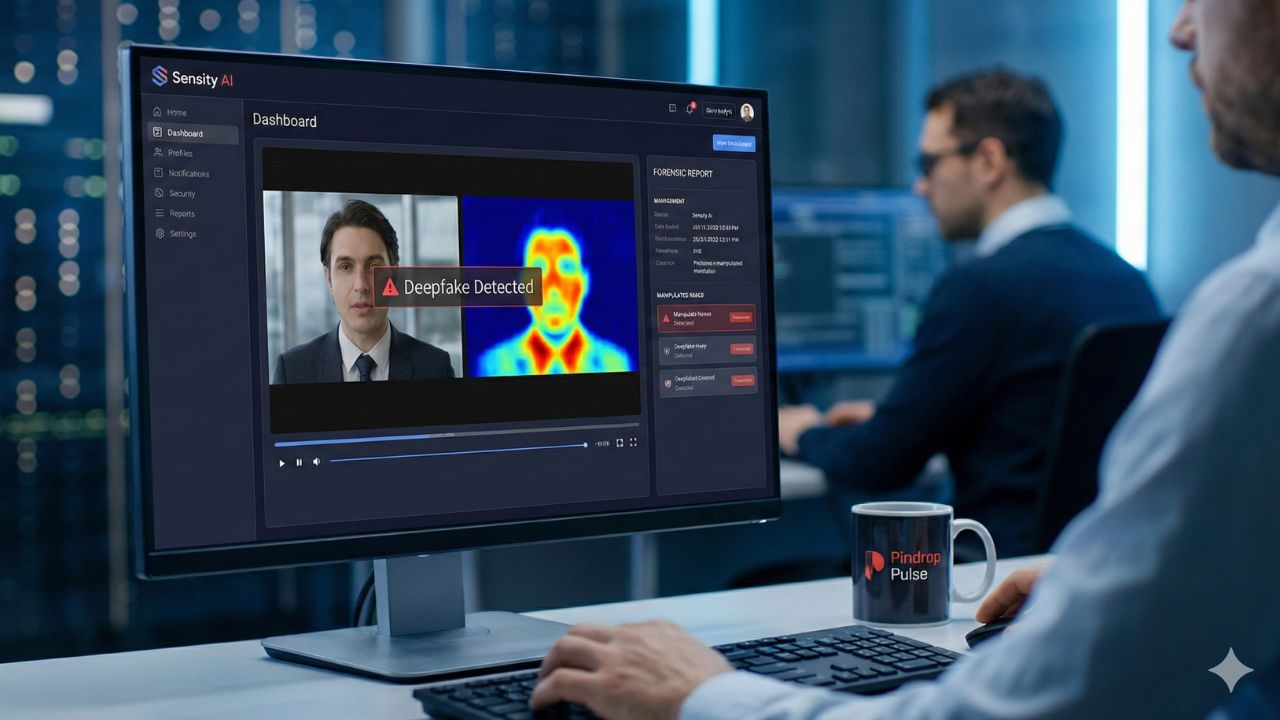
Sensity AI remains a market leader because it doesn't just detect; it investigates. It specializes in "Visual Threat Intelligence." This means it monitors the open web to see if your executives' faces are being used in unauthorized deepfake campaigns.
- Accuracy: Claims consistent 98% accuracy on public datasets.
- Forensic Reporting: Provides detailed "heat maps" showing exactly which pixels were manipulated.
- Use Case: Perfect for Trust & Safety teams who need to verify user identities during onboarding (KYC).
If your company relies on video verification for new customers, this is your first line of defense.
2. The "Real-Time" Blocker: Reality Defender
Best For: Live Screening & API Integration.
When milliseconds matter, Reality Defender wins. Unlike tools that require you to upload a file and wait 10 minutes, Reality Defender is built for real-time flows. It sits as an API gatekeeper for your content management systems (CMS) and media uploads.
- Multi-Modal: Detects fraud across Audio, Video, and Image simultaneously.
- Speed: Designed for "low-latency" operational blocking, meaning it stops the fake before it posts.
- Integrations: Plugs directly into enterprise communication platforms to flag synthetic content in live streams.
For media companies and social platforms, this "instant" verification is non-negotiable.
3. The "Voice" Guardian: Pindrop Pulse
Best For: Call Centers & Audio Fraud.
The most dangerous deepfake in 2026 isn't a video; it's a voice clone. Hackers are using AI to clone customer voices and bypass banking security questions. Pindrop Pulse is the industry standard for stopping this.
- Liveness Detection: It analyzes the "micro-tremors" in a voice that AI generators often smooth over.
- Environment Analysis: Can tell if the background noise matches the speaker's claimed location.
- Banking Standard: Widely adopted by financial institutions to protect against "vishing" (voice phishing) attacks.
4. The "Threat Hunter": CloudSEK
Best For: Security Operations Centers (SOC).
CloudSEK takes a broader approach. It treats deepfakes as a cybersecurity threat vector. Instead of just analyzing the video, it analyzes the context.
- Campaign Mapping: It links a specific deepfake video back to known criminal hacker groups.
- Scam Detection: specialized in identifying deepfakes used for investment scams and CEO fraud.
If you are protecting a high-profile brand from coordinated disinformation attacks, CloudSEK provides the necessary intel.
Why "Generic" AI Detectors Fail Here?
You might be wondering, "Can't I just use a standard AI text checker for this?" No. Deepfake video and audio require entirely different forensic methodologies.
Text detectors look for syntax; deepfake detectors look for compression artifacts and biological signals (like a pulse in the cheek).
For a better understanding of how text-based detection differs, read our technical primer on How to Detect Gemini 3.0 Content. Understanding forensic stylometry is key to grasping why these specialized tools are expensive, but necessary.
The Cost of Doing Nothing
In 2026, the cost of enterprise deepfake detection solutions can range from $10,000 to over $250,000 annually depending on volume.
That sounds high. But compared to the $40 billion in projected AI-fraud losses, it is an insurance policy you cannot afford to skip. One viral video of your CEO "announcing" a fake bankruptcy can wipe out billions in market cap in minutes.
Conclusion
The arms race is on. As Agentic AI becomes more autonomous, the best deepfake detection software for business 2026 will be the only thing standing between your brand and reputation collapse.
Don't wait for the crisis. Audit your communication channels today. Whether you choose Sensity for forensics or Reality Defender for speed, the goal is the same: Verify then Trust.
Optimize Your AI Workflow. Try Proton VPN

We may earn a commission if you buy through this link. (This does not increase the price for you)
Frequently Asked Questions (FAQ)
CloudSEK is currently rated as the best overall platform for comprehensive threat intelligence, while Sensity AI leads in forensic-grade visual analysis.
Tools like Pindrop Pulse analyze acoustic patterns and "liveness" signals in real-time to flag synthetic voices during live calls, protecting call centers from fraud.
Reality Defender and Sensity AI both offer multi-modal detection, meaning they cross-reference inconsistencies between the audio track and the visual lip movements to confirm authenticity.
Enterprise solutions typically range from $10,000 to $250,000+ per year, depending on the volume of media scanned and the level of API integration required.
Yes, tools like Deepware Scanner offer basic web-based checking without registration, but they lack the accuracy and security required for enterprise use.