ChatGPT Shopping Privacy: What OpenAI Actually Knows About Your Wallet
You have connected your digital wallet. You have authorized the "Instant Checkout" features. You just watched an advanced AI buy a week's worth of groceries in 30 seconds. It feels like magic.
But for the security-conscious user, it also feels slightly terrifying.
When you utilize Agentic Commerce—a system where an AI acts as a broker between you and a retailer—you are introducing a powerful middleman into your financial life. The burning question on everyone's mind is simple: Is ChatGPT shopping safe?
This guide is a technical "Privacy Audit" designed to explain exactly what data is shared, who sees it, and how to lock down your digital footprint.
1. The Data Flow: Who Sees What?
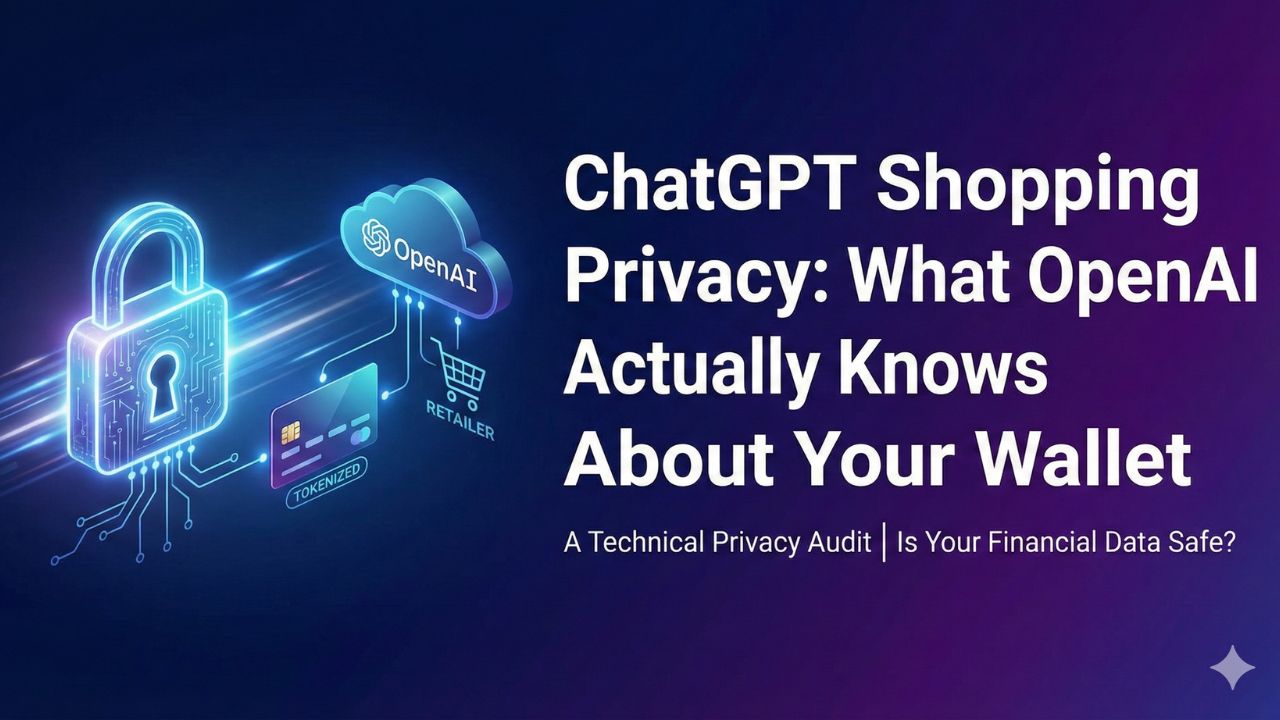
To understand ChatGPT shopping privacy, we must look at the architecture. The biggest misconception is that OpenAI becomes your bank. In reality, the system is designed as a "Pass-Through" architecture.
Here is the breakdown of a single transaction to illustrate data privacy in action:
- OpenAI (The Broker): They see the intent ("User wants red running shoes") and the confirmation ("Order #1234 successful"). They orchestrate the API call but do not hold the keys to the vault.
- Stripe / Payment Processor (The Vault): This is where your actual credit card lives. OpenAI holds a "Token"—a random string of characters that represents your card—but not the card number itself.
- The Retailer (Target/Walmart): They receive your name, shipping address, and the specific items ordered. To them, it looks like a standard API order.
Key Takeaway: OpenAI never stores your unencrypted 16-digit credit card number. If OpenAI were hacked tomorrow, the attackers would find useless tokens, not your Visa credentials.
2. The "Memory" Risk
While your credit card is technically safe, your personal privacy is a different matter.
The new ChatGPT "Memory" feature is designed to make shopping easier by remembering details like your shirt size, your wife’s birthday, and your preference for oat milk.
The Risk: This creates a highly detailed psychographic profile of your consumption habits stored within your chat history. While useful, you may not want a permanent record of every medication or personal item you've researched.
The Fix: You have granular control. You can tell the AI: "Forget that I bought this item". You can also view and delete specific "Memories" in Settings > Personalization > Memory.
3. The "Ad Targeting" Question
A common concern regarding ChatGPT shopping privacy is whether this new convenience comes at the cost of aggressive advertising. Does OpenAI sell purchase data?
- From OpenAI: No. Their current business model (for Plus/Pro users) is subscription-based, not ad-based. They explicitly state they do not sell training data to third-party advertisers.
- From The Retailer: Yes. Once the order lands in Walmart’s system, you are a Walmart customer. You are subject to their privacy policy. Expect to receive emails or see retargeting ads from the retailer, just as if you shopped on their website.
🛡️ Your 3-Step Privacy Lockdown Checklist
Before you complete your ChatGPT wallet setup and make your first AI purchase, we recommend these settings:
- Enable Biometric Auth: Go to Data Controls and ensure "Require FaceID/Fingerprint for Purchase" is ON. This prevents accidental (or malicious) orders if you leave your phone unlocked.
- Audit Connected Apps: Monthly, check which retailers are linked. Unlink any store you haven't used in 30 days to minimize surface area.
- Disable Model Training (Optional): If you want maximum privacy, you can toggle off "Improve the model for everyone" in Data Controls. Note that this may limit some "Memory" personalization features.

Frequently Asked Questions (FAQ)
Q: Does OpenAI sell my shopping history to advertisers?
A: OpenAI states they do not sell user data. However, the retailer you purchase from (e.g., Target or Walmart) will receive your transaction data just as if you bought from their site directly, and they may use it for their own marketing.
Q: Can ChatGPT support staff see my credit card number?
A: No. ChatGPT uses "Tokenization" (via Stripe or similar processors). The system only stores a secure, encrypted token. The raw 16-digit card number is never visible to the AI model or OpenAI employees.
Q: How do I delete my shopping preferences from ChatGPT?
A: You can go to Settings > Personalization > Memory and manually delete specific facts (like your shirt size or address). Alternatively, you can type "Forget everything you know about my shopping preferences" in the chat.
Sources and References
- OpenAI Security Portal: Official documentation on SOC 2 Type 2 compliance and data encryption standards for enterprise and consumer data.
- Stripe Security Architecture: Technical overview of how PCI-DSS Level 1 certification protects tokenized payments used in integrations like Agentic Commerce.
- OpenAI Data Controls FAQ: Guide on how to manage chat history, training data toggles, and memory deletion.