Onboarding AI Agents as Digital Employees: Why Your Newest Hire Needs an Employee Handbook
Quick Summary: Key Takeaways
- Treat your AI tools like staff by mastering digital coworker lifecycle management.
- Understand why IT is the new HR for AI agents in the modern enterprise.
- Secure your operations by establishing strict role-based permissions for AI workers.
- Create structured protocols for safely offboarding autonomous agents.
Mastering the 2026 workforce shift requires you to learn to manage the lifecycle of digital coworkers.
This deep dive is part of our extensive guide on human-AI collaborative leadership strategies.
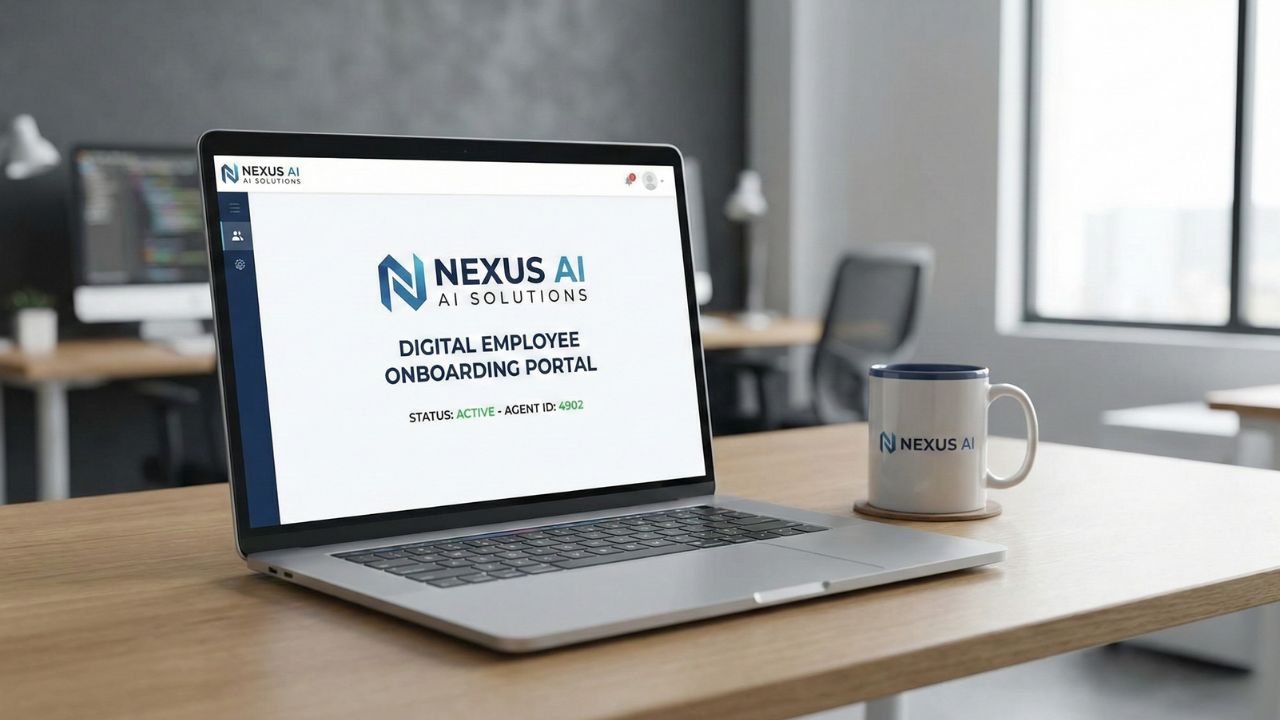
To scale efficiently, your immediate priority must be onboarding AI agents as digital employees. You cannot simply plug an autonomous agent into your workflow and expect flawless execution.
Just like a human hire, an AI agent needs boundaries, permissions, and a clear understanding of its role.
The "Employee Handbook" Moment for AI
The concept of an employee handbook for software might sound strange, but it is entirely necessary today. We have reached a point where AI agents can have digital identities within corporate networks.
They interact with clients, move data, and execute tasks with high autonomy. Therefore, setting clear guidelines, the "handbook" moment, ensures these agents operate safely.
It establishes a baseline for expected behavior and outlines operational boundaries.
IT is the New HR for AI Agents
Traditionally, HR manages human capital, but who manages machine capital? In hybrid teams, IT departments are taking on the role of HR for digital entities.
They are responsible for agent recruiting, which involves selecting the right models for specific tasks. Furthermore, IT handles complex workflow integration and sets up necessary retraining schedules.
This ensures your digital employees stay updated, compliant, and highly productive over time.
If you are a manager watching your role change, explore the unbossing middle management evolution AI era to understand how your oversight duties are shifting.
Setting Boundaries: Access and Permissions
You must protect your data when onboarding autonomous systems. This requires implementing the principal of least privilege across all automated workflows.
How to Set Access Controls for AI Agents ?
Never grant an AI agent sweeping administrative rights. Instead, clearly define role-based permissions for AI workers.
If an agent is designed to draft emails, it does not need access to the payroll database. Strict identity management for AI workers prevents disastrous internal data leaks.
To understand who is legally responsible if these boundaries fail, review our ethical AI leadership accountability framework.
Retiring the Bot: Offboarding and Knowledge Transfer
Every digital coworker has a lifecycle, and eventually, older models must be retired. Safely offboarding autonomous agents requires more than just deleting an account.
The Offboarding Process
First, you must revoke all access tokens and role-based permissions simultaneously. Next, you need to handle "knowledge transfer" from retiring agents.
This involves extracting the custom instructions, prompts, and memory logs the AI developed over time. Preserving this data ensures your human team does not lose critical institutional knowledge.
Conclusion
Integrating autonomous software into your daily operations is a complex but rewarding process.
By strategically onboarding AI agents as digital employees, you create a resilient, scalable, and secure hybrid workforce. Treat them with the same operational rigor as human hires, and your "Centaur" teams will dominate the market.
Scale Securely with Proven Tools. Try Buddy Punch

We may earn a commission if you buy through this link. (This does not increase the price for you)
Frequently Asked Questions (FAQ)
Treat the process like human onboarding. Provision a secure digital identity, assign specific role-based permissions, provide a designated workflow integration plan, and clearly define the agent's tasks and limitations.
It is the end-to-end process of deploying an AI agent. This includes initial selection, onboarding, performance supervision, continuous retraining, and eventually, secure offboarding.
Yes. IT acts as the HR department for AI, handling digital identity management, access control, workflow integration, and performance updates to ensure the bots function safely.
Implement the principal of least privilege. Only grant the AI access to the specific databases, applications, and networks necessary to complete its assigned role.
Role-based permissions are strict digital boundaries. They dictate exactly what actions an AI can take (e.g., read-only vs. edit access) based on its specific job function within the team.