India’s AI Impact Summit: The Bold Plan to Reclaim the Future? (February 2026)
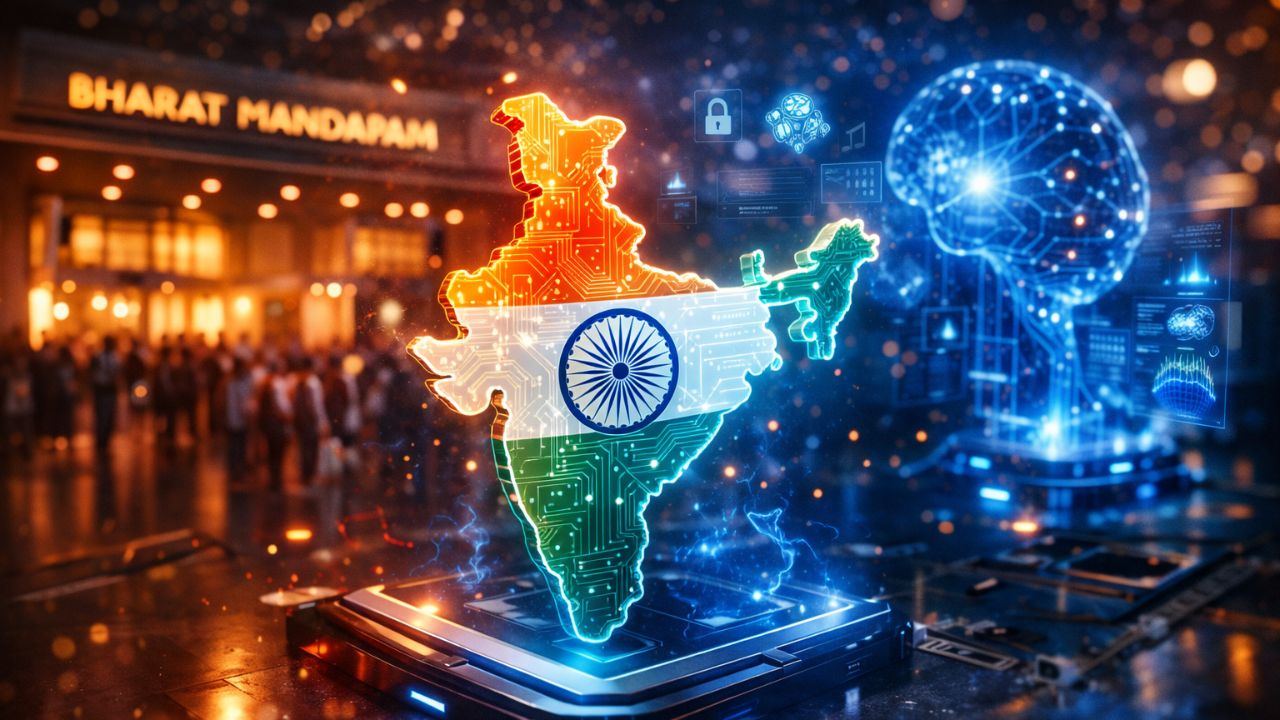
- Massive Diplomatic Footprint: Over 100 countries and 15–20 heads of government are in attendance, making this the largest AI convening in history.
- The New Triple-P Framework: India is championing "People, Planet, and Progress" over the restrictive, safety-first regulatory models seen in Europe.
- Sovereign Tech Launchpad: Official debuts for 12 approved sovereign LLM/SLM applications, including Sarvam AI and BharatGen.
- A High-Stakes No-Show: Nvidia CEO Jensen Huang’s withdrawal has left a gap, though his hardware remains the "oxygen" for India’s 100,000 GPU capacity goal.
All eyes are on Bharat Mandapam as New Delhi seizes the AI crown, forcing a pivot from Western safety-paranoia to the raw economic engine of the Global South. This is the moment the conversation shifts from restricting the "Black Box" to deploying it for the world’s majority. This pivotal event is a core focus for our latest-ai-news hub.
The New Delhi summit marks a radical departure from the AI timeline. While Bletchley Park focused on "Safety" (fear), Seoul targeted "Safety + Innovation," and Paris looked at "Implementation," New Delhi is about "Actionable Progress for the Majority." Electronics and IT Secretary S Krishnan defines this pivot through the "People, Planet, and Progress" framework.
The Global South Takes the Reins
The goal of this summit is simple: stop worrying about theoretical "catastrophic risks" and start solving on-ground, local problems with code. In a significant geopolitical twist, a Chinese delegation is attending following a formal invitation from New Delhi, cementing its status as a truly global forum, rather than a Western-exclusive club.
IndiaAI Mission CEO Abhishek Singh is pushing for "Information Gain" via the democratization of compute and data. Currently, a handful of nations build AI while the rest of the world remains mere "users" of biased systems. If datasets aren't inclusive of the Global South, the resulting AI will be fundamentally flawed.
Beyond Bletchley: Democratizing the "Black Box"
The summit's mission is to make compute power and algorithms accessible to the "majority of the world" who have been left out of the development phase. The attendance list is a "who’s who" of the silicon world: PM Modi and Sundar Pichai are joined by OpenAI’s Sam Altman, Anthropic’s Dario Amodei, and Google DeepMind’s Demis Hassabis.
However, the late cancellation of Nvidia CEO Jensen Huang due to "unforeseen circumstances" is a notable sting. Nvidia’s H100 and B200 chips are the literal oxygen for India’s ambitious 100,000 GPU capacity goal. This infrastructure is critical for the GCC product ownership framework 2026 being adopted by global centers.
Sovereign AI: Hardware, Software, and Dreams
India isn't just talking; it’s building. The summit is the official stage for 12 approved sovereign Large and Small Language Model (LLM/SLM) applications, featuring heavy hitters like Sarvam AI and BharatGen. The infrastructure to power these projects is scaling at a breakneck pace.
According to the IndiaAI Mission CEO, India’s GPU capacity is on track to triple to 100,000 units by the end of 2026. Beyond the models, the summit features over 500 AI startups and sessions dedicated to industry-specific usage. The focus is moving away from generic chatbots toward specialized "frontier lab" applications for the Global South.

The summit’s final act will be a high-stakes declaration statement intended to set the tone for the next decade. India must walk a diplomatic tightrope to avoid the friction seen in France last year. The challenge lies in consensus: New Delhi’s draft must be "pro-innovation" enough to keep the West on board while prioritizing Global South needs.
Frequently Asked Questions (FAQ)
It stands for People, Planet, and Progress. It is India's alternative to restrictive AI regulation, focusing on deploying AI to solve real-world problems and drive economic opportunity for the majority.
Under the IndiaAI Mission, the goal is to triple the current capacity, reaching a milestone of 100,000 units by the end of 2026.
Key attendees include PM Modi, President Emmanuel Macron, Sundar Pichai, Sam Altman, Dario Amodei, and Demis Hassabis.
Conclusion
This summit fundamentally resets the global AI trajectory, prioritizing economic opportunity and employability over speculative fears. It represents a transition from discussing "what if" to "how many" people can be empowered by the technology.
As the New Delhi declaration takes shape, it will likely serve as the blueprint for AI governance for the next ten years. India has made its move: the future of AI isn't just about safety—it's about survival and progress for the entire planet.