Anthropic Fights US Military Ban: The $200M Fallout
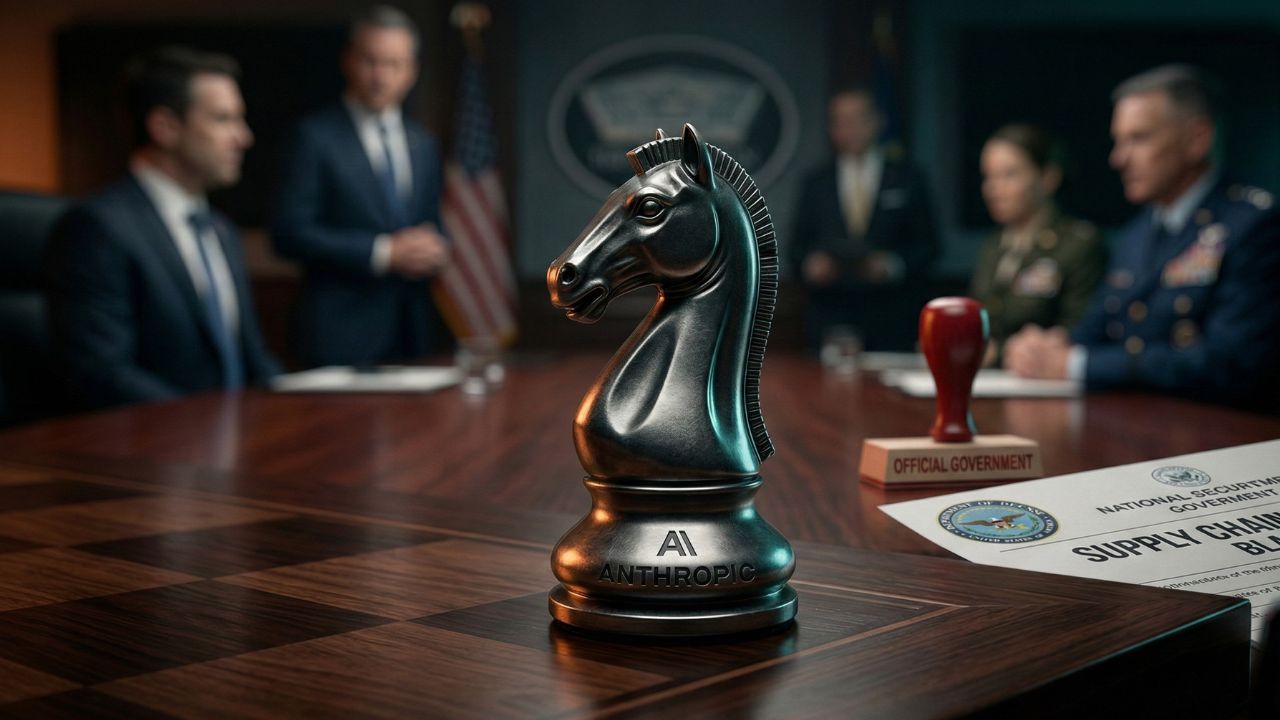
The Trump administration has officially blacklisted Anthropic as a national security threat after the AI giant refused to let the military use its Claude model for mass domestic surveillance and fully autonomous weapons. In a move sending shockwaves through the latest AI news cycle, CEO Dario Amodei is taking the Department of War to court over an unprecedented "supply chain risk" designation that just vaporized a massive government contract.
Key Takeaways
- The Ultimatum: Secretary of War Pete Hegseth labeled Anthropic a "supply chain risk," immediately terminating up to $200 million in government contracts.
- The Red Lines: Anthropic refused to drop usage bans on mass domestic spying and fully autonomous lethal weapons, arguing the technology is not reliable enough.
- The Legal Fight: Anthropic is suing the federal government, stating the designation is legally unsound and historically reserved for foreign adversaries.
- The Rival Play: OpenAI immediately swooped in to sign a classified network deal with the Pentagon hours after Anthropic’s exit.
Anthropic CEO Dario Amodei is drawing a hard line in the sand against the US government. Following months of tense negotiations, the artificial intelligence startup refused to surrender its safety guardrails to the Department of War. In response, Secretary of War Pete Hegseth issued a directive placing Anthropic on a supply chain risk list. President Donald Trump immediately ordered all federal agencies to stop using Anthropic’s technology, demanding a six-month phase-out for military platforms already running Claude.
The Stand Against Autonomous Weapons
Anthropic claims the government demanded unfettered access to Claude. Amodei explicitly denied the request, citing two non-negotiable red lines: the mass domestic surveillance of American citizens and the deployment of AI in fully autonomous lethal weapons.
According to Anthropic's official statement, current frontier AI models are not reliable enough to operate autonomous weaponry without endangering civilians and warfighters. The company maintains that removing human oversight from kill-chain decisions violates fundamental democratic rights.
The $200 Million Fallout
The supply chain risk designation, a punitive measure historically reserved for foreign adversaries like China or Russia, strips Anthropic of up to $200 million in defense contracts. Hegseth insists the mandate prohibits any defense contractor from conducting commercial activity with Anthropic.
However, Anthropic is fighting back. The company asserts that under 10 USC 3252, the government lacks statutory authority to dictate how independent contractors use Claude for non-military clients. Anthropic confirmed it will challenge the designation in federal court, calling the move legally unsound and a dangerous precedent for American tech companies.
OpenAI Swoops In
While Anthropic absorbs the blow, its biggest competitor is cashing in. Just hours after Hegseth's Friday evening deadline expired, OpenAI CEO Sam Altman announced a new deal to supply technology to the Pentagon's classified networks. Altman stated the Defense Department agreed to honor OpenAI's safety principles, filling the immediate void left by Anthropic's exile. This rapid maneuver deepens the ongoing rivalry between the two leading AI labs.
Why It Matters?
This showdown sets the ultimate stress test for AI ethics versus military supremacy. If the courts uphold the Department of War's supply chain risk designation, it sends a clear ultimatum to Silicon Valley: comply with the military's absolute terms or face financial exile. For enterprise customers and federal contractors, the ruling will determine whether utilizing principled, safety-focused AI models carries an unacceptable regulatory risk moving forward.