The “New Delhi Frontier”: PM Modi, Sundar Pichai, and Sam Altman Reveal India’s Sovereign AI Future
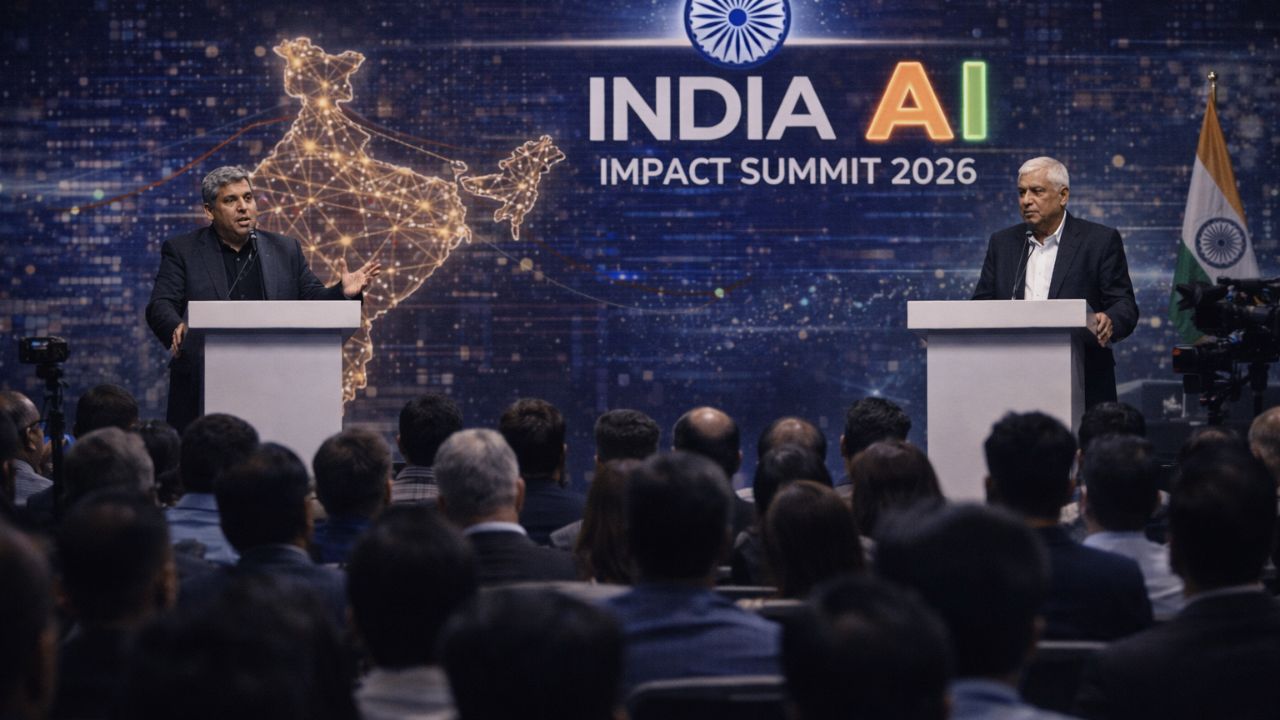
- The "MANAV" Vision: India has introduced the MANAV (Human) Vision for AI—focusing on Moral systems, Accountable governance, and National sovereignty.
- 15,000 AI Creator Labs: The government announced a massive rollout of AI-aligned Content Creator Labs in schools across the country.
- The 38,000 GPU Milestone: India has officially onboarded over 38,000 GPUs to provide democratized compute access for local developers.
NEW DELHI — In a moment that is already setting social media ablaze, the India AI Impact Summit 2026 has transitioned from a tech conference to a global turning point. A viral "power photo" captured at Bharat Mandapam shows Prime Minister Narendra Modi flanked by Google CEO Sundar Pichai and OpenAI’s Sam Altman, signaling that India is no longer just a consumer of AI—it is now the architect. This is a monumental update for the latest-ai-news hub, placing India at the center of the global AI discourse.
The "Frontier AI Commitments"
Union Minister Ashwini Vaishnaw today unveiled the New Delhi Frontier AI Commitments. This isn't just another policy; it’s a pact between global tech titans and Indian startups to build "Sovereign AI". Leading companies including Google, OpenAI, Meta, and Anthropic have signed this voluntary framework to focus on inclusive and responsible AI.
“AI is a shared resource for the benefit of all humanity,” PM Modi stated during the plenary session. “But India’s direction is clear: whose data, his right”. This principle is at the core of the MANAV doctrine, emphasizing that data generated within a nation should remain under its jurisdiction.
The "Sovereign" Shift
While the world worries about AI job losses, the sentiment at the Delhi Summit is different. Sam Altman noted that India will be "one of the biggest markets for AI in the world," specifically highlighting how Indian youth are using multilingual foundation models to bridge the rural-urban divide. This surge in adoption matches reports where Sarvam AI Blows Past DeepSeek and Gemini with new Indic-centric reasoning models.
The viral images of these leaders together aren't just for show—they represent the launch of 12 indigenous Indian foundation models designed to work in regional languages, a feat that traditional Silicon Valley models have struggled to master. These models will be powered by the government's democratized compute access via 38,000 GPUs.
Why It Matters: Human-Centric AI Welfare
The Prime Minister stressed that the approach to artificial intelligence should focus on "how to make AI human-centric rather than AI-centric". India's MANAV vision (Moral, Accountable, National sovereignty, Accessible, and Valid) aims to prevent AI monopolies and ensure the technology serves as a multiplier for public good.
With world leaders and tech icons like Sundar Pichai and Sam Altman supporting this vision, India is positioning itself as a leader for the Global South. The summit underscores that the future of AI is not pre-determined, but will be shaped by the decision to prioritize welfare for all.

Frequently Asked Questions (FAQ)
MANAV is a human-centric framework standing for Moral and ethical systems, Accountable governance, National sovereignty, Accessible and inclusive, and Valid and legitimate AI.
A voluntary pact between leading global and domestic tech companies to evaluate AI systems for global contexts, focusing on multilingual support and real-world usage.
India announced the launch of 12 indigenous foundation models designed to work effectively in regional languages.