Nvidia Forges Telecom Alliance to Build AI-Native 6G
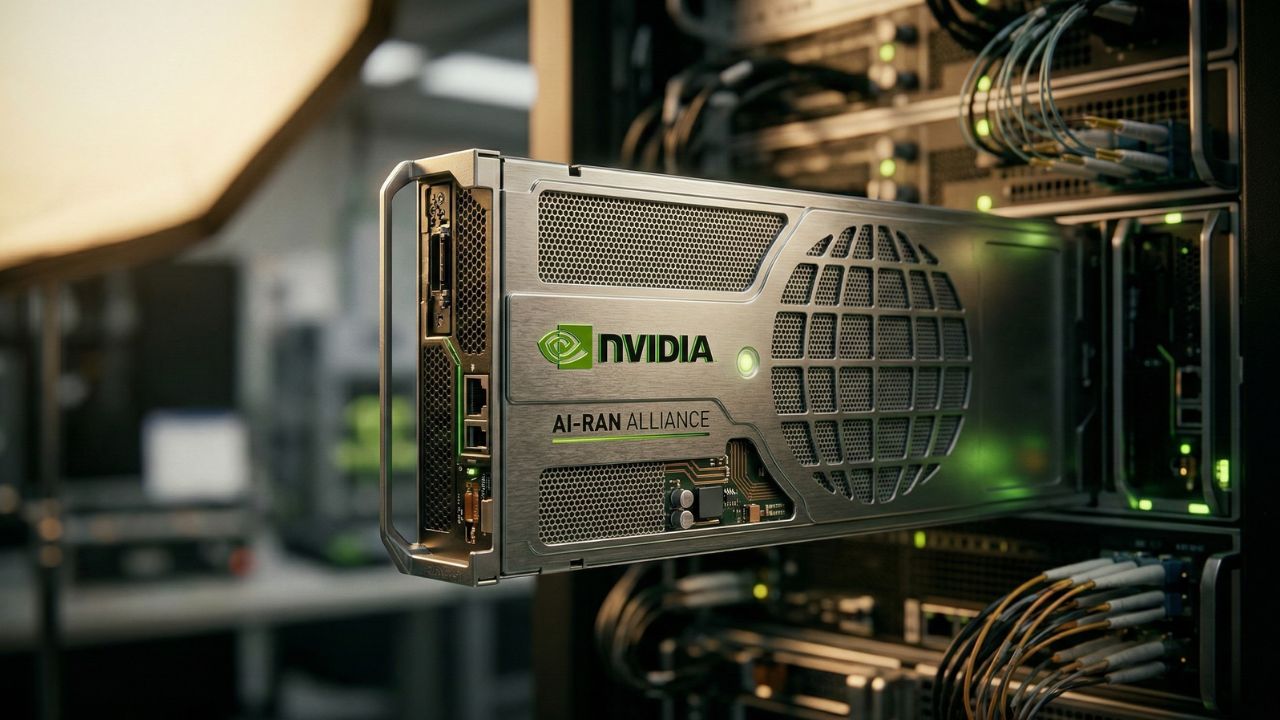
In the latest AI news, Nvidia just rallied twelve of the world's largest telecom operators to build an open, AI-native 6G wireless network from the ground up.
Unveiled at the 2026 Mobile World Congress, this sweeping coalition abandons legacy cellular models to turn telecom infrastructure into the operational backbone for global artificial intelligence.
Key Takeaways
- Nvidia partnered with T-Mobile, Nokia, Ericsson, and Deutsche Telekom to develop a software-defined 6G architecture.
- The alliance embeds artificial intelligence directly into the radio access network (RAN), edge, and core.
- Open 6G infrastructure is engineered specifically to power billions of autonomous robots, vehicles, and smart sensors.
- The initiative expands the AI-RAN Alliance, which now includes over 130 participating technology companies.
At the Mobile World Congress, Nvidia officially announced a massive industry commitment to develop 6G on open, secure, and AI-native platforms.
The hardware giant joined forces with global heavyweights like BT Group, Cisco, MITRE, and SK Telecom to fundamentally overhaul how wireless data moves.
Legacy wireless architectures lack the capacity to handle the incoming surge of agentic and physical AI traffic.
To solve this bottleneck, the coalition is building a software-defined ecosystem centered completely around AI-RAN architecture.
Rewiring the Global Network
Instead of relying on closed, proprietary systems, this 6G initiative mandates an open, programmable, and trusted foundation.
The resulting network will continuously evolve in real-time through software updates, embedding machine intelligence directly into every transmission point.
Deutsche Telekom CEO Tim Höttges confirmed this open 6G infrastructure establishes the foundation required for an era dominated by physical AI.
By integrating advanced sensing and communications, the network itself becomes a decentralized global computer capable of autonomous decision-making.
In the United States, this aligns directly with the OCUDU Initiative and the AI-Native Wireless Networks project to ensure supply chain resilience.
South Korea's SK Telecom and Japan's SoftBank are simultaneously shaping programmable 6G networks from the ground up in their respective regions.
The Future of Physical AI
Telecom infrastructure is actively transforming into pervasive AI hardware. As 6G becomes the nervous system of the digital economy, it eliminates the boundaries between connectivity and compute power.
This leap guarantees that future consumer devices, automated factories, and smart cities will operate with real-time, low-latency intelligence.
By running AI inferencing directly on the network edge, global operators are positioning 6G as the ultimate operating system for the physical world.