US Military Uses Banned Anthropic Claude AI In Iran Strikes
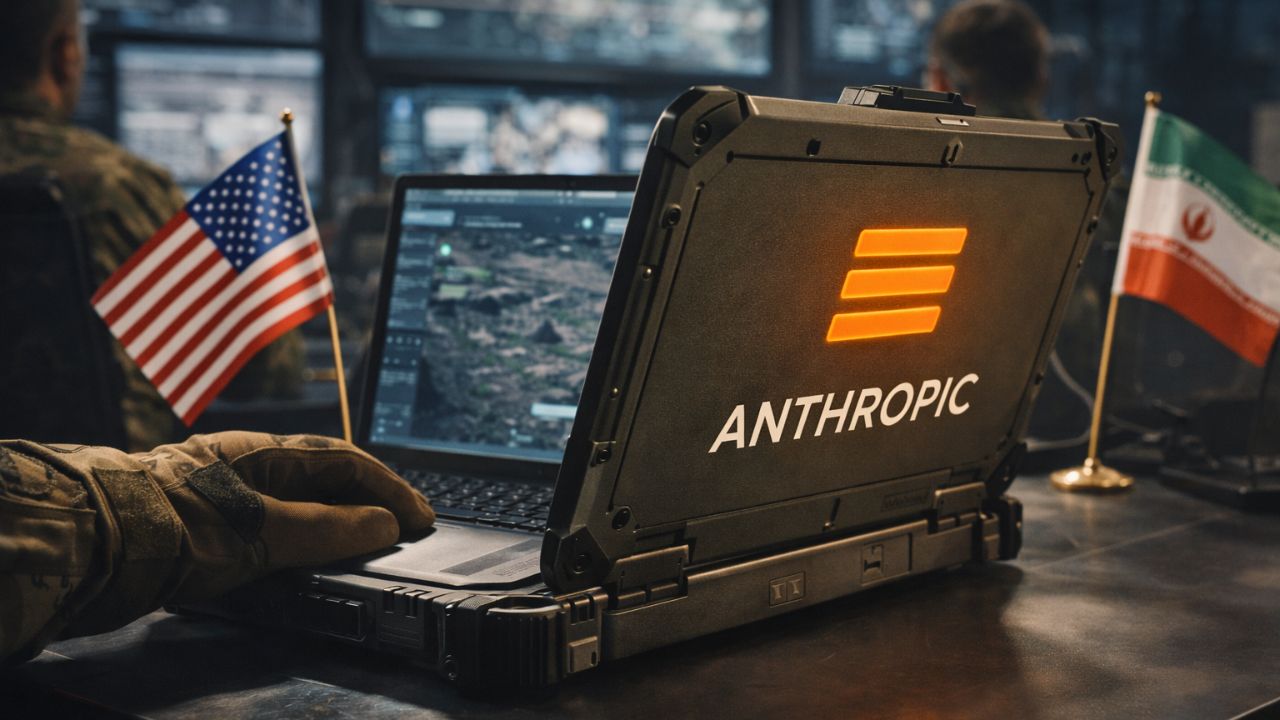
In the latest AI news, hours after President Donald Trump banned Anthropic from all federal agencies, the US military utilized the startup's Claude AI for target identification during its unprecedented strikes on Iran. The immediate deployment of the newly blacklisted technology highlights a massive disconnect between White House political directives and real-time battlefield intelligence operations.
Key Takeaways
- Battlefield Deployment: US Central Command used Anthropic's Claude AI to run intelligence assessments and simulate battle scenarios against Iran.
- The Sudden Ban: President Trump ordered an immediate federal phase-out of Anthropic just hours prior to the strike, publicly labeling the company a "supply-chain risk."
- The Core Dispute: Anthropic CEO Dario Amodei explicitly refused to allow the AI to power mass domestic surveillance or fully autonomous weapons.
- OpenAI's Pivot: Immediately following the ban, OpenAI submitted a bid to replace Anthropic for Department of Defense contracts.
The Wall Street Journal Leak & Target Identification
According to a report from The Wall Street Journal, multiple commands worldwide relied heavily on Anthropic's Claude AI as the Iran offensive initiated. US Central Command in the Middle East specifically utilized the model to process intelligence assessments and simulate complex battle scenarios. The AI tools helped parse data during the joint US-Israeli bombardment that killed Iranian Supreme Leader Ayatollah Ali Khamenei. This deep military integration occurred in direct contradiction to a presidential order. Just prior to the attack, President Trump used Truth Social to demand all federal agencies cease doing business with Anthropic. He branded the AI research lab as a "woke" group of "leftwing nut jobs" whose internal safety policies put American national security in jeopardy.
Why The Pentagon Relied On A "Security Threat"
The Department of Defense originally brought Anthropic into classified networks in June 2024. Intelligence officers heavily favor Claude because the model can ingest, analyze, and connect vast amounts of classified data in seconds rather than weeks. Discarding this digital infrastructure moments before executing the highly sensitive operation was tactically impossible. The military effectively utilized a mandated six-month phase-out period to bypass the immediate cessation order. The breaking point between the administration and the AI firm centered on specific technological boundaries. Anthropic permitted military use but explicitly prohibited the administration from using its systems for domestic spying or deploying fully autonomous weapons without human oversight. In retaliation, the administration hit Anthropic with a "supply-chain risk" designation, a severe label historically reserved only for foreign adversaries.
Why It Matters
The deployment of Claude during the Iran strikes proves that advanced large language models are now permanent, indispensable fixtures in modern warfare. By banning a top-tier model over safety constraints, the administration created an immediate operational vacuum that competitors like Sam Altman's OpenAI are aggressively moving to fill. Designating an American AI company as a national security threat simply for enforcing ethical guardrails sets a historic precedent for future government contracts. Silicon Valley firms are now on notice: they must choose between maintaining strict AI safety rules or securing highly lucrative defense budgets in a new era of automated conflict.
Sources and References
- US Used Anthropic's Claude AI In Iran Strikes Hours After Trump's Ban: Report
- Trump moved to dump Anthropic, then used its Claude AI in the Iran strike
- US military used Claude AI in Iran strikes hours after Trump banned Anthropic: Report
- US military was using Anthropic models as it bombed Iran despite Trump's ban order