OpenAI's Path to a $1T IPO: Is It Built on Solid Ground?
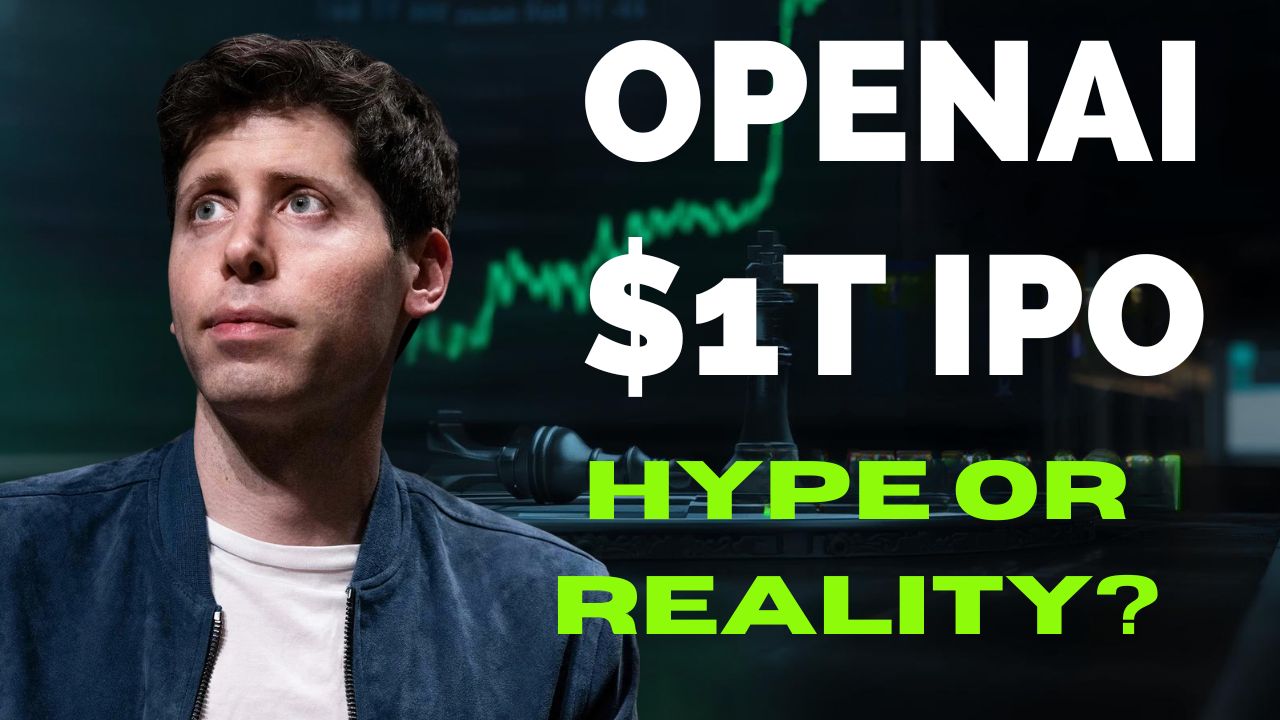
The prospect of a trillion-dollar OpenAI IPO has captivated financial markets, presenting a generational opportunity to invest in the leader of the AI revolution. Fueled by astronomical growth, the OpenAI valuation has soared, creating a compelling narrative of inevitable market dominance. But for any investor considering a stake in a public OpenAI, peeling back the layers of hype reveals a company built on a structural fault line.
The central thesis of this analysis is that OpenAI's ambition is on a collision course with its foundational mission. This creates a structural paradox, a mission-driven, non-profit-controlled corporation seeking public capital—that the public markets, with their relentless demand for shareholder primacy, are uniquely ill-equipped to handle.
The Trillion-Dollar Question: OpenAI's Meteoric Rise
The hype surrounding a potential public offering is grounded in the company's staggering valuation and explosive growth. This financial and technological momentum has positioned OpenAI as the undisputed center of the current AI boom.
From Nonprofit to a $500 Billion Juggernaut
A recent secondary stock sale valued OpenAI at an astonishing $500 billion, with current and former employees in talks to sell roughly "$6 billion worth of stock" to investors including Thrive Capital, SoftBank Group, and Dragoneer Investment Group. This valuation, which notably involves existing stakeholders cashing out rather than the company raising new capital, makes OpenAI "the most valuable venture capital-backed startup ever"—a clear signal of immense investor appetite.
Fueling the Hype: Rapid Revenue and Product Innovation
OpenAI's financial performance has been just as remarkable as its valuation. By July 2025, the company achieved an estimated "$1.2 billion in annualized revenue," a dramatic surge from previous levels. This growth is driven by the rapid enterprise adoption of its AI tools. The launch of GPT-5 in August 2025, its most advanced model to date, has further solidified its market leadership, with major enterprises like Amgen, BNY Mellon, and Morgan Stanley quickly integrating the new technology.
🚀 Supercharge Your Workflow!
Discover our curated list of cutting-edge AI tools designed to boost your productivity and creativity.
Explore AI ToolsA New Foundation: The Shift to a Public Benefit Corporation
Before any public offering can occur, OpenAI has undergone a critical corporate restructuring. This shift from a "capped-profit" model to a Public Benefit Corporation (PBC) was a necessary step to accommodate its massive capital needs and future growth ambitions.
Why the Change Was Necessary
OpenAI recently restructured into a for-profit PBC, a move essential for its continued expansion. This change was necessary to "move away from profit caps and equity limitations" that were core to its previous hybrid model. For investors, the key takeaway is how this change unlocked crucial funding. The change was a prerequisite for securing a major investment from SoftBank, which would have been able to reduce its \$30 billion contribution to $20 billion if the restructuring was not completed.
How the New Structure Works
The new ownership structure of OpenAI Group PBC is a complex arrangement designed to balance commercial goals with its original mission:
- Microsoft Stake: Microsoft holds a roughly 27% stake in the new for-profit entity.
- Foundation Control: The original OpenAI Foundation (the nonprofit) holds a 26% stake and, crucially, "will control the for-profit company through its board."
- Other Investors: Current and former employees, along with other venture investors, hold the remaining 47% of the company.
The Public Market Paradox: Can a PBC Satisfy Shareholders?
OpenAI's biggest barrier to a successful IPO is the fundamental conflict between its PBC structure and the relentless profit-maximization demands of the public markets. This structure effectively subordinates shareholder interests to an ideological mission, creating a level of uncertainty that most investors are unwilling to tolerate.
Governance: The Board's Kill Switch
The central conflict lies in its governance. The nonprofit board retains ultimate control and is legally empowered to "override commercial decisions if they are deemed to conflict with the company’s core mission of developing safe and broadly beneficial AGI." In an extreme scenario, the board could halt a lucrative product launch or even dissolve the for-profit entity entirely, directly destroying shareholder value in service of its non-profit mandate. Public market investors have "zero appetite for such existential uncertainty."
Altman's Ouster: A Preview of the Chaos to Come
The brief ousting and reinstatement of CEO Sam Altman in late 2023 serves as a "case study in this governance risk." The event was proof that the non-profit board is willing and able to decapitate the commercial entity's leadership without warning to protect its mission. This is the "existential uncertainty" in action—a demonstration of a governance model that is the antithesis of the predictability and clarity public market investors demand.
Want to know more about the PBC structure? Check out our FAQ below!
Ready to invest? Explore pre-IPO opportunities on EquityZen today. (Note: High Risk)
⏪ Relive Our Past Events
Curious about our previous conferences? Explore the sessions, speakers, and highlights from our flagship events.
View 2024 Highlights View 2025 HighlightsAnalyzing the Headwinds: 4 Major AI Risks Facing OpenAI
Beyond its structural paradox, OpenAI faces a landscape of intense competitive, financial, and legal challenges. For prospective shareholders, these AI risks represent significant headwinds on its path to a sustainable public valuation.
-
Microsoft's Embrace: Partner or Parasite?
OpenAI’s relationship with Microsoft is a double-edged sword. While Microsoft's multi-billion-dollar investment has been critical, it is both OpenAI’s largest benefactor and its "most powerful competitor." Microsoft uses licensed technology to power its own competing Copilot brand, presenting the dilemma: Is OpenAI creating its own obsolescence?
-
An Eroding Moat in a Crowded Field
The narrative that OpenAI has an unassailable technological moat is rapidly eroding. The field is crowded with well-funded competitors, including Anthropic, Google DeepMind, and Meta. This intense competition is turning advanced AI into a commodity, creating immense "downward pressure on pricing" and narrowing the path to sustained, high-margin profitability.
-
The Staggering Cost of AI Dominance
The financial mechanics of leading the AI race are staggering. The cost of training a single state-of-the-art model can run into the "hundreds of millions of dollars." OpenAI's cash burn estimate for 2025 has increased to roughly "\$8 billion." This astronomical cash burn is precisely what forces the company toward the public markets.
-
A Legal and Regulatory Minefield
OpenAI is navigating significant legal and regulatory threats. It is embroiled in a "landmark copyright and privacy lawsuit from The New York Times," and a lawsuit from Elon Musk alleging violation of its founding mission by transitioning to a for-profit structure. The outcome of these cases is highly uncertain.
The Investor's View: Hype vs. Reality
While the hype around an OpenAI IPO is undeniable, a growing chorus of skeptics is questioning whether the company's valuation is justified. On investor forums, the potential IPO has drawn sharp criticism and comparisons to past tech flameouts, with some labeling it "'We Work on steroids' or 'Enron levels of fudging the numbers'" due to insane capital expenditure commitments and the lack of a proven, cash-generating business model.
The Path to Public Investment
Currently, direct investment in OpenAI is limited. Pre-IPO shares are available to accredited investors on third-party platforms like EquityZen, where existing shareholders can sell their holdings. However, this remains an exclusive and high-risk option unavailable to the general public.
What's Next for Sam Altman and OpenAI?
Despite the risks, the company's leadership sees a public offering as an almost inevitable step to finance its monumental long-term ambitions.
The Trillion-Dollar Infrastructure Dream
OpenAI has floated the idea of spending "trillions" on computing infrastructure to achieve its goal of artificial general intelligence. An IPO would be a primary vehicle to help finance these plans. However, CEO Sam Altman has also expressed personal reservations, stating that he does not see himself as "well-suited" to lead a publicly listed company, adding another layer of uncertainty to its future leadership.
An IPO is "The Most Likely Path"
During a recent livestream, Sam Altman directly addressed the possibility of going public: "I think it's fair to say it is the most likely path for us, given the capital needs that we'll have." This statement delivers the final verdict on the OpenAI paradox: its revolutionary ambition is inseparable from the immense financial pressures driving it toward the public markets—a destination for which its unique, mission-driven structure may be fundamentally unprepared.
Frequently Asked Questions (FAQs)
What is an OpenAI Public Benefit Corporation (PBC)?
A PBC is a for-profit company that is legally required to balance the financial interests of shareholders with a specific public mission. In OpenAI's case, while it operates as a for-profit entity, it is ultimately controlled by the board of the original OpenAI non-profit foundation, which is mandated to prioritize the safe development of AGI for humanity over maximizing profit.
Why is OpenAI's relationship with Microsoft so complicated?
The relationship is complicated because Microsoft plays a dual role. It is a massive investor with a 27% stake and a key infrastructure partner. At the same time, it is also a major competitor that uses OpenAI's own licensed technology to build and market its rival "Copilot" brand of AI products, potentially undermining OpenAI's long-term market position.
What is the single biggest non-financial risk to an OpenAI IPO?
The single biggest non-financial risk is its unique governance structure. The non-profit board's legal right and duty to prioritize AI safety over shareholder profits creates what one analysis calls an "existential uncertainty." This structure, which subordinates shareholder value to a non-commercial mission, is a fundamental mismatch with the expectations of public market investors and has no precedent in the history of major IPOs.
Hungry for More Insights?
Don't stop here. Dive into our full library of articles on AI, Agile, and the future of tech.
Read More Blogs