RAG vs Fine-Tuning: The 2026 TCO Inflection Point
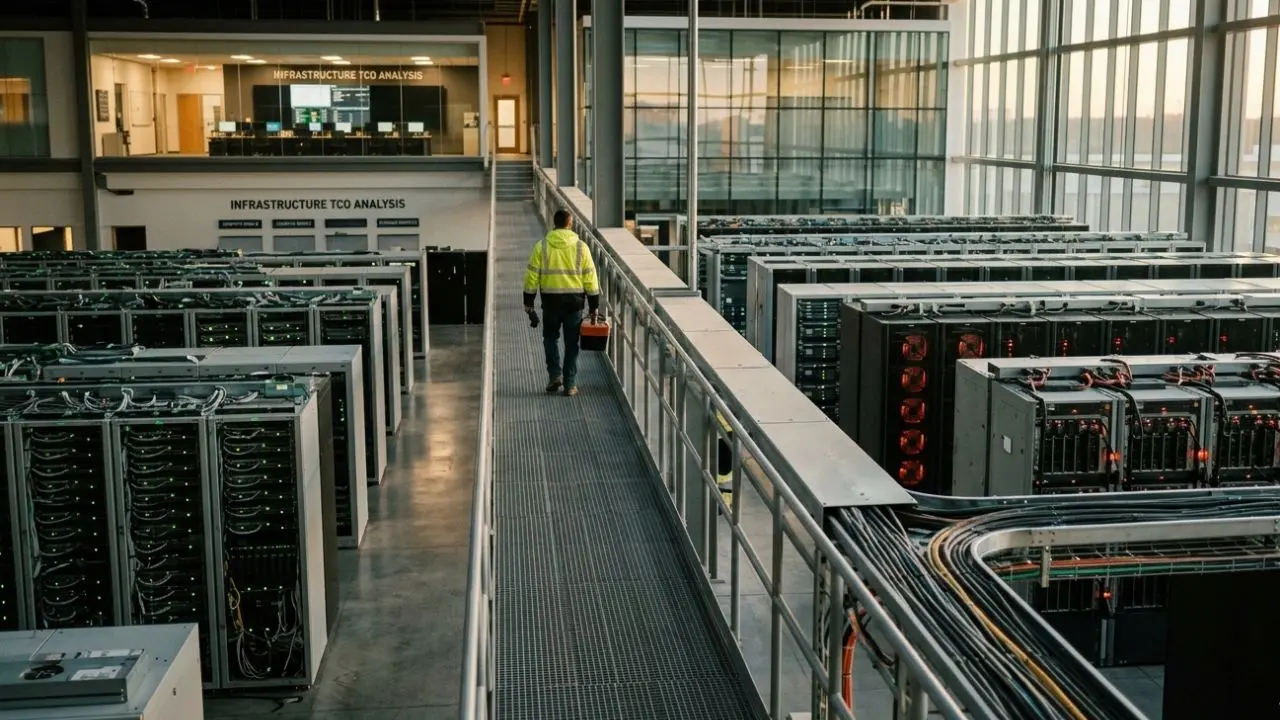
- RAG is not always the cheapest enterprise AI solution at scale.
- The financial crossover point sits near 14 million queries per year.
- Below 14M queries, RAG's lower upfront costs win the Total Cost of Ownership (TCO) battle.
- Above 14M queries, fine-tuning smaller models saves significant money on context token burn.
The debate between Retrieval-Augmented Generation and model fine-tuning often centers around capability, but in production environments, the argument quickly pivots to economics. When assessing your overall production RAG cost architecture, understanding when to switch from dynamic retrieval to baked-in weights is critical.
Many engineering teams start with RAG because of its low barrier to entry and ability to cite real-time sources. However, as query volumes scale, the ongoing costs of vector database reads, embedding refreshes, and context token bloat begin to erode the initial savings.
By 2026, enterprise financial modeling has pinpointed a distinct inflection point where the cost curves cross. Knowing exactly where your application sits relative to this threshold is the difference between a highly profitable AI product and an unsustainable infrastructure bill.
The Math Behind the 14-Million-Query Inflection Point
The total cost of ownership for a RAG system is heavily weighted toward operating expenses (OpEx). Every query incurs a vector database retrieval cost, reranking compute, and the cost of the retrieved chunks expanding the LLM's input context window.
Conversely, fine-tuning requires a significant upfront capital expenditure (CapEx) in data curation, training compute, and evaluation pipelines, followed by flat hosting costs for the specialized model.
At low query volumes, the per-query cost of RAG is negligible compared to the upfront cost of fine-tuning. However, at roughly 14 million queries per year (or ~38,000 queries per day), the cumulative cost of RAG's per-query context expansion surpasses the amortized cost of training and running a smaller, fine-tuned model.
Why RAG Context Windows Burn Budgets
To understand why RAG becomes expensive at high volumes, look at the token economics. A typical enterprise RAG query pulls in 5 to 10 relevant document chunks, often totaling 4,000 to 8,000 input tokens.
Even with dropping token prices, processing 8,000 input tokens 38,000 times a day adds up exponentially. You are essentially paying the LLM to re-read your internal knowledge base every single time a user asks a question.
A fine-tuned model, however, has internalized the domain patterns. The same query might only require a 200-token prompt, bypassing the retrieval pipeline entirely. At enterprise scale, reducing input tokens by 95% yields massive infrastructure savings.
When RAG Still Wins Above 14 Million Queries
The 14-million-query threshold is a reliable financial heuristic, but operational realities occasionally override the math. RAG remains strictly necessary—regardless of query volume—under two specific conditions.
First, if the domain data is highly volatile. If your system answers questions about live inventory, daily policy updates, or breaking news, fine-tuning cannot keep up. The weights would be outdated before the training run finished. RAG's ability to update knowledge instantly by inserting a new vector is irreplaceable here.
Second, if strict compliance and citation provenance are required. Fine-tuned models cannot reliably point to the exact document they derived a fact from. If your legal or compliance team requires a hyperlinked source for every AI assertion, you must use RAG.
The Rise of the Hybrid Architecture
The most cost-efficient enterprises in 2026 are not choosing between RAG and fine-tuning; they are deploying hybrid architectures. They fine-tune smaller, open-weight models (like Llama 3 or Mistral variants) to master the domain format and basic logic.
This fine-tuned foundation model drastically reduces hallucination rates on domain-specific terminology. Then, a lightweight RAG pipeline injects only the most recent, volatile facts directly into the prompt.
By relying on the fine-tuned model for deep domain understanding, the RAG retrieval can be much shallower—fetching only 1 or 2 chunks instead of 10. This hybrid approach combines the deep contextual accuracy of fine-tuning with the verifiability of RAG, ultimately offering the lowest cost-per-successful-answer at maximum scale.
Streamline Your Business Communications with AI. Try Cloud Talk

We may earn a commission if you buy through this link. (This does not increase the price for you)
Frequently Asked Questions
Is RAG cheaper than fine-tuning?
For workloads under 14 million queries per year, RAG is generally cheaper due to lower upfront training and maintenance costs. Above that threshold, fine-tuning a smaller, specialized model often yields a lower Total Cost of Ownership (TCO) by eliminating per-query retrieval and context window bloat.
What is the 14-million-query inflection point?
The 14-million-query inflection point is the mathematical threshold where the aggregate cost of continuous retrieval compute and extended LLM context windows (in RAG) surpasses the amortized cost of training and hosting a fine-tuned model.
When should I use a hybrid RAG and fine-tuning approach?
A hybrid approach is ideal for high-volume, stable-domain queries that also require up-to-the-minute facts or strict citation compliance. The fine-tuned model handles the domain logic efficiently, while RAG handles the volatile, fact-checking portion of the workload.
Does fine-tuning eliminate hallucinations?
No. Fine-tuning adjusts the model's style, format, and domain familiarity, but it does not completely prevent hallucinations. RAG remains the superior architecture for grounding responses in verifiable, up-to-date facts to minimize hallucination risk.