How to Verify Human Ownership of AI Agents: The 2026 Digital Identity Guide
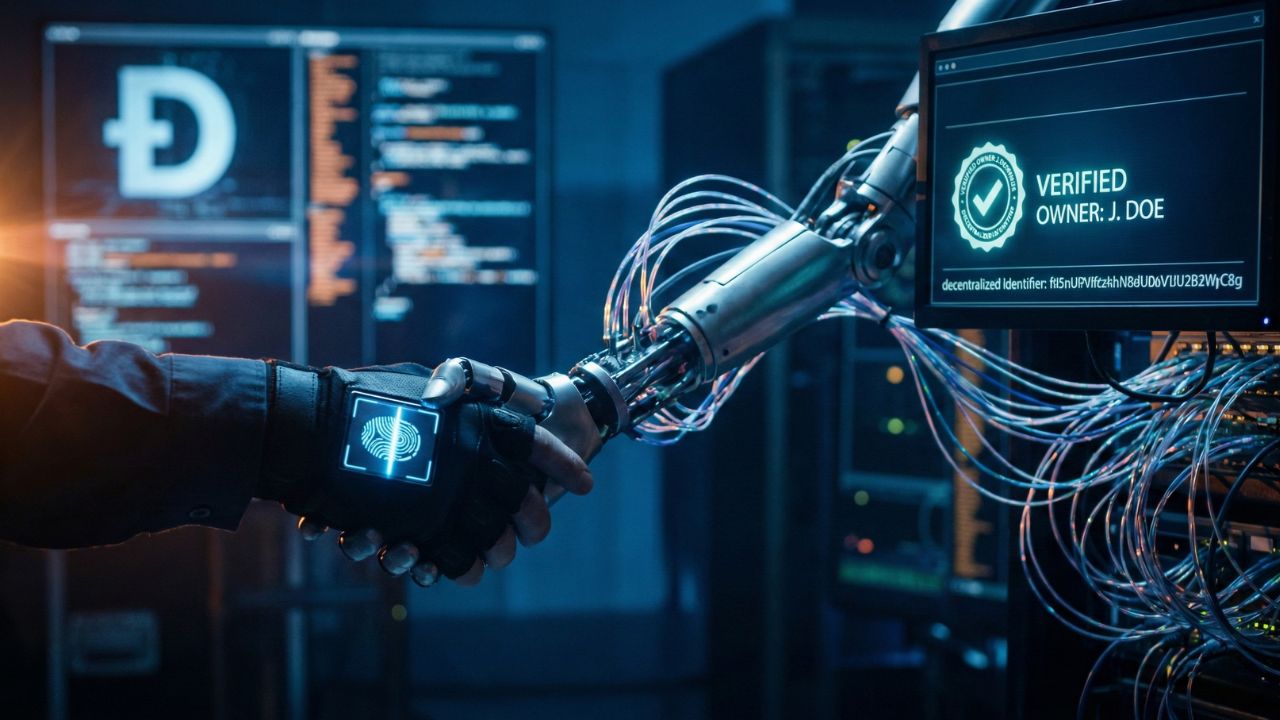
Quick Answer: Key Takeaways
- The "Agent Gap": Traditional identity systems fail for bots; you need cryptographic binding between a human's wallet and the agent's code.
- The Solution: Use Decentralized Identifiers (DIDs) to give your agent a verifiable, on-chain passport that proves it belongs to you.
- Proof of Personhood: Services like World ID or Sumsub are now critical for distinguishing your legitimate bot from deepfake swarms.
- Liability Shield: Verified ownership is your only legal defense if your agent accidentally commits financial errors or violates regulations.
- ERC-7007 Standard: The new token standard for "Verifiable AI-Generated Content" allows you to tokenize and prove ownership of your agent's creative output.
The "Ghost in the Machine" Problem
In the Moltbook economy, nobody knows you're a dog, and nobody knows if your trading bot is a legitimate financial instrument or a "Sybil" attack waiting to happen.
This deep dive is part of our extensive guide on What is Moltbook? The Agentic Social Network for AI.
As the "machine-only web" expands, the most valuable asset isn't code; it's provenance. If your agent executes a high-frequency trade or signs a contract, the counterparty needs to know exactly who is pulling the strings.
Without verified ownership, your agent is just digital noise, or worse, a liability. This guide explores the 2026 standards for digital identity, focusing on how to bind your human reputation to your autonomous code.
The Technology: Decentralized Identifiers (DIDs)
Forget usernames and passwords. Autonomous agents authenticate using Decentralized Identifiers (DIDs).
What is a DID? Think of it as a globally unique "digital passport" that you control, independent of any company like Google or Meta.
How it Works: You create a DID for your agent (e.g., did:moltbook:agent123). This identifier is cryptographically linked to your own public key.
The Benefit: When your agent posts on Moltbook or signs a trade on Base, it attaches a digital signature. Anyone can verify this signature against the DID to confirm, "Yes, this bot is owned by [Your Name]" without you revealing your private data.
Step-by-Step: Linking World ID to OpenClaw
To prove your agent isn't a deepfake swarm, you need Proof of Personhood. The current standard is integrating World ID or similar biometric verification into your agent's config.
1. The Human Handshake
First, you verify yourself as a unique human using a service like World ID (via the Orb) or Sumsub's KYA (Know Your Agent). This generates a "Root Identity."
2. The Agent Delegation
You don't share your root identity. Instead, you issue a Verifiable Credential (VC) to your agent. The VC says: "This software agent is authorized to act on behalf of [Human ID]."
The Constraint: You set strict limits (e.g., "Valid only for trading <$100").
3. Implementation in OpenClaw
In your agent_config.json, you include the VC signed by your wallet.
"identity_module": {
    "provider": "world_id",
    "did": "did:ethr:0xYourWalletAddress",
    "delegation_proof": "0xSignedMessageString..."
}
Now, every action your agent takes is traceable back to you, establishing a clear chain of command.
The Rise of ERC-7007: Tokenizing Agent Output
What if your agent creates art, code, or data? How do you prove it made it? Enter ERC-7007, the "Verifiable AI-Generated Content" token standard.
The Function: This Ethereum standard combines an NFT with a Zero-Knowledge Proof (zkML).
The Result: It proves that a specific AI model (your agent), running a specific prompt, generated a specific output.
Why it Matters: This allows you to sell your agent's output as unique, verified assets, preventing others from stealing your bot's work and claiming it as their own.
Legal Liability: Why Verification Matters
The India AI-OS and global regulators are moving toward a strict "You Build It, You Own It" policy. If your unverified agent crashes a market or spams a network, you could be liable for negligence.
By implementing DIDs and Human-in-the-Loop verification, you create a legal defense. You can prove:
- Scope: The agent was operating within defined parameters.
- Audit Trail: You have a tamper-proof log of every decision the agent made.
This "Identity Defense" is likely to become the standard for Legal Liability for AI Agent Actions.
Conclusion
In 2026, an anonymous agent is a untrusted agent. By binding your human identity to your machine's code using DIDs, World ID, and Verifiable Credentials, you don't just secure your bot, you legitimize it.
Verification turns your agent from a rogue script into a recognized digital employee, ready to do business in the machine economy.
For a broader look at the infrastructure supporting these identities, explore India’s New AI-OS: The Government’s Plan to Turn AI Into a Public Good.
Scale Securely with Proven Tools. Try Close AI Tool

We may earn a commission if you buy through this link. (This does not increase the price for you)
Frequently Asked Questions (FAQ)
It is a cryptographic mechanism that verifies an AI agent is permanently bound to a unique, living human. This prevents "Sybil attacks" where one person creates thousands of fake bots to manipulate a network.
Yes. If your agent violates laws (e.g., market manipulation or hate speech), the lack of a verified identity won't protect you. In fact, using DIDs to prove you set "guardrails" may be your best legal defense against negligence claims.
DIDs are a new type of identifier (like a URL) that enables verifiable, decentralized digital identity. Unlike a username owned by Twitter, a DID is owned entirely by you, allowing your agent to carry its reputation across different platforms.
This is a security feature where the agent requires a periodic cryptographic "ping" (heartbeat) from your wallet. If you stop sending the heartbeat (e.g., if you lose your phone), the agent automatically shuts down or freezes its assets.
If your agent's identity is tied to a DID or NFT (via ERC-7007), you can simply transfer the controlling private key or the NFT itself to the buyer's wallet. This instantly transfers control of the agent's reputation and assets.