The End of FLOPS: Why Cost Per Token Dictates AI Survival
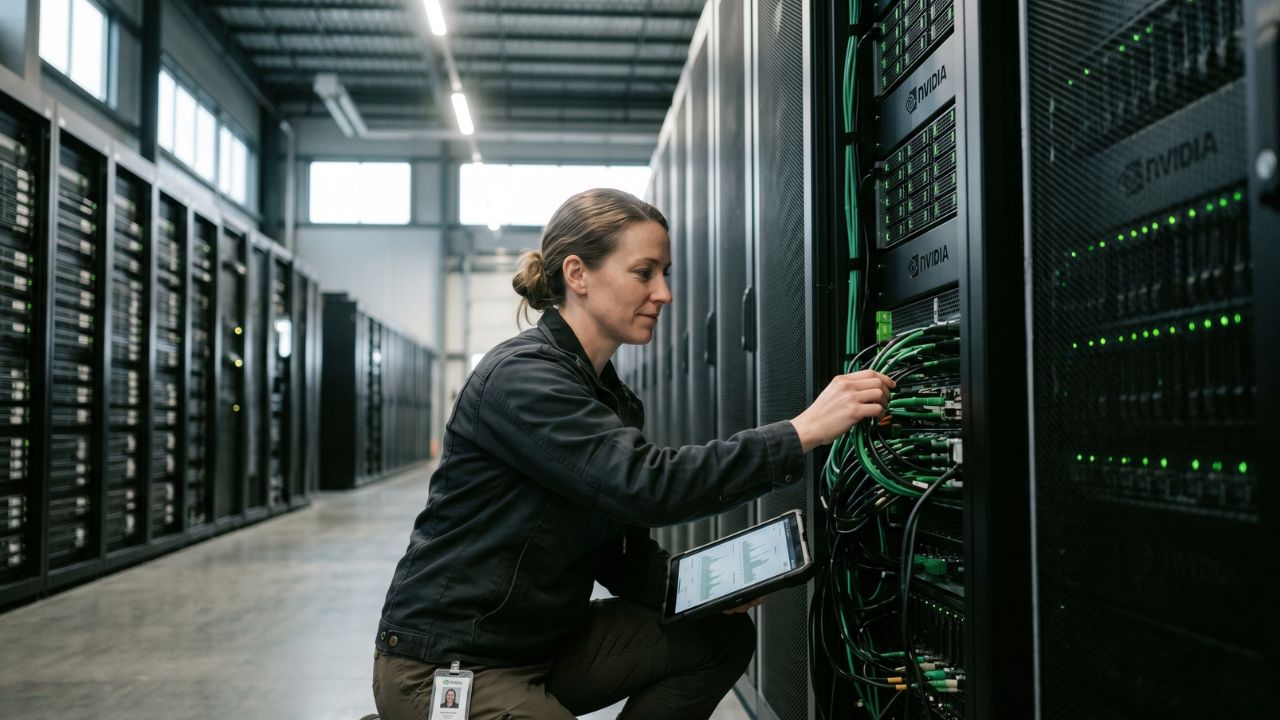
Generative and agentic AI have completely rewired the modern data center, transforming traditional storage facilities into massive "AI token factories."
According to NVIDIA's latest economic analysis, the primary workload has shifted entirely to inference.
The defining output of these facilities is now manufactured intelligence, packaged and delivered strictly in the form of raw tokens.
Despite this radical evolution, enterprise IT leaders are still evaluating Total Cost of Ownership (TCO) using outdated input metrics like peak chip specifications, hourly compute costs, or floating-point operations per second (FLOPS) per dollar.
This input-obsessed strategy creates a dangerous financial mismatch. Optimizing for theoretical computing power entirely ignores the real-world software and networking bottlenecks that dictate true corporate margins.
The only metric that determines whether an enterprise can scale profitably is the "cost per million tokens."
An analysis of the DeepSeek-R1 model exposes the devastating reality of relying purely on inputs.
While the new NVIDIA Blackwell (GB300 NVL72) costs roughly $2.65 per GPU hour, nearly double the $1.41 rate of the Hopper generation, its real-world output is staggering.
Blackwell delivers 6,000 tokens per second per GPU compared to Hopper's 90, crushing the actual cost per million tokens from $4.20 down to an unprecedented $0.12.
Architecting the Denominator: Why MoE Interconnects and FP4 Precision Define Output
For software architects and infrastructure engineers, driving down token costs requires a ruthless focus on the "inference iceberg."
This represents the massive stack of underlying technologies hidden beneath the surface of hourly GPU rates.
A cheaper cloud GPU is financially lethal if it lacks the scale-up interconnect bandwidth necessary to handle the intensive "all-to-all" traffic generated by large-scale mixture-of-experts (MoE) reasoning models.
Engineering teams must pivot their architecture to maximize delivered output per second.
This requires fully integrated hardware and software codesign, leveraging FP4 precision without sacrificing model accuracy.
If the chosen inference runtime cannot natively support speculative decoding or multi-token prediction, the entire system throttles.
That latency destroys user interactivity and instantly spikes the all-in cost per token.
Furthermore, modern API pipelines demand highly advanced serving layers to handle massive input sequence lengths.
Disaggregated serving, KV-aware routing, and KV-cache offloading are no longer optional features; they are mandatory survival tools for stateful agentic workflows.
A failure to orchestrate these algorithmic optimizations guarantees that the TCO denominator collapses, rendering the infrastructure economically unviable.
Open-source inference software engines, such as vLLM, SGLang, NVIDIA TensorRT-LLM, and Dynamo, are continuously optimizing this exact stack.
By engineering enterprise applications to natively exploit these integrated runtimes, developers ensure that token output constantly increases while the cost per token declines long after the initial hardware acquisition.
The "Inference Iceberg" Reality: Why GCCs and CTOs Must Abandon FLOPS-Based Budgets
At the C-Suite level, evaluating AI infrastructure via raw computing cost is a fast track to margin collapse.
For enterprises managing on-premises deployments, where capital commitments to land, power, and cooling are immense, optimizing the token-per-watt ratio is the only path to positive ROI.
NVIDIA Blackwell’s ability to generate 2.8 million tokens per second per megawatt, a 50x leap over Hopper's 54K, fundamentally alters corporate FinOps and revenue potential.
This architectural shift hits the Indian tech ecosystem and Global Capability Centers (GCCs) particularly hard.
As global clients aggressively transition from human-driven middleware to autonomous AI agents, GCCs must orchestrate massive, complex inference swarms.
If Indian engineering leaders continue procuring cloud compute based on hourly hardware rates, their offshore cost arbitrage will be incinerated by bloated API bills.
To prevent a 400% token compute tax from un-optimized AI agents, executives must prioritize full-stack MoE deployments.
To survive the AI scaling wars, CTOs must relentlessly interrogate cloud vendors on their exact cost per million tokens for reasoning models.
Leading infrastructure partners like CoreWeave, Nebius, Nscale, and Together AI are already deploying optimized Blackwell stacks that eliminate the "cheaper GPU" illusion.
True enterprise AI profitability relies on full-stack fungibility: ensuring the infrastructure seamlessly handles training, post-training, and high-scale inference without stranding valuable capital.
Frequently Asked Questions
What is the difference between compute cost and cost per token?
Compute cost is simply the hourly rate paid for rented cloud infrastructure or amortized on-premise hardware. Cost per token is the true all-in metric that accounts for hardware, software optimization, and real-world utilization to calculate the exact price of generating delivered intelligence.
Why are FLOPS per dollar an inaccurate metric for AI TCO?
FLOPS per dollar only measures raw, theoretical computing potential without factoring in vital architectural realities like network interconnects, KV-cache offloading, or MoE traffic handling. A system with high FLOPS can still deliver terrible real-world token throughput, resulting in massively inflated operational expenses.
How does NVIDIA Blackwell reduce the cost per million tokens?
Despite having a higher hourly compute cost than previous generations, the NVIDIA Blackwell architecture increases token throughput by 65x, reaching 6,000 tokens per second per GPU. This exponential leap in real-world output drops the cost per million tokens to $0.12, a 35x reduction compared to the Hopper architecture.