Why Anthropic’s Gigawatt Google Deal Should Change Your 2027 Cloud Strategy
Anthropic just pushed its annualized run-rate past an astonishing $30 billion, fueled by unprecedented enterprise adoption.
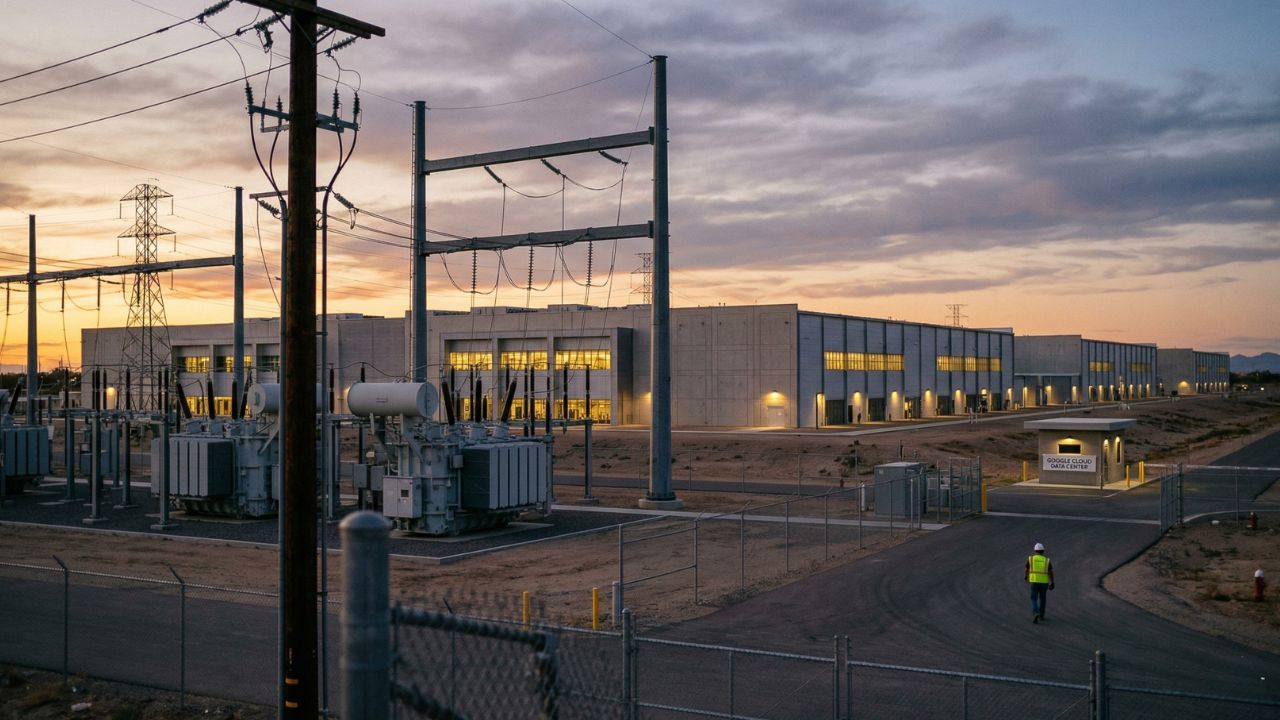
The company is immediately deploying this capital into a 3.5-gigawatt hardware expansion with Google and Broadcom, forcing engineering leaders to rapidly rethink their AI infrastructure budgets.
Quick Facts
- The 3.5-gigawatt expansion secures immense Tensor Processing Unit (TPU) capacity starting in 2027.
- Annualized run-rate revenue exploded from $9 billion in late 2025 to over $30 billion today.
- Over 1,000 corporate clients are now spending upwards of $1 million annually on Claude integrations.
- Hardware vendor diversity is the new standard, with workloads distributed across AWS Trainium, Google TPUs, and NVIDIA GPUs.
The $30 Billion Enterprise Reality
Enterprise AI has officially become a multi-million-dollar line item. Recent financial disclosures reveal that over 1,000 enterprise customers are actively spending more than $1 million a year on Claude models.
This aggressive enterprise integration has tripled Anthropic's revenue in a matter of months.
CTOs are no longer just experimenting with generative models. They are heavily relying on them for core operational tasks.
This surge in utilization creates an immediate bottleneck around physical hardware availability.
Relying on a single cloud vendor is a heavy liability.
Localized outages or chip shortages can immediately paralyze automated business functions.
Anthropic is mitigating this risk directly through intense hardware diversification.
The newly announced Anthropic's groundbreaking TPU partnership guarantees reliable access to custom silicon.
This infrastructure scale is required to maintain continuous uptime for high-volume enterprise agents.
"We are making our most significant compute commitment to date to keep pace with our unprecedented growth. This groundbreaking partnership with Google and Broadcom is a continuation of our disciplined approach to scaling infrastructure."
— Krishna Rao, Chief Financial Officer at Anthropic.
The CTO’s Multi-Cloud Mandate
This expansion fundamentally alters cloud contract negotiations. Engineering teams must stop hardcoding their tech stacks for a single provider.
Claude remains the only frontier model natively accessible across Amazon Web Services, Google Cloud, and Microsoft Azure.
This multi-cloud availability allows organizations to route API requests dynamically.
If one region experiences latency, traffic can failover to a different cloud provider entirely.
This flexibility protects enterprise API pricing by preventing forced vendor lock-in.
Offshore tech centers are pivoting to manage these sprawling infrastructure budgets.
Global Capability Centers (GCCs) are rapidly transitioning into strategic FinOps hubs.
These teams are now responsible for balancing multi-million dollar AI orchestration across diverse silicon architectures.
Why It Matters
As Anthropic locks in gigawatts of new compute capacity for 2027, enterprise leaders must act immediately.
Organizations that fail to diversify their hardware dependencies will suffer from severe scaling limitations and escalating operational costs.
CTOs need to audit their AI compute strategy today. Prioritizing intelligent multi-cloud load balancing is the only way to achieve cost-efficient, zero-downtime agentic operations at scale.
Competitors tied to inflexible systems will be outpaced by those leveraging true hardware independence.
Frequently Asked Questions
How does Anthropic's compute infrastructure impact enterprise API pricing?
By scaling multi-gigawatt TPU capacity and maintaining a hardware-agnostic approach, Anthropic prevents single-vendor lock-in, which helps stabilize API costs and offers enterprises more leverage during cloud contract negotiations.
What is the ROI of using Claude for large-scale enterprise workflows?
Over 1,000 businesses are now spending $1 million annually on Claude, indicating substantial returns in operational efficiency. The ROI comes from zero-downtime agentic operations and native multi-cloud support that eliminates single points of failure.
How should CTOs manage multi-cloud AI infrastructure budgets?
CTOs must adopt FinOps strategies that avoid hardcoding for one cloud provider. They should dynamically route workloads across AWS, Google Cloud, and Azure to optimize compute availability and avoid exorbitant localized latency costs.
How does hardware diversity reduce enterprise AI operational risks?
Running models across Google TPUs, AWS Trainium, and NVIDIA GPUs ensures that a supply chain issue or server outage at one chip manufacturer will not disrupt an enterprise's active automated workflows.
What role do GCCs play in scaling enterprise AI compute?
Global Capability Centers (GCCs) are transitioning into strategic FinOps hubs, taking responsibility for auditing multi-million dollar AI budgets, managing cross-cloud load balancing, and optimizing hardware utilization.