Best AI Agent Orchestration Frameworks 2026: Choosing the Brain for Your Business Swarm
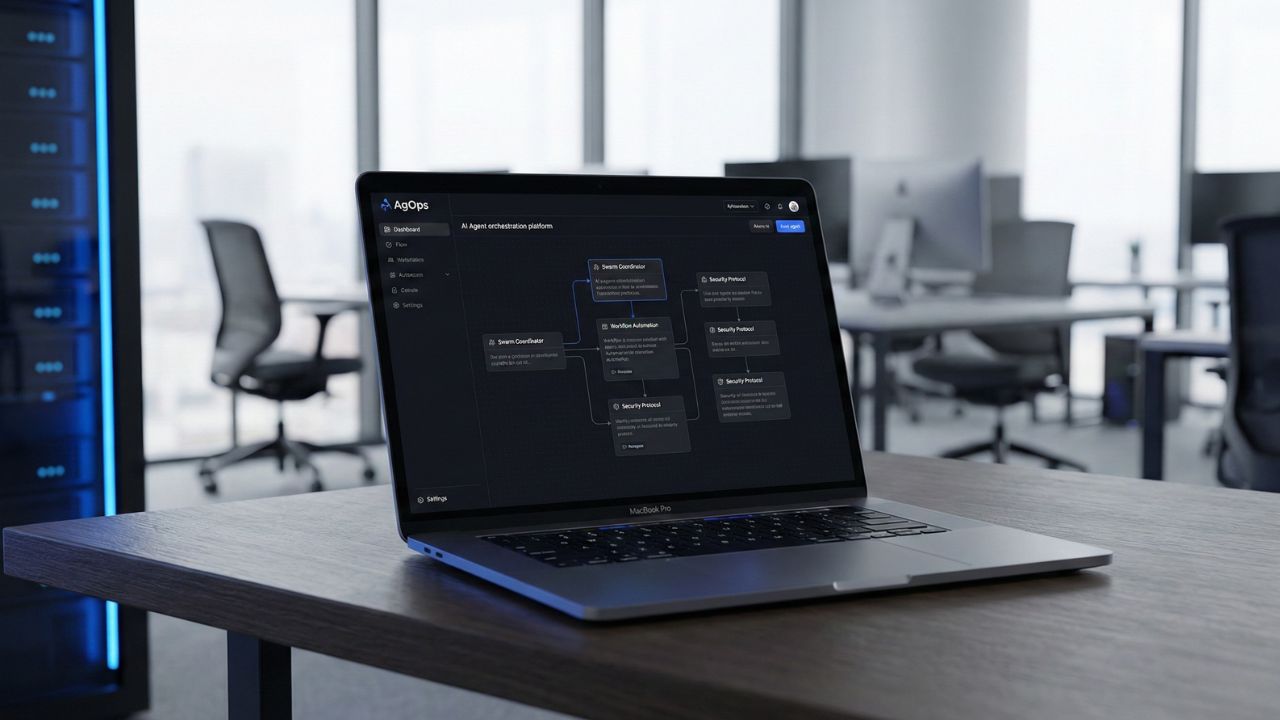
What's New in This Update
- Microsoft AutoGen Status: Confirmed shift into maintenance mode, radically altering enterprise migration plans.
- OpenClaw 2.0 Integration: Added performance metrics for the open-source challenger dominating air-gapped environments.
- Cost Benchmarks: Inserted updated 2026 API token burn-rate data comparing stateful cyclic architectures.
- MCP Tooling: Added integration considerations for the Model Context Protocol across top frameworks.
Key Takeaways
- LangGraph maintains its lead for complex, cyclic, and highly deterministic engineering workflows requiring a human-in-the-loop.
- CrewAI provides the fastest time-to-value for role-based task delegation, ideal for marketing and operations teams.
- Microsoft AutoGen has entered maintenance mode, forcing enterprise teams to rapidly evaluate alternative local-first runtimes.
- OpenClaw is emerging as the premier choice for zero-trust, air-gapped deployments where data compliance is non-negotiable.
The era of treating large language models as basic chat interfaces ended months ago. Enterprise software engineering has definitively shifted toward multi-agent systems (MAS), where autonomous bots collaborate, debate, and execute multi-step workflows without human intervention. But binding these discrete models together requires a robust control plane. Choosing the right architecture determines whether your system scales gracefully or collapses under infinite logic loops and catastrophic API bills.
Selecting the optimal framework is the most consequential architecture choice technical leaders face this year. The stakes are immense: pick the wrong orchestration layer, and you risk stranding your engineering team with brittle, stateless scripts that fail the moment edge cases arise. To navigate this, engineering teams must evaluate their options through a rigorous AI agent framework decision matrixbefore writing a single line of production code.
The Death of the Stateless API Wrapper
Early generative AI integration relied on simple, linear chains—sending a prompt, awaiting a response, and surfacing the output to a user. This stateless approach works for summarizing documents or drafting emails, but it crumbles when applied to software development, financial auditing, or dynamic supply chain routing.
Agents require memory. They need the ability to recognize when an intermediate step has failed, roll back their state, fetch a new tool, and try a different path. This concept—stateful orchestration—is the foundation of every viable 2026 framework. Instead of predicting the next word, models are prompted to predict the next action within a bounded graph of possibilities.
LangGraph: The Heavyweight Champion of Stateful Orchestration
Built by the team behind LangChain, LangGraph emerged specifically to solve the limitations of linear agent execution. By modeling agent workflows as state machines and cyclic graphs, LangGraph gives developers granular control over how information flows between nodes.
The core strength of LangGraph lies in its deterministic routing. Developers explicitly define the nodes (functions or agents) and the edges (conditional logic determining the next step). This structure natively supports cyclic execution, meaning an agent can loop back to a previous node until a specific condition—like passing a code compilation test—is met.
Furthermore, LangGraph excels at state persistence. Its built-in checkpointer allows workflows to pause execution, write the current state to a database, and await human approval before executing sensitive operations (like dropping a database table or sending a wire transfer). For teams deploying multi-agent orchestration patternsin highly regulated industries, this human-in-the-loop (HITL) capability is mandatory.
LangGraph Pros and Cons
- Pros: Unmatched control over cyclic logic; robust state management and memory; enterprise-grade human-in-the-loop features.
- Cons: Steep learning curve; verbose syntax compared to higher-level abstractions.

CrewAI: Role-Based Delegation for Enterprise Swarms
While LangGraph forces developers to think in terms of graph theory and state machines, CrewAI abstracts the complexity by mimicking human corporate structures. CrewAI operates on a role-playing paradigm where agents are assigned distinct personas, goals, and tools.
In a CrewAI setup, you define a "Manager" agent responsible for overseeing a task. The manager reviews the objective, breaks it down into sub-tasks, and delegates work to specialized "Worker" agents (e.g., a "Senior Data Analyst" bot and a "Lead Copywriter" bot). The agents communicate asynchronously, hand off context, and synthesize a final output.
This framework is exceptionally powerful for teams looking to spin up cross-functional AI squads rapidly. It requires significantly less boilerplate code than LangGraph, making it accessible to technical product managers and data scientists who want to orchestrate agents without managing complex routing logic. However, calculating the exact CrewAI vs LangGraph cost per agentis essential, as CrewAI's conversational delegation can consume massive amounts of tokens if agents begin debating each other endlessly.
CrewAI Pros and Cons
- Pros: Highly intuitive, human-like abstraction; excellent for rapid prototyping; strong community support.
- Cons: Less granular control over routing logic; higher risk of token burn in unconstrained agent conversations.
Microsoft AutoGen: The Frozen Giant
Microsoft AutoGen pioneered the conversational multi-agent paradigm, allowing developers to create highly customizable agents that solve tasks through automated dialogue. For a brief period, it was the default choice for researchers building complex, communicative swarms.
However, the landscape shifted rapidly. As Microsoft AutoGen enters maintenance mode, enterprise adoption has drastically stalled. The framework's reliance on unstructured message passing proved difficult to audit, and compliance teams struggled to trace exactly why an agent made a specific decision. Without active feature development from Microsoft to support new protocols like the Model Context Protocol (MCP), teams remaining on AutoGen face mounting technical debt.
If your infrastructure currently relies heavily on this framework, migrating to a more deterministically routed system should be a Q3 priority. A structured migrate AutoGen to LangGraphtransition plan is necessary to avoid service disruption.
OpenClaw: The Local-First Security Challenger
As regulatory scrutiny intensifies—particularly under the strict traceability mandates of the EU AI Act—a new requirement has emerged: sovereign, air-gapped agent execution. Enter OpenClaw, a framework explicitly engineered for high-security, local-first environments.
Unlike cloud-dependent frameworks, OpenClaw is designed to run deeply integrated swarms on bare-metal hardware or private virtual private clouds (VPCs). It enforces strict memory siloing, ensuring that an agent parsing financial records cannot accidentally leak context to an agent querying external web APIs. For institutions moving sensitive operations away from public LLM APIs, the OpenClaw vs AutoGen comparisonheavily favors OpenClaw's verifiable security guarantees.
Cost Economics: Managing the Swarm's Burn Rate
Deploying multi-agent systems introduces a unique financial risk: infinite looping. If two agents disagree on how to solve a sub-task, they can pass messages back and forth hundreds of times in a matter of seconds, silently racking up massive API bills.
Optimizing these frameworks requires establishing strict "max turn" limits and implementing semantic circuit breakers that halt execution if progress stalls. Our recent LangGraph vs CrewAI production benchmarksexpose the dramatic variance in how different frameworks manage token context windows. LangGraph's explicit graph edges tend to be far more token-efficient than CrewAI's conversational delegation over long-running tasks, directly impacting total cost of ownership (TCO).
Scale Securely with Proven Tools. Try Proton AI
We may earn a commission if you buy through this link. (This does not increase the price for you)
Frequently Asked Questions (FAQ)
The ideal framework depends entirely on your enterprise use case. LangGraph is preferred for highly deterministic, stateful logic, while CrewAI excels in role-based delegation, and OpenClaw leads in local, high-security tasks.
Microsoft AutoGen treats agents as conversational entities that solve problems through simulated dialogue, but it recently entered maintenance mode. CrewAI is structured around specific roles, allowing a top-level manager bot to strictly delegate distinct tasks to specialized worker bots.
Yes, for complex multi-agent systems. While LangChain is great for simple, linear chains, LangGraph handles cyclic, stateful orchestration, allowing agents to loop back, correct errors, and maintain memory over long periods.
Choose stateful orchestration for workflows where agents must remember prior actions and context. Stateless orchestration is only suitable for simple, single-turn tasks like basic API data retrieval.
Hierarchical Swarm architectures, governed by Directed Acyclic Graphs (DAGs) or strongly typed state machines, scale best. They prevent endless conversational loops by enforcing clear chains of command across the agent mesh.
Final Verdict: Selecting Your Architecture
The transition to agentic workflows is no longer experimental; it is an operational imperative. Building on obsolete wrappers or frozen codebases will guarantee a costly refactor within the year. Evaluate your team's engineering capacity: if you possess strong Python skills and require absolute auditability, LangGraph provides the necessary rigor. If your goal is rapid deployment of specialized tasks across non-engineering departments, CrewAI delivers immediate value.
Before committing your cloud budget, prototype a single, high-value process across your top two framework choices. Measure the latency, audit the token burn, and stress-test the error handling. The brain you choose for your business swarm today will dictate your scaling velocity for the next decade.
Sources and References
- LangChain Documentation on Stateful Graph Execution (2026). Review LangGraph Documentation.
- CrewAI Enterprise Case Studies and Role Architecture. Review CrewAI Docs.
- Microsoft AutoGen Repository Status Updates (May 2026).