RBI Authentication Mandate April 2026: Is Your Fintech Legally Compliant or Just "Safe-ish"?
Key Takeaways
- The End of Static OTPs: Discover why traditional SMS OTPs are failing and how to implement the "dynamic factors" now required for legal compliance.
- Zero Liability Shift: Learn how the new rules protect consumers and shift the financial burden of AI-driven fraud directly onto fintech platforms.
- Mandatory Transparency: Understand why algorithmic transparency is now a hard requirement for banking auditors evaluating risk decision engines.
- 72-Hour Breach Protocol: Master the strict timelines and frameworks required for reporting AI-driven data breaches to regulatory bodies.
- Graded Liability Systems: Explore how to structure internal liability frameworks to manage the autonomous actions of financial AI agents.
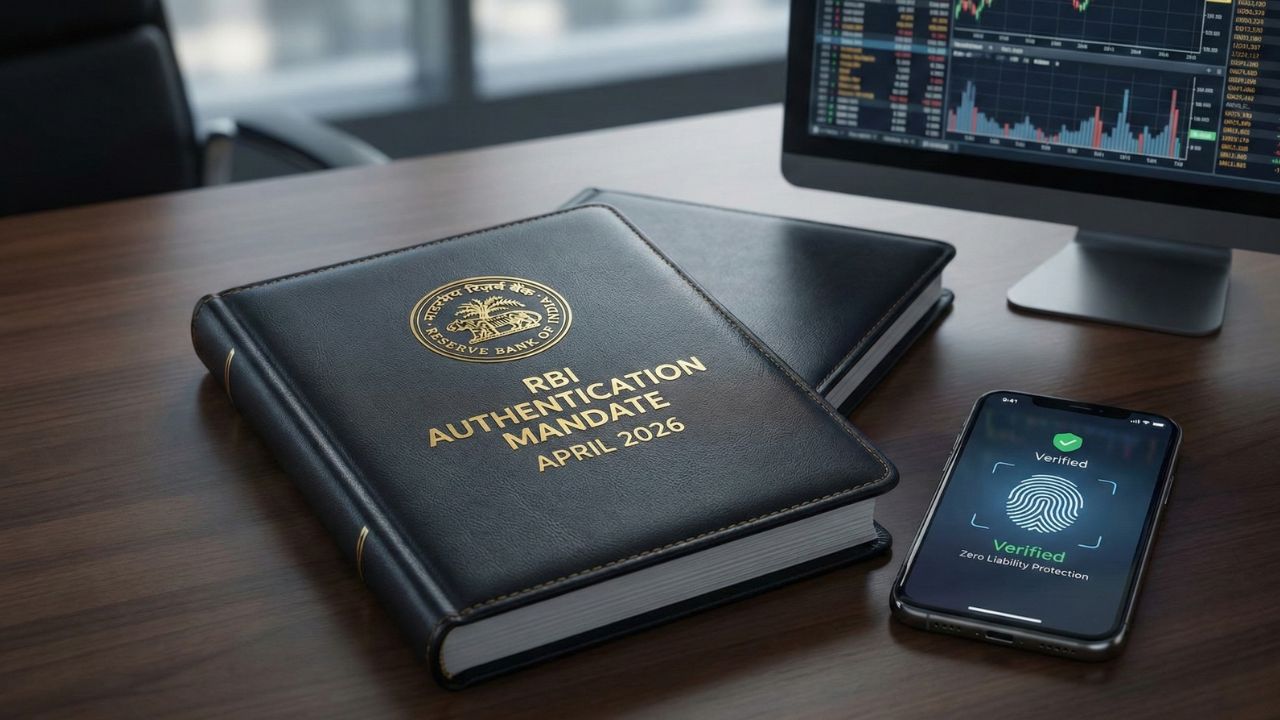
The RBI authentication mandate April 2026 is not just an update; it is a fundamental rewrite of India's digital payment security laws.
If your financial application still relies on static, single-layer verification, you are operating on borrowed time.
Prepare for the regulatory shift by discovering how to move beyond SMS OTPs and implement the "dynamic factors" required for legal compliance.
This deep dive is part of our extensive guide on Agentic AI and Vernacular Banking in Indian Finance 2026.
Moving Beyond SMS OTPs for Two-Factor Authentication
For years, the SMS OTP was the gold standard for verifying digital transactions.
Today, it is the weakest link in the financial chain.
Cybercriminals effortlessly bypass OTPs using SIM swapping, malware, and sophisticated social engineering tactics.
To comply with the new mandates, fintechs must adopt multi-layered, dynamic authentication that verifies the user's actual presence.
The Shift to Dynamic Factors
The Reserve Bank of India now expects platforms to utilize contextual, real-time data to verify transactions.
This means integrating device-bound tokens and assessing the environment in which the transaction is taking place.
For a deeper look into how these contextual signals work, read our analysis on Behavioral Biometrics for UPI: Why "How You Type" is More Secure Than Your PIN.
Zero Liability Rules and Graded Liability for AI
The 2026 framework introduces aggressive consumer protection laws, specifically regarding unauthorized digital transactions.
The "Zero Liability" rules dictate that borrowers bear no financial loss if a breach occurs due to a systemic failure or third-party AI vulnerability.
If your AI risk engine fails to flag an obvious anomaly, your fintech absorbs the entire cost of the fraud.
Structuring Graded Liability Systems
Because AI agents now execute transactions autonomously, banks must structure a "Graded Liability" system.
This system clearly defines financial responsibility between the tech provider, the banking institution, and the end-user based on where the security failure occurred.
If a user shares their credentials, they bear limited liability; if the AI's algorithm is bypassed, the institution pays.
Algorithmic Transparency for Banking Auditors
Regulators are no longer accepting "black box" AI models that cannot explain their trading or risk-scoring decisions.
Algorithmic transparency is mandatory. You must be able to prove exactly why an AI agent approved a high-risk loan or blocked a legitimate payment.
To achieve this level of transparency, many institutions are adopting decentralized ledgers, which we cover extensively in The Immutable Audit: Using Blockchain to Prove Your AI Isn’t the One Stealing.
The 72-Hour Breach Reporting Protocol
When a security failure happens, the clock starts ticking immediately.
Under the new regulatory framework, any AI-driven data breach or systemic cyber incident must be reported within exactly 72 hours.
Failure to meet this deadline, or failure to pass the subsequent RBI digital security audit, results in crippling financial penalties and potential license suspension.
Conclusion
The era of operating in a regulatory gray area is officially over.
The RBI authentication mandate April 2026 forces fintechs to evolve from being just "safe-ish" to being legally, cryptographically, and behaviorally secure.
By embracing dynamic factors, ensuring algorithmic transparency, and preparing for strict liability shifts, your institution can turn compliance into a competitive advantage.
Do not wait for an auditor to find your vulnerabilities; upgrade your AI risk decision engines today.
Scale Securely with Proven Tools. Try Pangram Labs

We may earn a commission if you buy through this link. (This does not increase the price for you)
Frequently Asked Questions (FAQs)
It is a comprehensive set of regulatory directives requiring financial institutions to upgrade from static security measures to dynamic, multi-factor authentication to combat advanced digital fraud.
Fintechs must integrate device-bound cryptographic tokens, behavioral biometrics, and contextual risk-decision engines to verify user identity without relying on easily intercepted SMS messages.
These rules ensure that a consumer suffers zero financial loss if an unauthorized transaction occurs due to a security flaw, AI failure, or breach on the bank's or platform's end.
Yes, the mandate increasingly requires dynamic factors, such as location checks, device health, and real-time behavioral analysis, especially for high-value or anomalous transactions.
You must deploy risk decision engines that analyze transaction metadata in real-time, maintain detailed decision logs, and adhere to frameworks like NIST SP 800-218 for secure software development.