AI for HR: The 5 Ways Your Workforce Will Change Forever
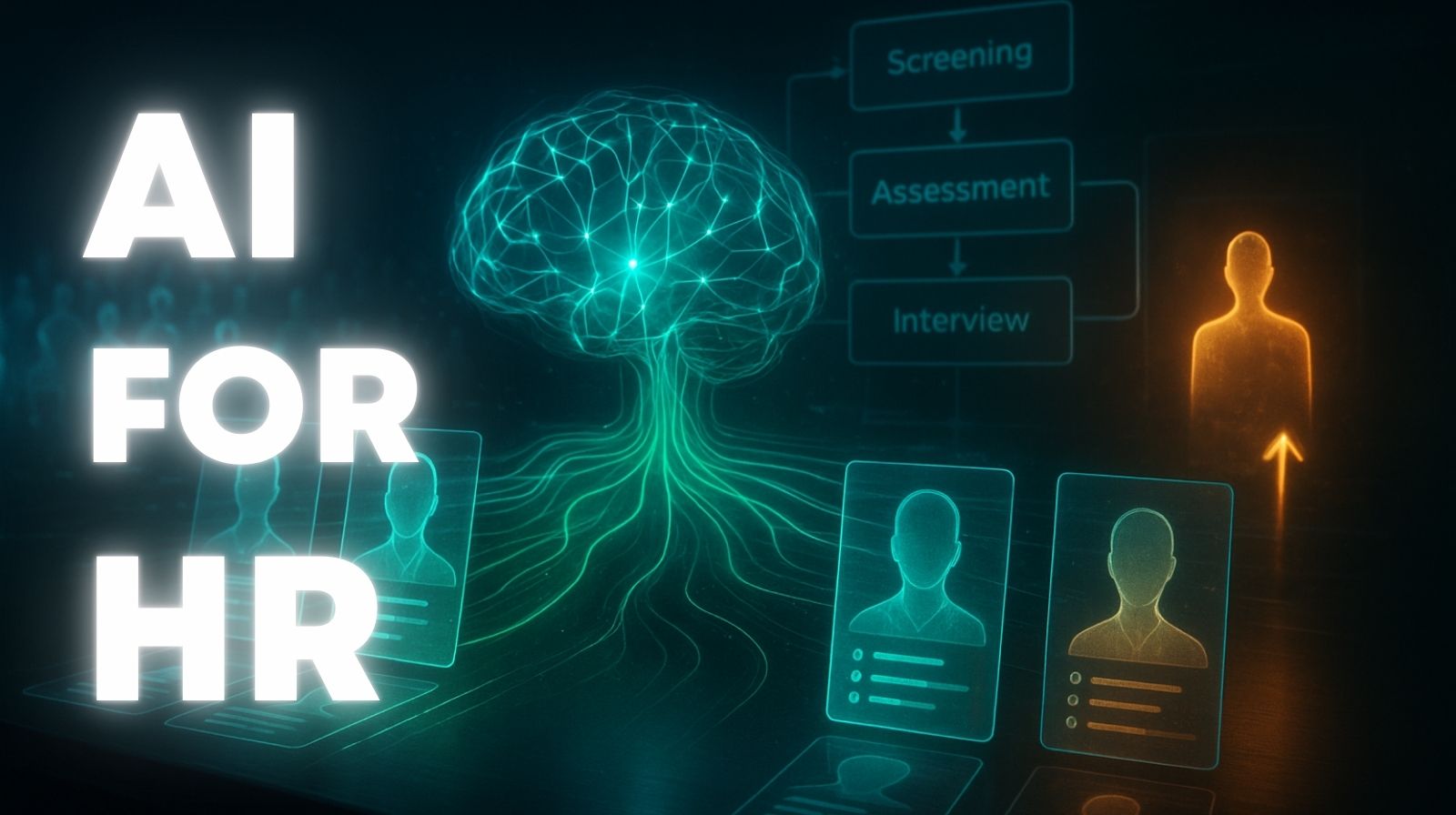
The most profound impact of AI for Business today lies not in replacing human roles, but in fundamentally transforming the Human Resources Technology function itself. AI in HR is turning what was once a reactive, admin-heavy department into a strategic, data-driven team that helps organizations get the absolute best out of their people.
This profound AI Transformation means shifting the core focus from transactional management—think paperwork and endless emails—to a system based on predictive analytics, personalized employee development, and proactive retention strategies. This change marks the true dawn of the Future of Work.
1. Predictive People Management: Mastering Employee Retention
The core of modern AI in HR is the ability to predict the Future of Work and manage change proactively. Instead of reacting to resignations, HR leaders can now anticipate and address them.
Predicting Employee Churn Before It Happens
HR is now leveraging sophisticated AI for Workforce analysis to stabilize its most valuable asset: its people.
- Data Analysis: Predictive Employee Churn models analyze vast amounts of data points, including compensation, time since last promotion, departmental changes, and manager feedback scores.
- Risk Calculation: The system calculates the risk that any individual employee will resign.
- Proactive Intervention: This crucial insight allows managers to take proactive interventions, such as initiating personalized career discussions, offering mentorship, or performing compensation adjustments, before a high-value employee even thinks about quitting.
Expert Insight: We’ve moved from asking 'Why did they leave?' to asking 'What can we do to make them stay?' This predictive power is the single greatest Return on Investment (ROI) for AI for Business in the HR space.
2. Revolutionizing Talent Acquisition with Automation
The race for talent is won or lost in the efficiency of the hiring funnel. Here, AI for Workforce Automation is eliminating repetitive tasks, allowing recruiters to focus on the human element: the candidate experience.
Making Hiring Easier and Faster
AI is the engine driving high-volume recruitment, making the process faster, fairer, and cheaper.
- Automated Sourcing and Screening: AI systems can instantaneously review millions of resumes, matching qualifications and cultural fit against job requirements. This eliminates the manual sifting process that previously consumed up to 30% of a recruiter’s time.
- Recruitment Process Automation (RPA): RPA handles tasks like scheduling interviews, sending follow-up communications, and managing background checks, drastically reducing the time-to-hire metric.
3. Closing the Skills Gap with AI-Powered L&D
The skills required by your workforce are constantly changing. Generic training modules are obsolete. AI in HR enables continuous, personalized development that keeps pace with the AI Transformation.
AI-Powered Learning & Development (L&D) tools assess each employee's current skills against the future needs of the business, creating a real-time skills gap analysis. Based on this gap, the AI dynamically generates personalized learning paths, ensuring the workforce is always acquiring high-value, future-ready skills.
For example, if your Q3 strategy requires a specific cloud computing certification across your engineering team, the AI will prioritize that module for all relevant employees who currently lack it, ensuring no delays.
4. Establishing Trust: The Imperative of AI Governance
As Human Resources Technology becomes more powerful, the risks associated with data and fairness also amplify. Responsible adoption of AI for Business demands a rigorous framework.
The Challenge of Algorithmic Bias
The single biggest non-technical risk in using AI in HR systems is Algorithmic Bias. If the historical data used to train the AI model reflects past human biases, for instance, a historical preference for hiring candidates from a specific demographic or background, the AI will learn and perpetuate that bias at massive scale. This risk is particularly acute in areas like Automated Sourcing and Screening, where biased systems could unintentionally filter out qualified, diverse candidates.
Reducing Risk with an AI Governance Framework
To navigate these challenges ethically, a robust AI Governance Framework is non-negotiable. It establishes the rules and processes for responsible AI deployment in HR.
AI Ethics in HR is not just a compliance checkbox; it is the foundation of employee trust. For a complete understanding of how to build and enforce your framework, read our full guide: AI Governance and Ethics: Building Trust and Compliance.
- Definition: The AI Governance Framework establishes the rules and processes for responsible AI deployment in HR.
- Purpose: It ensures that all Human Resources Technology systems are Fair (mitigating bias), Transparent (explaining decisions), and Compliant (adhering to data privacy and employment laws).
AI Ethics in HR is not just a compliance checkbox; it is the foundation of employee trust. A system that scales without a governance framework will ultimately fail due to internal and external scrutiny.
The establishment of transparent, fair, and compliant AI systems is often overseen by the legal and risk management teams who define the acceptable boundaries for automated decisions. For a detailed breakdown of how AI impacts legal drafting, contract compliance, and regulatory enforcement, read our guide on AI in Legal Practice: From Days to Minutes.
5. Strategic Optimal Workforce Planning
Beyond managing today's employees, AI for Workforce is providing the predictive insights necessary for true Optimal Workforce Planning.
By analyzing vast external data, including global economic trends, rates of AI for Workforce Automation, and the talent market supply, AI simulations inform long-term organizational strategy. This allows leaders to make smart, forward-looking decisions on everything from facility location to major hiring drives, completing the full circle of the AI Transformation in the enterprise.
Conclusion
AI in HR isn’t here to replace people, it’s here to empower them. By handling data-heavy tasks, AI allows HR professionals to focus on strategic, human-centered work. At the same time, investing in reskilling and rethinking how people and processes work together helps organizations work smarter.
This combination of empowered people and smarter systems unlocks lasting value from AI. In short, thriving in the AI era means putting people and AI to work together.

Frequently Asked Questions (FAQs)
No. AI is replacing tasks, not jobs. While AI automates repetitive administrative and data analysis tasks, it simultaneously drives a significant increase in demand for roles requiring strategic human skills like critical thinking, empathy, and complex problem-solving. HR professionals will evolve into strategic Human Capital Consultants who use AI insights to drive employee engagement and retention.
AI enables Predictive Employee Churn models that analyze an employee's data (performance, compensation, internal movement, tenure) to calculate their risk of leaving. This allows HR and management to perform targeted, proactive interventions, such as offering a new career path, mentorship, or compensation review, before a valued employee begins to look for a new job.
The most significant non-technical risk is Algorithmic Bias. If the data used to train the AI model reflects historical human biases (e.g., favouring one gender or background over another), the AI will learn and perpetuate that bias at scale. An AI Governance Framework with continuous auditing and human oversight is essential to mitigate this risk.
An AI Governance Framework is critical for establishing rules and processes for responsible AI deployment. In HR, it ensures AI systems are Fair (mitigating bias), Transparent (explaining decisions), and Compliant (adhering to data privacy and employment laws). It provides the necessary structure to build trust and scale AI ethically.