Agility Digit: How GXO Cut Warehouse Costs by 30% in 2026
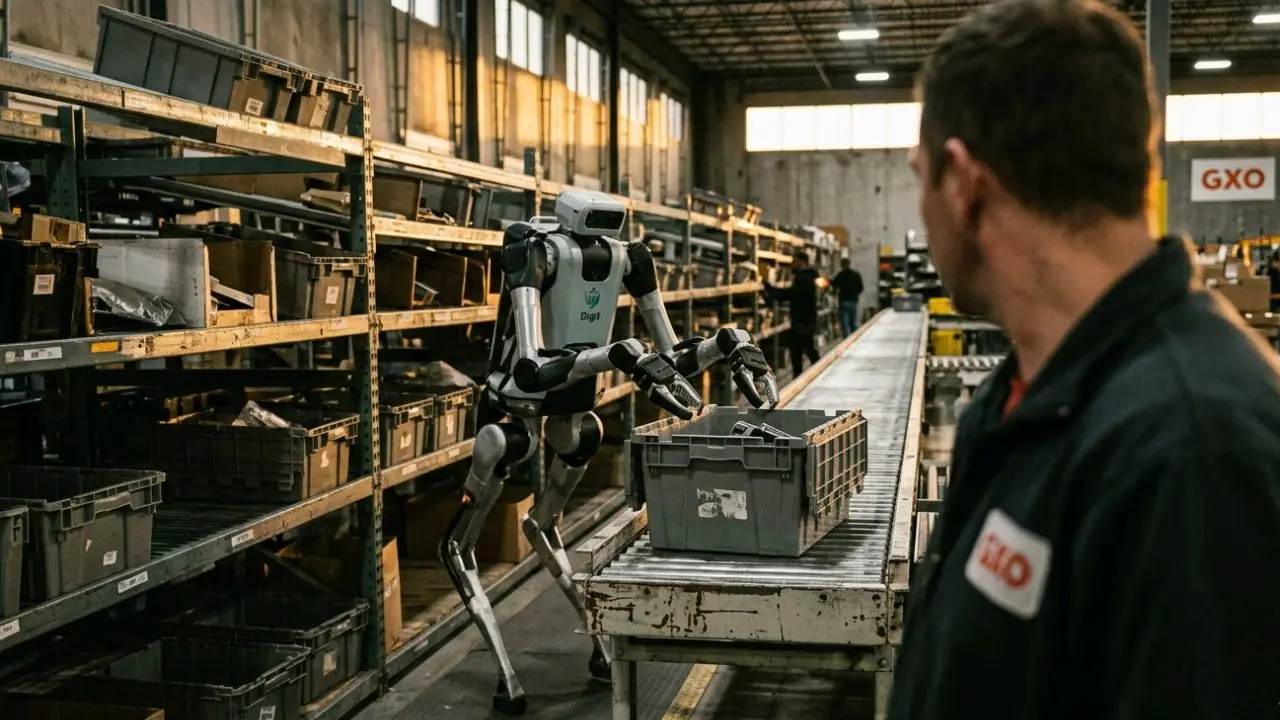
- Agility Digit is actively deployed in real-world commercial logistics for GXO and Toyota in 2026.
- GXO achieved a 30% cost reduction by targeting the specific, repetitive "tote-to-conveyor" workflow.
- The Robot-as-a-Service (RaaS) pricing model eliminates heavy initial capital expenditure.
- Digit's specialized design outperforms general-purpose humanoids like Figure 03 in structured warehouse tasks.
If you have been following our master 2026 procurement guide, you know that general-purpose AI is struggling on unstructured factory floors. However, in the highly controlled, structured environment of logistics, targeted humanoid automation is thriving.
This analysis breaks down the exact operational economics of the Agility Robotics Digit deployment in 2026.
The Math Behind GXO's 30% Warehouse Cost Reduction
When auditing commercial robotics, you must look past the promotional videos and examine the unit economics. GXO Logistics integrated the Digit humanoid robot specifically to target the highest-turnover, lowest-margin workflows in their fulfillment centers.
The 30% cost reduction isn't a facility-wide metric; it is isolated to the "tote-to-conveyor" workflow. Human workers experience massive ergonomic fatigue moving empty and loaded plastic totes for eight hours. By offloading this exact task to Digit, GXO eliminated fatigue-related downtime, reduced worker compensation claims, and maintained a continuous, unbroken throughput rate that human shifts could not sustain.
Agility Digit vs Figure 03: The Workflow Test
A common procurement question is how Agility Digit compares to Figure 03 in warehousing. In a direct warehouse workflow test, Digit wins in logistics while Figure 03 wins in manufacturing.
Digit's unique, bird-like leg structure allows it to reach lower and lift with better mechanical advantage in tight warehouse aisles. While Figure 03 relies on highly complex neural network processing for varying tasks, Digit dominates in highly structured, repetitive pick-and-place loops.
Toyota's Integration: Beyond Traditional Manufacturing
While GXO focuses strictly on logistics, Toyota's Digit pilot bridges the gap between warehousing and the production line. Their 2026 pivot to Agility Digit highlights a need for mobile, bipedal automation. Toyota is utilizing Digit to transport standardized parts boxes from warehouse storage directly to the active automotive assembly line.
Optimize Your AI Workflow. Try Survey Monkey AI

We may earn a commission if you buy through this link. (This does not increase the price for you)
Frequently Asked Questions (FAQ)
1. Where is Agility Robotics Digit deployed commercially in 2026?
Agility Robotics Digit is actively deployed in commercial environments at major enterprise facilities, most notably with GXO Logistics in massive fulfillment centers and within Toyota's advanced manufacturing supply chains.
2. How does GXO use the Digit humanoid robot?
GXO Logistics primarily uses the Digit humanoid robot for highly repetitive warehouse tasks, specifically focusing on moving standardized plastic totes from storage racks to active conveyor belts, reducing human ergonomic strain.
3. What is the Digit robot RaaS hourly rate?
Agility Robotics utilizes a Robot-as-a-Service (RaaS) pricing model. While exact enterprise contract rates are confidential, industry estimates place the operational cost highly competitive with fully loaded human logistics labor rates, typically between $20 to $30 per hour.