The Sentient Home: AI Security, Energy & Insurance
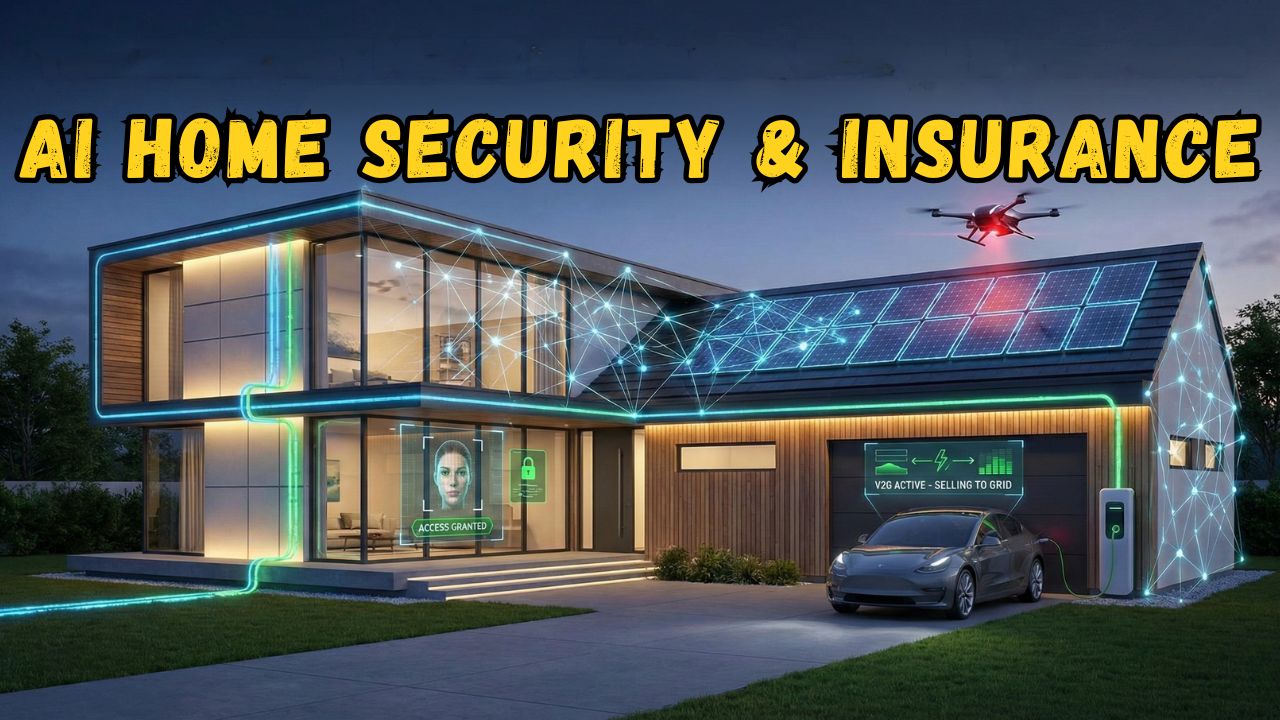
Beyond "Smart": The Rise of the Sentient Home
For the last ten years, we have been sold a lie. We were told that buying a Wi-Fi lightbulb made our homes "Smart." But a home you have to yell commands at isn't smart, it's just obedient. If you leave the house and forget to lock the door, a "smart" home just lets you get robbed.
In 2026, we are upgrading to Sentient Home Automation. A sentient home doesn't wait for orders. It thinks. It uses "Edge AI" (processing data locally on the device, not the cloud) to analyze thousands of data points every second.
It knows the difference between the vibration of a delivery truck and the vibration of a window breaking. It is a transition from a home that reacts to a home that protects. This guide explores the three pillars of this revolution: Proactive Security, Profitable Energy, and the massive financial incentives (Insurance & Solar) driving it.
Explore The Physical AI Revolution Hub
1. AI Security: The Fortress That Knows You
The days of fumbling for keys, or even using a fingerprint scanner, are over. The standard for 2026 is Face Recognition Door Lock technology, but it’s far more advanced than what is on your phone.
Biometric Entry: Companies like Doma and RecFaces have integrated biometrics directly into door frames. These use "Liveness Detection" (3D depth sensing) so they cannot be fooled by a photograph or a mask. As you walk up with groceries in both hands, the door unlocks automatically.
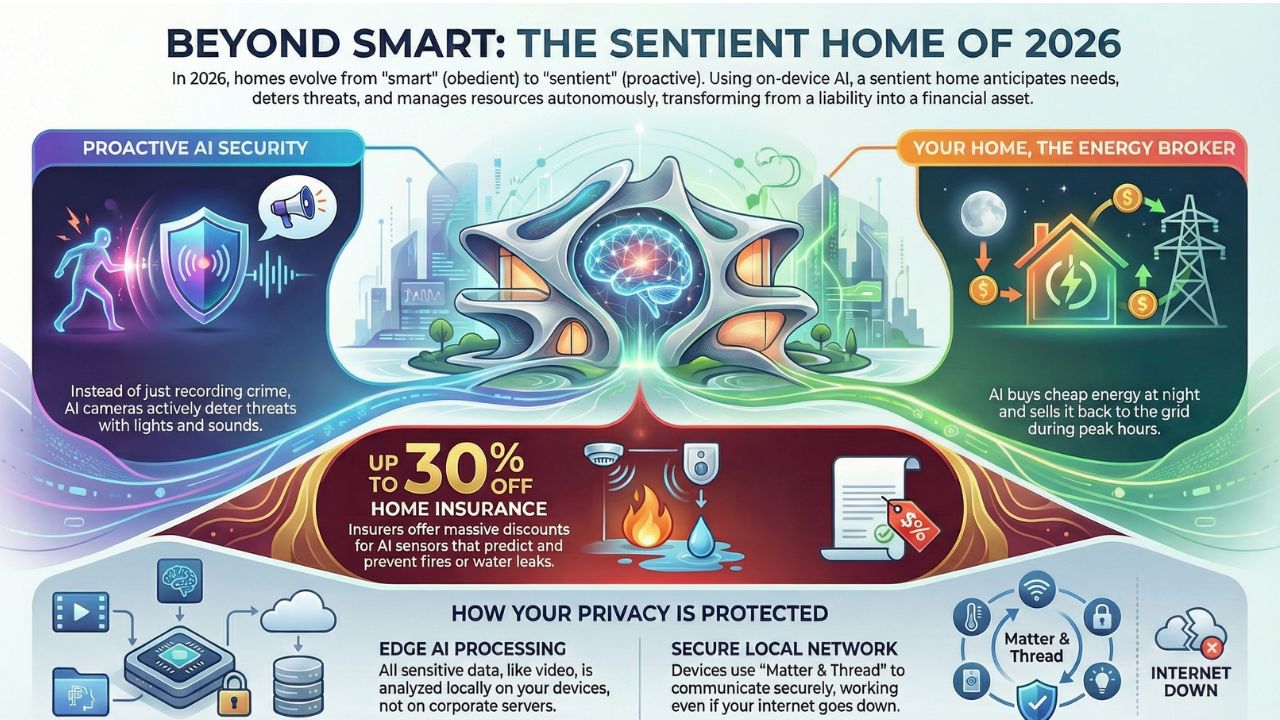
Active Deterrence: We are seeing the rise of AI Surveillance for Home Safety that stops crime before it happens. Old cameras just recorded evidence for the police. New systems, like those from Guardian Protection, identify "loitering behavior." If a stranger stand by your window at 3 AM, the camera flashes red, plays a warning sound, and turns on the floodlights instantly.
Drone Guardians: High-end estates are now deploying "Home Drone" systems (like Ring’s Always Home Cam) that deploy automatically when a sensor is tripped to fly to the location and stream video to your phone.
2. The Energy Broker: Lower Electricity Bill with AI
This is where the High CPC "Solar" keywords come into play. Your home is now a trader. In 2026, AI Energy Management Systems for Home (like Schneider Electric’s Home Pulse) do more than just turn down the AC. They act as a "Virtual Power Plant."
- Arbitrage (Buy Low, Sell High): Your AI knows that electricity is expensive at 6 PM and cheap at 2 AM. It charges your Tesla Powerwall or EV battery at night when rates are low.
- V2G (Vehicle to Grid): During peak hours (when the grid is stressed and prices spike), your home automatically sells the energy stored in your car back to the electric company. This automated home climate control and energy trading can effectively zero out your bill.
- Phantom Load Killing: The AI identifies devices that are sucking power while in standby (game consoles, old TVs) and cuts power to those specific outlets when no one is in the room.
3. The "Self-Healing" Home: Insurance & Maintenance
The most lucrative shift in 2026 is how insurance companies view AI. They are moving from "Repair & Replace" to "Predict & Prevent." Major insurers are now offering massive Smart Home Insurance Discounts, sometimes up to 20-30%, for homes equipped with specific Predictive Home Maintenance sensors.
Water: The $10,000 Saver: Water damage is the #1 home insurance claim. Smart water valves (like Moen Flo) monitor the pressure in your pipes 24/7. If they detect a micro-leak (even one drop per minute behind a wall), they alert you. If they detect a burst pipe, they shut off the main water supply in 3 seconds.
Fire & Electrical: AI sensors now "listen" to your electrical wires. They can detect "arc faults" (sparking inside the wall) weeks before a fire starts, alerting you to call an electrician.
4. The Privacy Shield: IoT Security Risks in 2026
With cameras and microphones in every room, privacy is the biggest concern. A truly Sentient Home must be secure from hackers.
Edge Processing: The best systems in 2026 (like Apple HomeKit Secure Video or Unifi Protect) process video locally inside your home. The footage never goes to a corporate server. The AI analysis happens on the chip in the camera.
Matter & Thread: These are the communication standards of 2026. They allow your devices to talk to each other securely without needing the internet. If your Wi-Fi goes down, your Sentient Home Automation still works perfectly because it runs on its own local mesh network.
Conclusion: The House That Pays You Back
The Sentient Home of 2026 is an asset, not a liability. By combining Best AI Home Security Systems 2026 with intelligent energy management, your home becomes safer, cheaper to run, and harder to break into. The question isn't "Can I afford these upgrades?" It is "Can I afford not to have them?"
Frequently Asked Questions (FAQ)
Top contenders include systems from Guardian Protection (known for proactive video surveillance) and biometric solutions like Doma for keyless entry. Look for systems that offer "AI Deterrence" to prevent crimes before they happen.
AI Energy Management systems monitor real-time grid pricing. They automatically switch high-energy appliances (like EV chargers or HVAC) to run only during "off-peak" hours when electricity is cheapest, potentially lowering bills by 30%.
Yes. Insurers like Allstate, Chubb, and Hippo offer significant discounts (often 5-20%) for homes with proactive sensors like water leak detectors and smart security systems because they reduce the risk of catastrophic payouts.
Modern systems use 3D depth sensing (like FaceID) which cannot be fooled by photos or masks. However, for maximum security, it is recommended to keep biometric data stored locally on the device rather than in the cloud to prevent hacking.
The main risk is cloud-based processing where video feeds are sent to external servers. To mitigate this, choose devices that support Edge AI (local processing) and the Matter smart home standard, which creates a secure, local network for your devices.