Unitree H2 vs Optimus: The $29,900 Spec Sheet Tesla Hides
- Immediate Availability: Unlike its competitors, the Unitree H2 is currently shipping at a fixed price of $29,900.
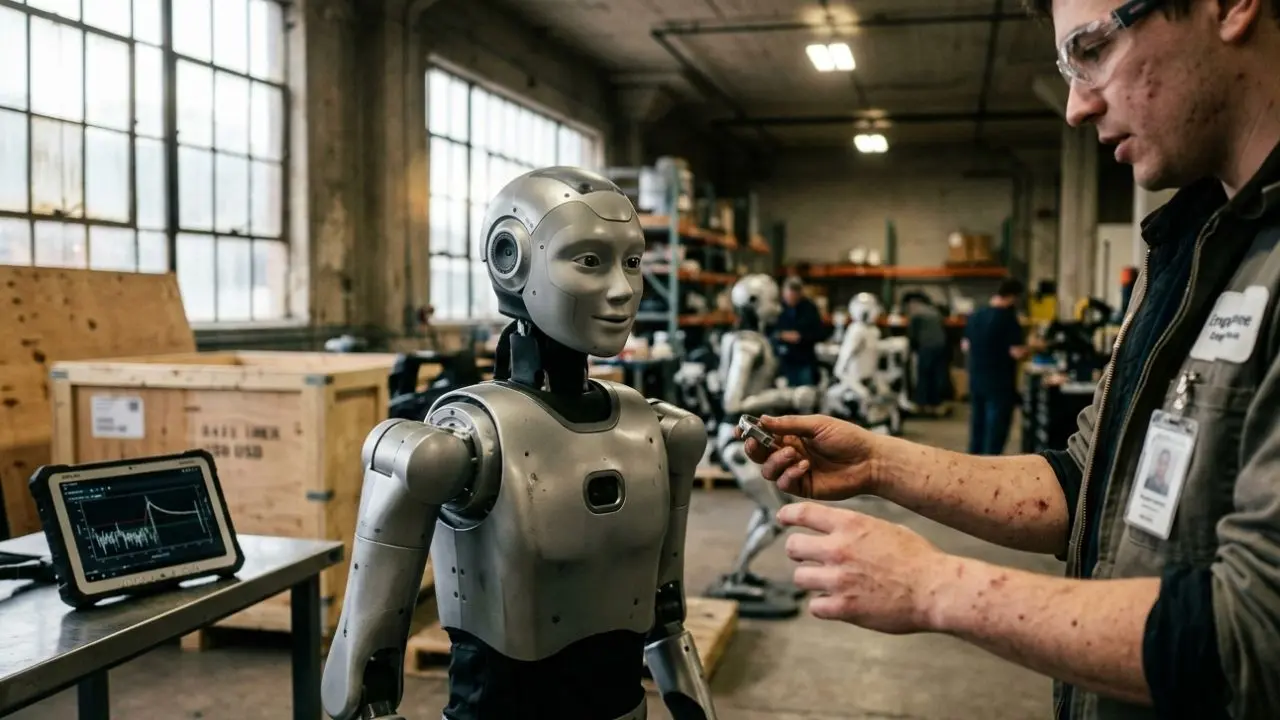
- Bionic Interaction: The H2 features a unique bionic face for improved human-robot interaction (HRI), a spec Tesla has not yet integrated.
- Payload Dominance: The H2 is engineered for industrial heavy-lifting, often exceeding the rumored specs of the Gen 3.
- Open Ecosystem: Unitree maintains a more open-access programming environment compared to Tesla’s closed-loop proprietary AI.
Unitree H2 ships now at $29,900 with a bionic face — 5x under projected Optimus Gen 3 pricing. While the West waits for a production-ready Tesla bot, the reality of the 2026 market is that functional, high-payload humanoids are already crossing international borders.
In our master 2026 Humanoid Robot Audit, we examined the supply chain dominance shifts that allow for such aggressive disruption.
The Unitree H2 isn't just a prototype; it's a strategic move in the ongoing battle for the best humanoid robots that currently populates the global market.
The $29,900 Reality: Unitree H2 Pricing vs. Tesla Speculation
The Unitree H2 price of $29,900 is a direct challenge to the Western "luxury" robotics model.
While Tesla targets a sub-$20,000 price point for mass production years from now, the current procurement reality is that the H2 is the only high-power option available for immediate purchase at this scale.
This pricing gap represents more than just a discount; it is a fundamental shift in Chinese humanoid robot exports.
By leveraging local manufacturing clusters, Unitree has achieved a cost-to-spec ratio that Tesla's Fremont facility is still struggling to match.
Bionic Face vs. Minimalist Visor: The HRI Debate
One of the most striking unitree h2 bionic face specs is the inclusion of emotive capabilities.
While Optimus Gen 3 maintains a minimalist, featureless glass visor, the H2 uses a bionic face to bridge the gap in human-robot collaboration.
In commercial settings, specifically in retail or hospitality, this emotive feedback is a critical differentiator.
It allows for intuitive status signaling that a blank visor cannot replicate, making it a frontrunner for bionic face robot applications in 2026.
Unitree H2 vs. Unitree G1: Choosing Your Tier
Buyers often confuse the heavy-duty H2 with the consumer-grade G1.
While the Unitree G1 vs H2 debate is common, they serve distinct markets.
The G1 is a viral "Rizzbot" aimed at hobbyists, while the H2 is a high-torque industrial beast.
Technical Breakdown: What Tesla Won't Acknowledge
The unitree humanoid robot 2026 spec sheet highlights several hardware advantages that remain "unconfirmed" or "delayed" in the Tesla ecosystem.
- Degrees of Freedom (DoF): The H2 boasts a higher DoF count in the lower limbs, optimizing it for uneven terrain.
- Power Density: Utilizing proprietary high-torque motors, the H2 delivers superior payload-to-weight ratios.
- Sensor Integration: Unlike Tesla's "Vision Only" approach, Unitree utilizes a hybrid LiDAR and depth-camera stack for redundant safety in industrial environments.
Conclusion: The Buyer's Choice
If you need a humanoid robot for a live production line in 2026, the Unitree H2 is a tangible reality. While the Tesla Optimus remains the "North Star" of the industry's marketing, the H2's $29,900 spec sheet is the one currently changing the math for global procurement.
Optimize Your AI Workflow. Try Survey Monkey AI

We may earn a commission if you buy through this link. (This does not increase the price for you)
FAQ: Unitree H2 and the Humanoid Race
What is the price of the Unitree H2 humanoid robot in 2026?
The Unitree H2 is currently priced at $29,900 for international shipping. This price point is significantly lower than the projected early-adopter pricing for enterprise-grade competitors like the Optimus Gen 3 or Figure 03.
Does the Unitree H2 really have a bionic face?
Yes, the Unitree H2 features an integrated bionic face capable of basic emotive expressions. This hardware is designed to improve Human-Robot Interaction (HRI) by making the robot's intentions and status more legible to human workers.
How many Unitree humanoid robots shipped in 2025?
Unitree accelerated its production significantly in 2025, leading the market in total units shipped for full-sized humanoids. This volume has allowed them to refine the H2’s reliability and lower the unit cost for the 2026 market.
What can the Unitree H2 do that Optimus Gen 3 can't?
The H2 is currently available for purchase and immediate deployment, whereas Optimus is restricted to internal Tesla pilots. Additionally, the H2 offers a hybrid LiDAR-vision sensor suite and an emotive bionic face.
Is the Unitree H2 legal to import into the US?
As of 2026, the Unitree H2 is legal for import for research and industrial use. However, buyers should consult the latest trade regulations regarding high-tech robotic components and specific tariff assessments for Chinese electronics.
How does Unitree H2 compare to Unitree G1?
The H2 is a full-sized industrial humanoid with high payload capacity and a bionic face. The G1 is a smaller, sub-20k consumer model focused on viral engagement and light interaction, often referred to as the "Rizzbot".
What payload can the Unitree H2 carry?
The Unitree H2 is designed for heavy-duty tasks, featuring a payload capacity that supports standard industrial pick-and-place operations. Its high-torque actuators allow it to handle weights comparable to or exceeding current Western counterparts.
Is the Unitree H2 open-source like its predecessors?
While the core firmware remains proprietary, Unitree provides extensive SDK access, allowing developers to program custom behaviors. This makes it more flexible for non-Tesla-built AI integrations compared to the closed Optimus ecosystem.
What battery life does the Unitree H2 have?
The H2 features a high-density battery pack typical for its class, providing roughly 3 to 5 hours of operation depending on the intensity of the tasks and payload weight being managed.
Can Unitree H2 be programmed without a robotics background?
Unitree has simplified its interface, but the H2 still requires some technical knowledge. However, its compatibility with mainstream robotics frameworks like ROS2 makes it more accessible than many proprietary enterprise systems.