Predictive Workforce Planning for AI-Impacted GCC: Hiring the Humans that Manage the Machines
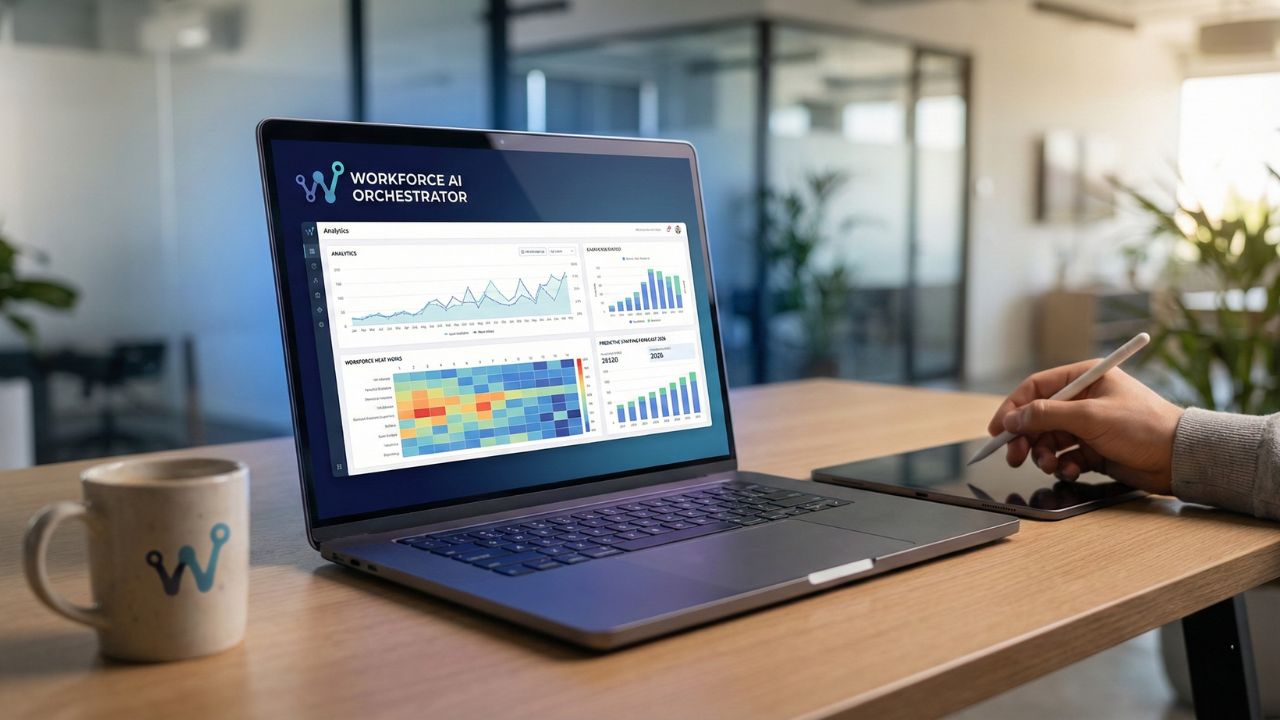
Quick Summary: Key Takeaways
- Right-size for 2026: AI is redefining headcount, requiring a completely new forecasting methodology.
- New Roles Emerge: Junior developers and legacy BPO roles are out; AI Agent Orchestrators and Prompt Architects are in.
- Hybrid Teams: The future is human-AI collaboration, demanding strict "Human-in-the-loop" oversight.
- Autonomy Scoring: Utilize predictive analytics to score task autonomy and accurately forecast future staffing needs.
Mastering predictive workforce planning for AI-impacted GCC is your key to surviving the 2026 talent shift.
You must discover how to right-size your team and hire for the agentic era effectively.
This deep dive is part of our extensive guide on the AI-Native Global Capability Center Operating Model.
We are zooming in on exactly how to build the human infrastructure required to govern your autonomous agents safely.
Right-Sizing the Agentic Workforce
The days of scaling your offshore center simply by adding hundreds of junior bodies to desks are permanently over.
Instead of traditional staffing, leaders must utilize predictive analytics for GCC staffing to forecast the precise ratio of human overseers to digital employees.
You are no longer managing a purely human workforce; you are managing workforce elasticity within a hybrid ecosystem.
The Autonomy Score Strategy
How do you know who to hire and who to let go?
You calculate the "Autonomy Score" of every departmental task.
If an AI agent can execute a workflow with 95% autonomy, you don't need a team of ten legacy software engineers.
You simply need one senior expert to monitor the output, completely changing the math behind your offshore strategy.
Hiring the New AI-Native Roles
As routine tasks become fully automated, the AI talent gap in Indian GCCs becomes glaringly obvious.
You must aggressively recruit for the top 10 AI roles in GCCs, shifting your budget from massive low-tier hiring to elite, specialized talent.
The AI Agent Orchestrator
The most critical hire you will make is the AI Agent Orchestrator.
This professional does not write boilerplate code; they deploy, monitor, and troubleshoot fleets of autonomous agents.
“ Human-in-the-Loop" Oversight
Even the most advanced AI models hallucinate or drift, making the "Human-in-the-loop" requirement for GCC ops absolutely vital.
This oversight ensures that human judgment catches errors before they cascade.
To securely enforce this, your talent strategy must align with a strict Generative AI Governance Framework for GCC Compliance.
Transitioning Legacy Teams
Will AI lead to layoffs in Indian GCCs? Yes, for those who refuse to adapt.
However, smart leaders are learning how to re-train legacy software engineers for AI engineering.
By upskilling your best domain experts into Prompt Architects and AI managers, you retain valuable institutional knowledge.
This strategic transition from headcount-heavy operations to lean, highly skilled teams is the core of the GCC Pivot from Labor Arbitrage to Intelligence Hub.
Conclusion
Flawless predictive workforce planning for AI-impacted GCC ensures you have the exact human intelligence required to safely and profitably run the machines of tomorrow.
Scaling headcount is out; scaling intelligence with specialized human overseers is the future.

Frequently Asked Questions (FAQ)
A 2026 GCC requires significantly fewer employees than traditional models. Headcount is based on the volume of AI agents deployed, focusing on a lean team of highly skilled human orchestrators.
The top roles include AI Agent Orchestrators, Prompt Architects, Chief AI Officers, AI Governance Auditors, AI Red Teamers, Digital Workforce Managers, LLM Integration Specialists, Data Sovereignty Engineers, AI Ethics Compliance Officers, and Hybrid-Team Productivity Analysts.
Predictive analytics assesses historical data, current AI capabilities, and future automation roadmaps to forecast exactly when human roles will become redundant and where new specialized oversight will be required.
Traditional BPO roles, especially data entry and basic L1 support, are entirely replaced by autonomous digital agents. Remaining BPO staff must be upskilled to manage complex escalations.
Look for candidates who possess a blend of systems engineering, prompt architecture experience, and project management skills. They must troubleshoot complex AI logic flows rather than just writing code.