AI Print-on-Demand: Launch Your Design Brand in 24 Hours
Quick Summary: Key Takeaways
- Zero Risk: You never hold inventory; items are printed only after a sale is made.
- Global Reach: Sell to customers worldwide using automated fulfillment partners.
- High Margins: AI reduces design costs to near zero, increasing your profit per unit.
- Rapid Scaling: Test dozens of niche designs daily without financial penalty.
- Asset Building: You own the brand and the customer data, not just the gig.
The barrier to entry for launching a global fashion or home decor brand has never been lower. By mastering this AI generated print on demand design guide, you can bypass the traditional hurdles of warehousing, shipping, and expensive graphic designers.
This deep dive is part of our extensive guide on Best AI Passive Income Ideas: The 2026 Beginner’s Wealth Blueprint.
In this guide, we will break down the exact workflow to turn text prompts into physical products that sell on autopilot.
The New E-Commerce Stack
Traditional dropshipping is dead; AI Print-on-Demand (POD) is the future. The model is simple: You act as the creative director. AI acts as the artist.
A POD partner handles the logistics. You do not need to be an artist. You only need to understand the market and the tools.
1. The Design Engine (Midjourney & DALL-E 3)
Your primary tool is the generative AI engine. Midjourney v6 and DALL-E 3 are currently the industry leaders for photorealistic and stylized graphics.
Midjourney: Best for artistic, intricate, and "vibey" t-shirt graphics.
DALL-E 3: Excellent for following specific text instructions and typography.
Pro Tip: If you become exceptional at crafting these descriptions, you can essentially double your income. Learn how to sell popular AI prompts for profit to other designers.
2. The Quality Control (Upscaling)
Raw AI images are usually 1024x1024 pixels. This is too small for a high-quality hoodie or poster print. Printing a low-res image will result in blurry products and refunds.
You must use AI upscaling tools (like Gigapixel AI or specialized web tools) to increase the resolution to 300 DPI (dots per inch) without losing detail.
3. The Fulfillment Partner (Printful & Printify)
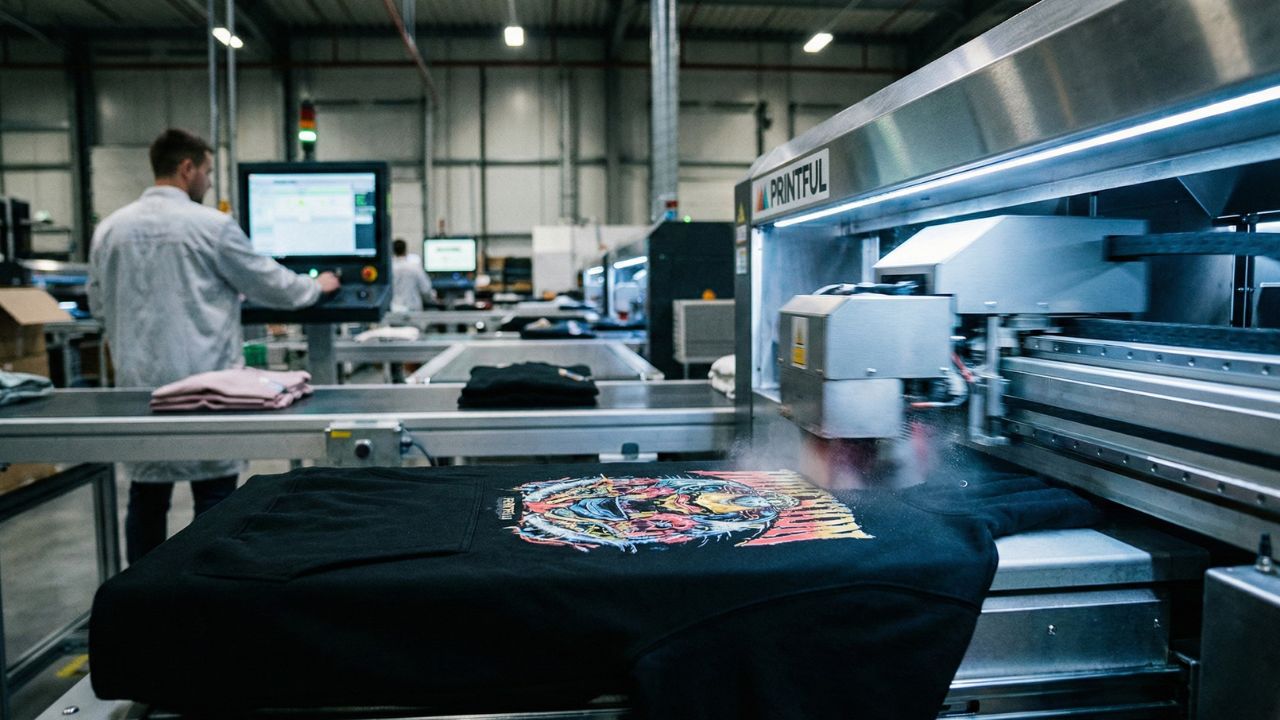
Once your design is ready, you sync it with a provider like Printful or Printify. These platforms integrate directly with Shopify, Etsy, or WooCommerce.
When a customer buys a shirt from your store, the order goes automatically to the provider. They print, pack, and ship it. You keep the difference.
Navigating the Legal Landscape
A common concern for new entrepreneurs is copyright. Is AI art legal for print-on-demand products?
Generally, yes. You can sell physical products featuring AI art. However, the U.S. Copyright Office has stated that raw AI-generated images cannot be copyrighted because they lack "human authorship".
What this means for you: You can sell the products freely. You generally cannot sue someone else for "stealing" the raw AI image unless you have significantly modified it manually. Always check the commercial terms of the specific AI tool you use (e.g., Midjourney Paid Plan allows commercial use).
Execution: From Prompt to Product
To ensure success, follow this simplified workflow:
- Niche Research: Don't just "make art." Find a hungry crowd (e.g., "Introverted Accountants" or "Retro Sci-Fi Lovers").
- Generate: Run your prompts until you get a visual winner.
- Upscale: Convert the image to 4k+ resolution.
- Vectorize (Optional): For t-shirts, remove the background and convert to vector for the cleanest print.
- Mockup: Place the design on a digital shirt model to show customers what it looks like.
Conclusion
The days of needing a garage full of inventory are over. With the right AI generated print on demand design guide, you can launch a legitimate brand in under 24 hours.
Focus on niche communities, ensure your print quality is impeccable, and let the algorithms handle the rest.

Frequently Asked Questions (FAQ)
You must subscribe to a paid Midjourney plan to own the commercial rights to your images. Use the --ar (aspect ratio) parameter to generate images that fit specific print areas, and always upscale before printing.
Yes, you can sell products with AI art. However, you likely cannot copyright the image itself unless there is significant human input. Always verify the terms of service of your AI generator.
Top tools include Topaz Gigapixel AI (software) and various web-based upscalers like Upscayl. Aim for 300 DPI to ensure crisp printing on fabric or paper.
Create your design in Midjourney, upscale it, and then upload the high-res file to Printful's "File Library." Connect Printful to your Etsy or Shopify store to automate the order processing.