Amazon KDP 2026: Publish Your AI-Written Guide in a Weekend
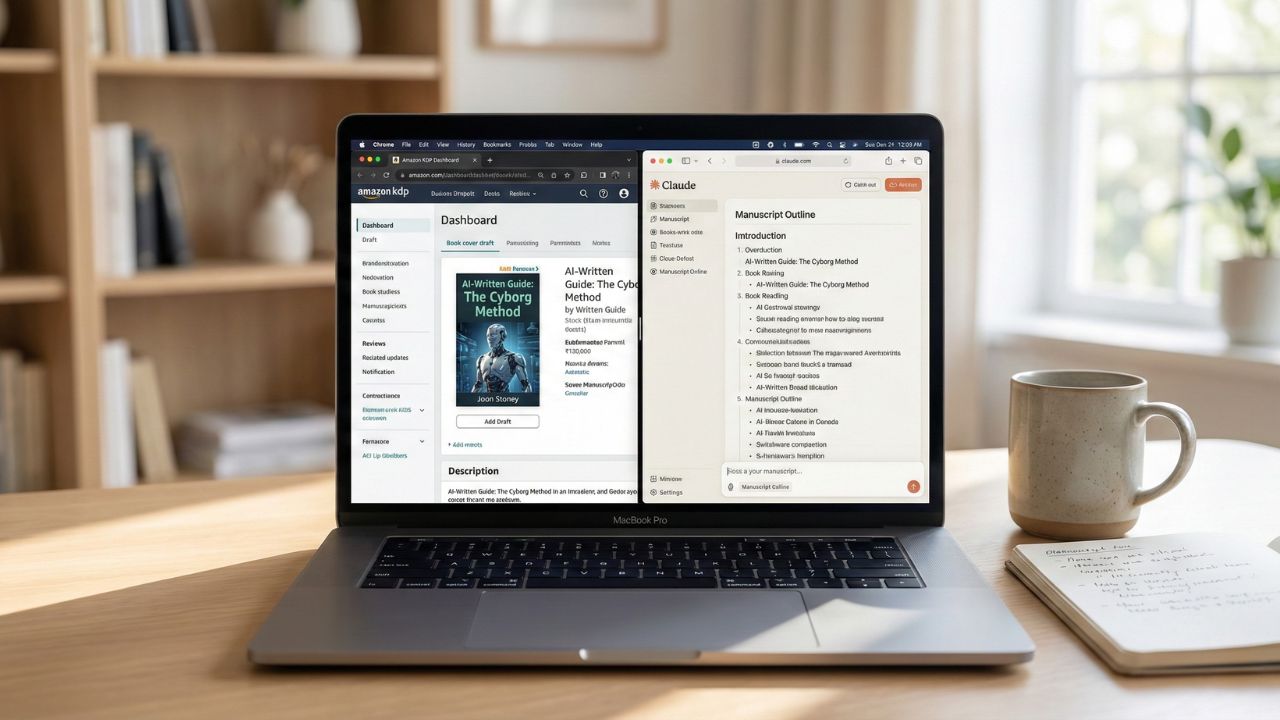
Quick Summary: Key Takeaways
- Speed: Go from raw concept to published author in under 48 hours.
- Zero Cost: Amazon KDP is free to join; you pay nothing until you sell.
- Asset Value: A book is a digital asset that builds authority and generates royalties for years.
- AI Synergy: Use Claude for outlining and ChatGPT for drafting to maintain high quality.
- Global Distribution: Instantly reach millions of readers on Kindle and via Print-on-Demand.
Writing a book used to be a "someday" goal. In 2026, it is a weekend project.
If you want to publish AI written ebooks and guides that actually sell, you must move beyond generic prompts and embrace a structured workflow.
This deep dive is part of our extensive guide on Best AI Passive Income Ideas 2026.
In this guide, we will cover the specific "Cyborg Method" to produce high-quality non-fiction guides that dominate their niche categories.
Phase 1: The "Golden Niche" Discovery
Before you write a single word, you must validate the market. Do not guess. Use data. Look for specific problems that people are desperate to solve.
Bad Niche: "How to Lose Weight" (Too broad, too competitive).
Good Niche: "Anti-Inflammatory Meal Prep for Busy Dads" (Specific, targeted).
Once you identify a topic, you need the right instructions to get the AI to execute. If you struggle with this, you might want to learn how to sell popular AI prompts for profit first to master the syntax.
Phase 2: Structuring with Claude (The Architect)
For long-form content, Claude is generally superior to ChatGPT due to its larger context window. It can hold the entire "thread" of your book in memory without hallucinating or losing focus.
The Workflow:
- Feed the Persona: Tell Claude it is a "New York Times Bestselling Non-Fiction Editor."
- The Outline: Ask for a 10-chapter outline based on the most popular questions in your niche.
- The Hook: Ensure every chapter ends with a "cliffhanger" or a key takeaway that leads to the next.
Phase 3: Drafting with ChatGPT (The Writer)
Once you have the approved outline, switch to ChatGPT (GPT-4 or later) for the actual prose. Crucial Rule: Write one chapter at a time.
Never ask AI to "write the whole book." It will produce generic fluff. Instead, feed it the outline for Chapter 1 and ask for a "deep dive with real-world examples and actionable steps."
Phase 4: The Packaging (Cover & Marketing)
People do judge books by their covers. You can use Midjourney to generate stunning cover art, but you must add professional typography using a tool like Canva.
Once published, you need traffic. A powerful strategy is to launch a companion website to collect emails. Read our guide on how to build AI powered affiliate review sites to drive external traffic to your Amazon listing.
The Quality Control Check
Amazon is cracking down on low-quality "AI spam." To ensure your book survives:
- Human Edit: You must read every line. Fix repetitive phrases like "In the fast-paced world of..."
- Fact Check: AI hallucinates facts. Verify all statistics and dates.
- Originality: Add your own personal stories or case studies that the AI cannot know.
Conclusion
The gatekeepers are gone. You now have the power to publish AI written ebooks and guides that rival traditional publishing houses in speed and relevance.
Your first book is just a prompt away. Start the outline tonight, and you could be a published author by Monday morning.

Frequently Asked Questions (FAQ)
Use Amazon's free tool, "Kindle Create." It automatically formats your Word document into a professional "kpf" file. Ensure you use standard Heading 1 and Heading 2 styles in your draft so the tool recognizes your chapters.
Non-fiction is currently easier and more profitable for beginners. AI excels at structuring information and "how-to" guides. Fiction requires complex emotional arcs and continuity that AI often struggles to maintain over 300 pages.
Upload top-performing competitor book summaries to Claude and ask it to analyze their structure. Then, ask it to generate a unique outline that covers "gaps" those books missed, ensuring your content adds new value.
High-demand niches include specialized technical skills (e.g., Python for Finance), specific diet/health guides (e.g., Low-FODMAP recipes), and mental health workbooks (e.g., CBT for anxiety).