Who Owns AI Generated Code? The 2026 Guide to IP and Copyright.
Quick Answer: Key Takeaways
- Human Authorship Rule: As of 2026, content generated entirely by AI is public domain.
- To claim copyright: you must prove substantial human modification.
- The "Copilot Risk": If your AI tool generates code identical to an existing open-source snippet, you could be liable for license infringement.
- Contract Clauses: Smart businesses now include specific "AI Deliverable" clauses in freelancer contracts to define ownership transfer clearly.
- Patent Limitation: You generally cannot patent an invention conceived solely by an AI; a human inventor must be named.
- Trade Secrets: The safest route for proprietary AI code is protecting it as a "Trade Secret" rather than relying on copyright registration.
The most dangerous assumption in modern software development is that you own everything your AI writes. In 2026, understanding who owns AI generated code and content is the difference between a secure asset and a worthless codebase.
This deep dive is part of our extensive guide on Best AI Tools for Business.
If your team uses tools like GitHub Copilot or ChatGPT to build core features, you might be accidentally releasing your intellectual property into the public domain. Below, we unpack the complex legal landscape of AI ownership to keep your business safe.
The Core Rule: Human Authorship Required
The US Copyright Office and major global courts have drawn a line in the sand. Copyright protects human creativity.
If you type a prompt and the AI generates a complete Python script, that script is likely not copyrightable. However, if you take that AI script, debug it, rewrite 40% of the logic, and integrate it into a larger system, the resulting work is protected.
The "Public Domain" Trap
This is where it gets tricky for agencies and SaaS companies. If you deliver a product to a client that was 100% generated by AI, you technically cannot transfer exclusive copyright ownership to them, because you never owned it in the first place.
To avoid lawsuits, transparency is key. You must disclose AI usage and focus on selling the solution, not just the raw code.
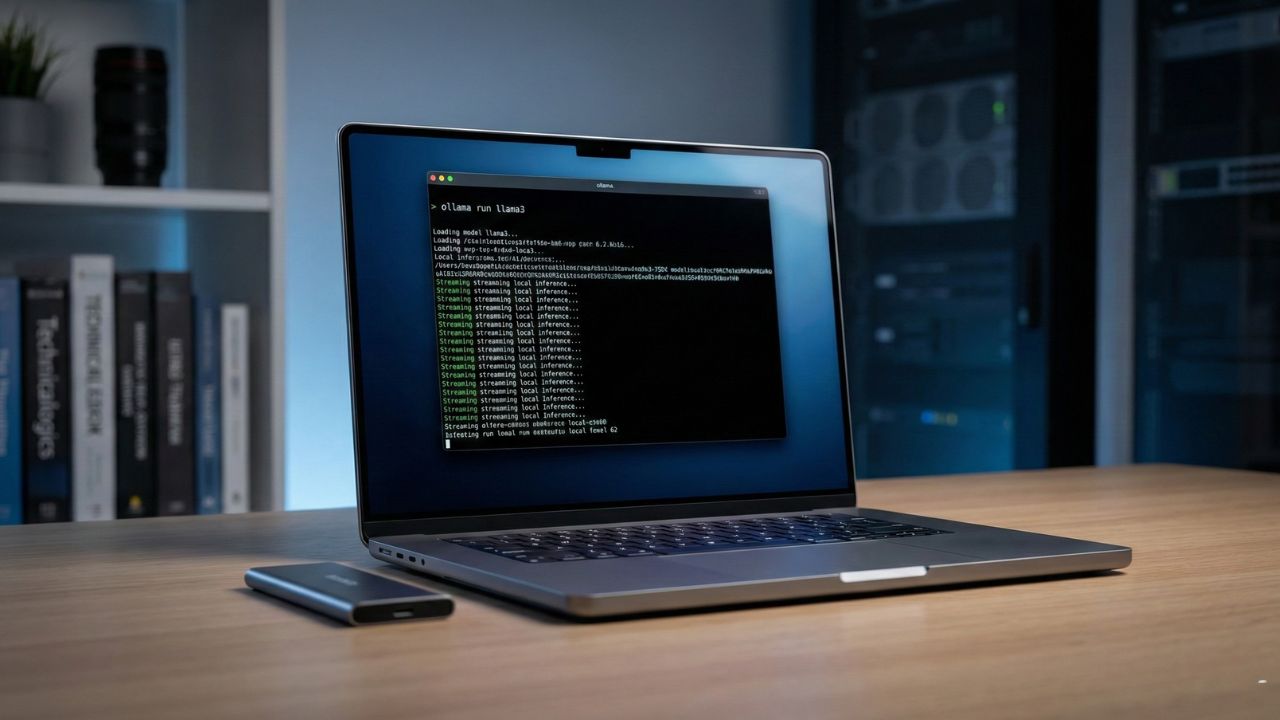
For developers concerned about keeping their work secure while coding, we recommend using local environments. Check our guide on Best Laptop for AI Development to set up a secure, offline workflow.
Protecting Your Proprietary Data
The issue isn't just about what comes out of the AI; it's about what goes in. When you paste proprietary algorithms into a public chatbot, you may be granting that AI company a license to use your data for training.
This is why we stress the importance of data governance in our guide on How to Implement AI in Your Business Workflow.
Best Practice: Use enterprise instances with "Zero Data Retention" policies for any code you intend to keep private.
Liability for AI Bugs
If an AI writes code that causes a security breach, who is liable? In 2026, the liability falls on the human operator.
"The AI made a mistake" is not a legal defense. You are responsible for vetting, testing, and securing every line of machine-generated code before it hits production.
Conclusion
The question of who owns AI generated code and content is rarely black and white. It depends on the "Human-in-the-Loop."
To secure your IP, ensure your team treats AI as a drafter, not an author. Modify the output, document your human contribution, and never assume automatic ownership of raw AI generations.

Frequently Asked Questions (FAQ)
Generally, no. Raw code generated solely by AI without significant human modification is considered public domain. To copyright it, a human must add "substantial" creative input to the final output.
Terms of Service for OpenAI and Google typically assign the rights of the output to you (the user). However, because copyright laws require human authorship, this "ownership" is difficult to enforce legally against third parties who might copy it.
No. Patent offices in the US, UK, and EU require a human inventor to be named. An AI cannot be listed as the inventor. If a human used AI as a tool to invent the process, the patent is valid, but the human must claim credit.
The main risk is "reciprocal licensing." If Copilot suggests a snippet of code that was trained on GPL-licensed software (which requires you to make your code open source), and you use it verbatim, you could be sued for violating that license.
Yes, typically. Under "Work for Hire" doctrines, the company owns the output of its employees. However, if the employee used AI to generate the work entirely, the company might find it owns un-copyrightable assets.
Sources & References
- Best AI Tools for Business
- Best Laptop for AI Development
- How to Implement AI in Your Business Workflow
- U.S. Copyright Office: Copyright Registration Guidance for Works Containing Material Generated by AI
- USPTO: Inventorship Guidance for AI-Assisted Inventions
- Harvard Law Review: Intellectual Property and Artificial Intelligence
Internal Resources:
External Authorities: