Palantir Forward Deployed Software Engineer (FDSE)
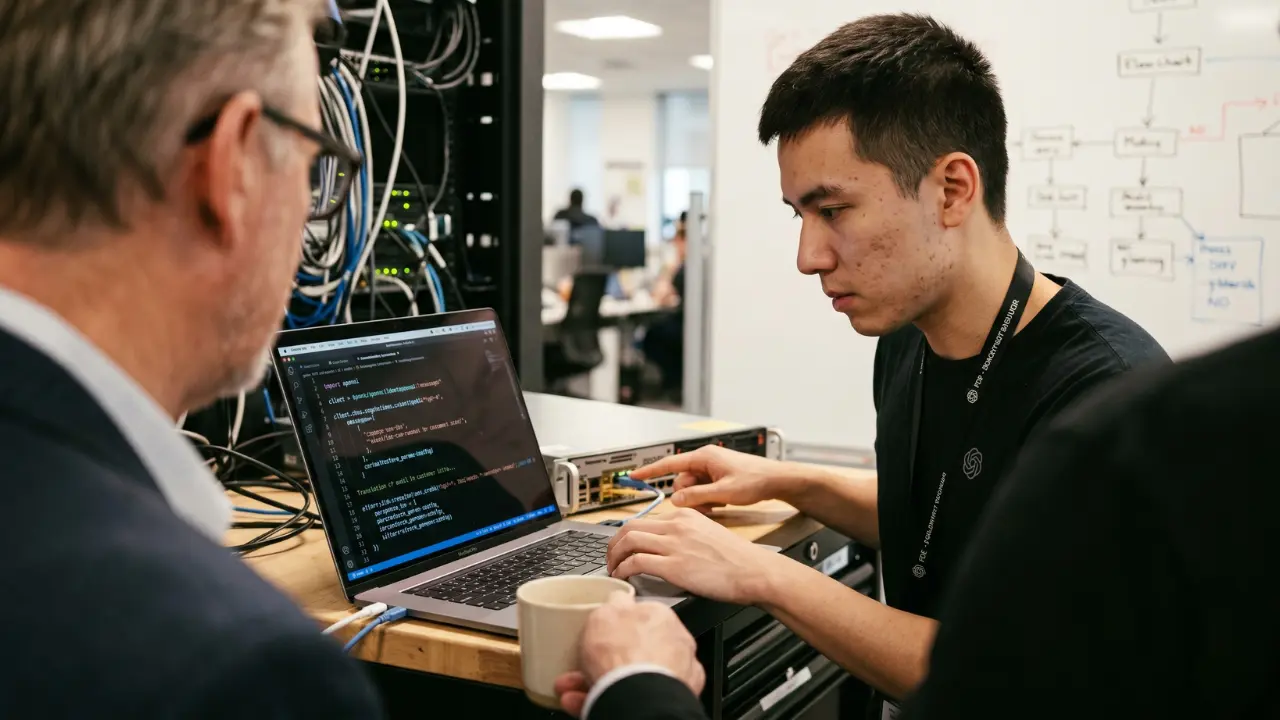
- The original FDE role: Palantir's Forward Deployed Software Engineer is the role the rest of the industry copied.
- Client-site builder: deploys Gotham, Foundry and AIP inside customer environments — hands-on code, not consulting or sales.
- The decomposition round is the gate: Palantir invented it, and it eliminates the most candidates.
- Pay: ~$211K median total comp (Levels.fyi), $171K–$415K+ range, with liquid public RSUs but demanding hours.
Palantir invented the forward deployed role, and its title for it — Forward Deployed Software Engineer, or FDSE — is still the benchmark the rest of the industry is measured against. If you are weighing an FDSE offer or preparing for the loop, this guide covers what the role actually is at Palantir, how the interview works, and what it pays in 2026.
This page is the company-specific guide. To prepare, pair it with the cluster tools: the FDE interview questions guide, the decomposition case study simulator, and the salary calculator. For the role in general, start at the Forward-Deployed AI Engineer pillar.
What a Palantir FDSE Actually Does
An FDSE works directly inside the customer's world — government agencies, defence and intelligence organisations, and increasingly commercial enterprises — deploying and customising Palantir's platforms (Gotham for defence and intelligence, Foundry for commercial, and AIP for AI) against the customer's specific problems. The role is travel-heavy and frequently on-site, and it is explicitly a builder role, not a consultant or sales one: FDSEs write, debug and ship production code.
The distinguishing skill is ontology and data modelling. Most Palantir deployments start from messy, fragmented customer data that has to be reconciled into a clean, trustworthy model before anything useful can be built on top. That is why the interview weights data engineering and structured problem decomposition far more than algorithmic puzzles.
The Palantir FDSE Interview Loop
The Palantir loop is widely regarded as one of the most distinctive in tech, and it is the origin of the decomposition round now copied across the industry. A typical process runs around four weeks and looks like this:
1. Recruiter screen
Background, motivation for a client-facing engineering role, and basic fit.
2. Technical / use-case round
Working through a realistic use case — less about clever algorithms, more about how you turn an ambiguous problem into a structured approach against real data.
3. The decomposition round
The signature stage: a vague, open-ended problem you must break down out loud. Palantir is assessing how you pick up unfamiliar technology and how you think, not whether you reach a specific answer. This is the round that eliminates the most candidates, and the failure mode is almost always jumping to a solution before clarifying.
4. Hiring-manager & final
Ownership, customer judgment, and how you operate inside someone else's organisation.
Drill this format directly in the case study simulator, then pressure-test breadth with the 50-question OpenAI and Palantir bank.
Palantir FDSE Salary in 2026
According to Levels.fyi, the median total compensation for a Palantir FDSE in the US is around 211,000 dollars, with the role ranging from roughly 171,000 to 295,000 dollars, and senior FDSEs on high-value contracts reported well above 400,000 dollars. Base salaries sit between about 155,000 and 240,000 dollars, with the rest in RSUs and bonus.
| Level | Approx. total compensation (USD) |
|---|---|
| Entry / new grad | $171K – $205K |
| Mid-level | $205K – $300K |
| Senior | $300K – $415K+ |
| Staff+ | $630K+ (top contracts) |
The crucial distinction versus the frontier labs is equity type. Palantir grants liquid, publicly traded RSUs, which makes the headline number far more reliable than the private-valuation equity at OpenAI or Anthropic — though on raw total comp, Palantir now sits below them. Model your own bands in the salary calculator.
How to Prepare Specifically for Palantir
Three things move the needle for an FDSE loop. First, get fluent at decomposition out loud — clarify before solving, name failure modes unprompted. Second, sharpen data modelling and SQL, because turning messy data into a clean ontology is the core of the job. Third, prepare ownership stories that show you operating inside a customer's environment under ambiguity. Map the full route with the 90-day plan.

Frequently Asked Questions (FAQ)
An FDSE deploys and customises Palantir's platforms (Gotham, Foundry and AIP) directly inside customer environments such as government, defence and commercial enterprises. It is a hands-on engineering role with significant on-site work and travel, focused on turning messy customer data into deployed, decision-grade software.
It is considered one of the tougher loops in tech, mostly because of the decomposition round rather than algorithmic difficulty. You are given a vague problem and judged on how you break it down and pick up unfamiliar technology. The process typically runs around four weeks.
Median total compensation is around 211,000 dollars per year according to Levels.fyi, ranging from roughly 171,000 dollars at entry to over 400,000 dollars for senior FDSEs, with staff-level on top contracts clearing 630,000 dollars. Base sits between about 155,000 and 240,000 dollars.
No. The FDSE is a distinct, client-facing variant unique to Palantir. It carries more customer exposure, travel and deployment ownership than a standard software engineer role, and the interview weights decomposition and data modelling over pure coding.
Palantir grants liquid, publicly traded RSUs, so the value is far more predictable than the private-valuation equity at frontier labs. The trade-off is that Palantir's total compensation now sits below OpenAI and Anthropic, which rely on equity that can be worth much more but is illiquid.
Yes, generally. The role is built around working on-site inside customer organisations, so it is travel-heavy and often demanding on work-life balance, which is reflected in Palantir's comparatively low work-life-balance ratings.