The 2026 Shift: How India's Native AI Ecosystem Slashes Enterprise Costs by 40%
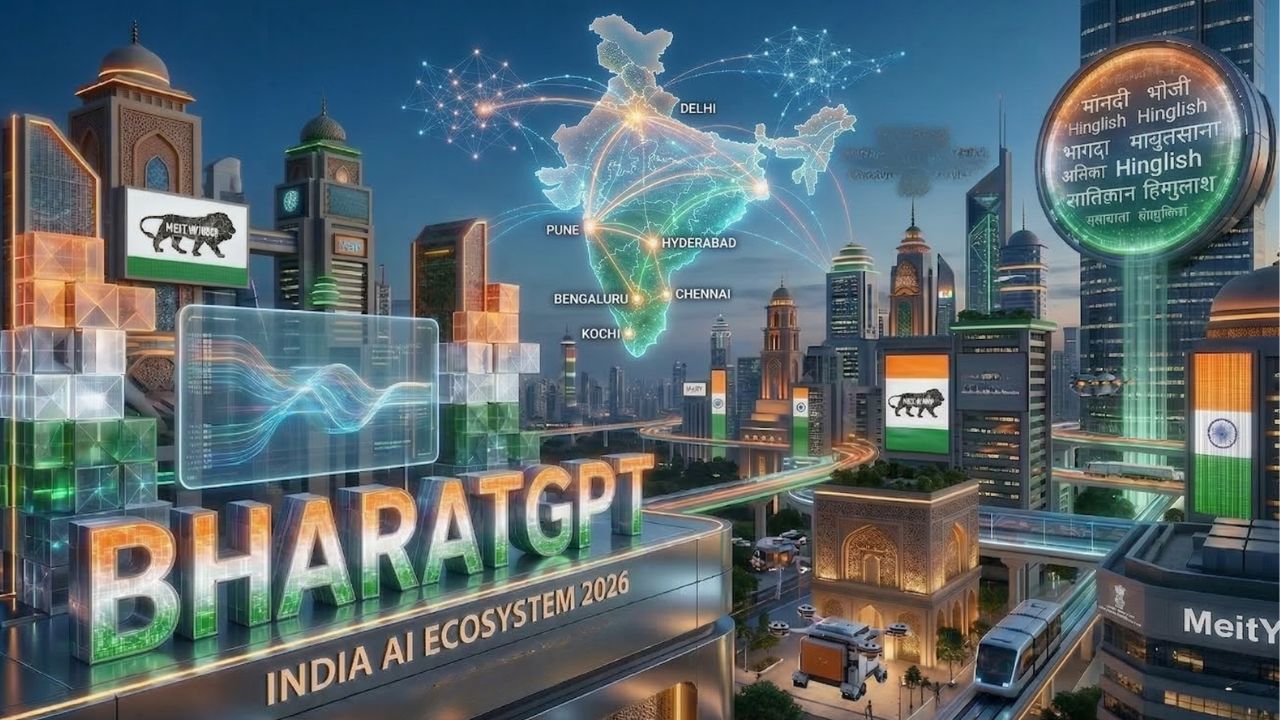
Executive Summary: The 2026 Paradigm Shift
- Cost Efficiency & Scalability: Transitioning to domestic AI frameworks can cut enterprise compute costs in half and reduce operational overhead by 40%.
- Hyper-Localization is Mandatory: Native models like BharatGPT solve critical tokenization issues for Hindi and Hinglish, which is crucial for deep Tier-2 city penetration.
- Untapped Funding Pools: Billions in Government AI subsidies for Indian developers remain unclaimed through MeitY and Make in India innovation programs.
- Strategic Networking: Substantial ROI for founders relies heavily on navigating private networking tracks found at premier AI developer events.
Indian developers and enterprise IT teams are bleeding runway paying for Western APIs that fundamentally fail to understand local dialects. The broader India AI ecosystem is currently witnessing a painful reliance on expensive, generic language models. This reliance is actively destroying profit margins, inflating tech debt, and severely limiting true regional adoption across the subcontinent.
Before your organization commits its quarterly tech budget to overseas compute, you must review this strategic breakdown. Discover how native frameworks are not just cultural wins, but absolute financial necessities driving India's next massive tech boom.
The Compute Crisis: Why Western APIs Are Draining Your Runway
The global technology landscape has shifted dramatically. A few years ago, leveraging Silicon Valley's foundational models was the standard, unquestioned playbook. Today, that strategy is an operational and compliance risk. Forcing an English-first LLM to understand highly nuanced regional Indian banking contexts, e-commerce behaviors, or legal terminology inevitably leads to data hallucinations that alienate users.
Startups and enterprise engineering teams alike are coming to a harsh realization: the core tokenization engines of overseas models are simply not optimized for Indic scripts. When token counts inflate dramatically because a model struggles to parse Devnagari script or conversational Hinglish, your API costs skyrocket. You are essentially paying a heavy premium for a foreign system to poorly translate its thoughts before delivering a substandard answer.
To achieve sustainable B2B ROI, forward-thinking organizations must evaluate BharatGPT vs international models. These localized, indigenous frameworks are engineered specifically to handle the deep linguistic nuances of the region, ensuring that your enterprise applications run smoothly without draining your entire infrastructure budget.
Pro Tip: Auditing Your Token Usage
Take a hard, analytical look at your latest billing statement from your primary LLM provider. Calculate the average cost per query for regional language interactions compared to standard English queries. The resulting disparity often reveals exactly why a rapid migration to an indigenous AI model is no longer just a patriotic tech choice, but a strict financial necessity for survival.
The Biggest Mistake Beginners Make: The Localization Illusion
A critical, often fatal error many tech executives make when attempting rapid expansion into Tier-2 and Tier-3 Indian cities is assuming that automated translation layered over an English-speaking AI avatar is sufficient. It is categorically not. Marketing to Tier-2 India with dubbed, robotic Western AI avatars is actively destroying your brand trust and establishing an "uncanny valley" effect for the consumer.
Audiences in India's emerging tech and commerce hubs demand deep authenticity. If an avatar's visual lip-syncing does not perfectly match the phonetic cadence of the local dialect, the user's immersion breaks instantly. To successfully capture and retain these massive emerging markets, you must integrate the Best Hindi AI video generator tools designed from the ground up for regional resonance and cultural accuracy.
Strategic Funding: Securing Domestic Infrastructure Capital
It is a stark reality that most early-stage Indian founders are burning their own hard-earned venture capital for AWS and Azure compute credits, while the government simultaneously sits on millions in unclaimed AI compute grants. The Make in India initiative, alongside aggressive Ministry of Electronics and Information Technology (MeitY) programs, has deployed massive capital explicitly to ensure national data sovereignty.
From highly beneficial tax exemptions for localized AI research and development to specific, massive state-level grants in innovation hubs like Karnataka or Telangana, the financial resources are readily available. Understanding the precise, rigorous application procedures for Government AI subsidies for Indian developers is now a mandatory skill for modern tech leadership.
Industry Warning: Strict Compliance Readiness
Government grants require rigorous, meticulous documentation. You must ensure your corporate data privacy frameworks align perfectly with Indian data privacy laws regarding local LLM training before applying. Failing a single phase of a compliance audit results in immediate, non-negotiable disqualification.
Tracking Innovation: The Startups Shaping 2026
The most lucrative and structurally sound AI innovations are quietly scaling in the corridors of Bangalore and Pune. The industry narrative has successfully shifted away from consumer chatbot wrappers toward hyper-specific, agentic AI solutions tailored for massive sectors like healthcare diagnostics, agritech, and B2B global SaaS exports. Executives must stop following mainstream tech hype and look directly at the real benchmark data.
Summit Strategy: Bypassing the Industry Noise
The AI event circuit in 2026 is incredibly crowded. Market data suggests that 90% of founders waste their summit budgets talking to junior developers instead of actual enterprise decision-makers and VC partners. Showing up to a major AI summit without a targeted, pre-planned meeting strategy is the fastest way to torch your marketing and travel budget.
To achieve actual, measurable ROI, you must uncover the true AI developer events India 2026 schedule. Accessing the exclusive VIP investor sessions and knowing exactly which days focus heavily on agentic coding frameworks and localized LLM deployment is the only definitive way to succeed in this dense ecosystem.
Optimize your enterprise research and user data collection with AI.
Try SurveyMonkey AI
We may earn a commission if you buy through this link. (This does not increase the price for you)
Frequently Asked Questions
The ecosystem has rapidly matured, pivoting away from expensive Western APIs toward native, cost-effective infrastructure. The primary focus has heavily shifted to localized LLMs, massive government compute subsidies, and highly specialized B2B startups scaling effectively in regional tech hubs.
While the US focuses on training massive, generalized foundational models, the Indian market is experiencing explosive, hyper-targeted growth focused heavily on enterprise affordability and regional localization. This distinct trajectory creates a rapidly compounding market with unique B2B software export potential.
Models like BharatGPT and similar indigenous frameworks are specifically engineered from the ground up for the region. They consistently outperform international counterparts in the deep contextual understanding of regional dialects, offering vastly superior tokenization and logical reasoning for Hindi and Hinglish inputs.
While direct Google AdSense grants are a specific niche, there are billions of rupees in broader government AI subsidies aimed directly at subsidizing infrastructure and deep-tech research. These effectively boost base profitability and dramatically reduce compute overhead for independent developers and startups monetizing their bespoke tools.
The 2026 market is driven by a vibrant, aggressive mix of agile startups building specialized localized LLMs, established IT service giants effectively pivoting to enterprise agentic AI, and domestic hardware providers deploying regional data centers to aggressively drive down B2B infrastructure costs.
Major infrastructural support stems from the India AI Mission and the Ministry of Electronics and Information Technology (MeitY). These critical initiatives provide subsidized or free GPU access to vetted startups, highly beneficial tax exemptions for R&D, and maximum grant allocations operating under the broader Make in India banner.
Startups can seamlessly integrate indigenous models using specialized localized API endpoints. By utilizing native SDKs specifically optimized for Indic scripts, developers achieve much lower latency and significantly reduced token costs, making it highly efficient and profitable for customer service chatbots and regional e-commerce layers.
Bangalore (Bengaluru) and Pune remain the undisputed national leaders for early-stage B2B AI startups and securing VC funding. However, rapidly emerging hubs like Hyderabad, Chennai, and the Delhi NCR region are quickly scaling their infrastructure specifically for enterprise AI research and high-density specialized data centers.
The absolute primary challenge is the historical reliance on English-first models that fundamentally fail to capture regional cultural nuances. Overcoming this friction requires adopting native AI video generators and heavily localized LLMs that actively build brand trust through authentic, culturally accurate, and linguistically precise dialect interactions.
Strict domestic data localization mandates (like the DPDP Act) require enterprise AI models to process sensitive financial, medical, and personal user data entirely domestically. This strict legal framework heavily favors deploying local LLMs and using regional data centers, completely eliminating the massive compliance risks associated with routing secure, private information to overseas servers.
Sources & References
- External Authoritative Sources
- NASSCOM: AI Adoption Index 2.0 (Tracking India's Sectoral Progress)
- Ministry of Electronics and Information Technology (MeitY)
- INDIAai (The National AI Portal of India)
- Internal Hub Resources
- Definitive Guide to Government AI Subsidies
- Maximizing ROI at AI Dev Day India
- Technical Benchmark: BharatGPT vs International Models
- Top Hindi AI Video Generators for 2026
- Essential AI Developer Events Calendar
- Hidden AI Startups VCs are Watching