Enterprise AI Governance Framework 2026: The Compliance Blueprint
Quick Answer: The 2026 Compliance Standard
- The New Reality: The "Move Fast and Break Things" era is over. The EU AI Act is fully enforced, with fines reaching 7% of global turnover for non-compliance.
- Governance as Code: Static PDF policies are dead. In 2026, you must use automated "Guardrails" that block non-compliant prompts before they reach the model.
- Data Sovereignty: Hosting models locally (e.g., Llama 3 on-prem) is now the most effective "Get Out of Jail Free" card for GDPR data export restrictions.
- Traceability: You must now maintain a "Chain of Custody" for every AI decision, linking the output back to the specific data consent that authorized it.
The Shift: From "Ethics" to "Engineering"
In 2024, AI governance was a philosophy debate. In 2026, it is an engineering ticket.
If your marketing AI hallucinates a discount you didn't offer, or your coding agent accidentally leaks PII (Personally Identifiable Information) into a public repository, the liability is instant.
Building a robust enterprise AI governance framework 2026 is not just about avoiding fines; it is about building the "brakes" that allow you to drive fast safely.
This deep dive is part of our extensive guide on Live Leaderboard 2026: Gemini 3 Pro vs. DeepSeek vs. GPT-5. While raw intelligence scores matter, compliant intelligence is what keeps your C-suite out of court.
Here is the blueprint for operationalizing AI governance this year.
1. The "Governance as Code" Model
The days of manual review are gone. You cannot manually review 1 million autonomous agent interactions.
You need Governance as Code. This involves wrapping your LLMs in a middleware layer that programmatically enforces policy.
How it works:
- Input Filtering: Checks user prompts for PII or banned topics before sending them to the LLM.
- Output Validation: Scans the AI's response for hallucinations or toxic content.
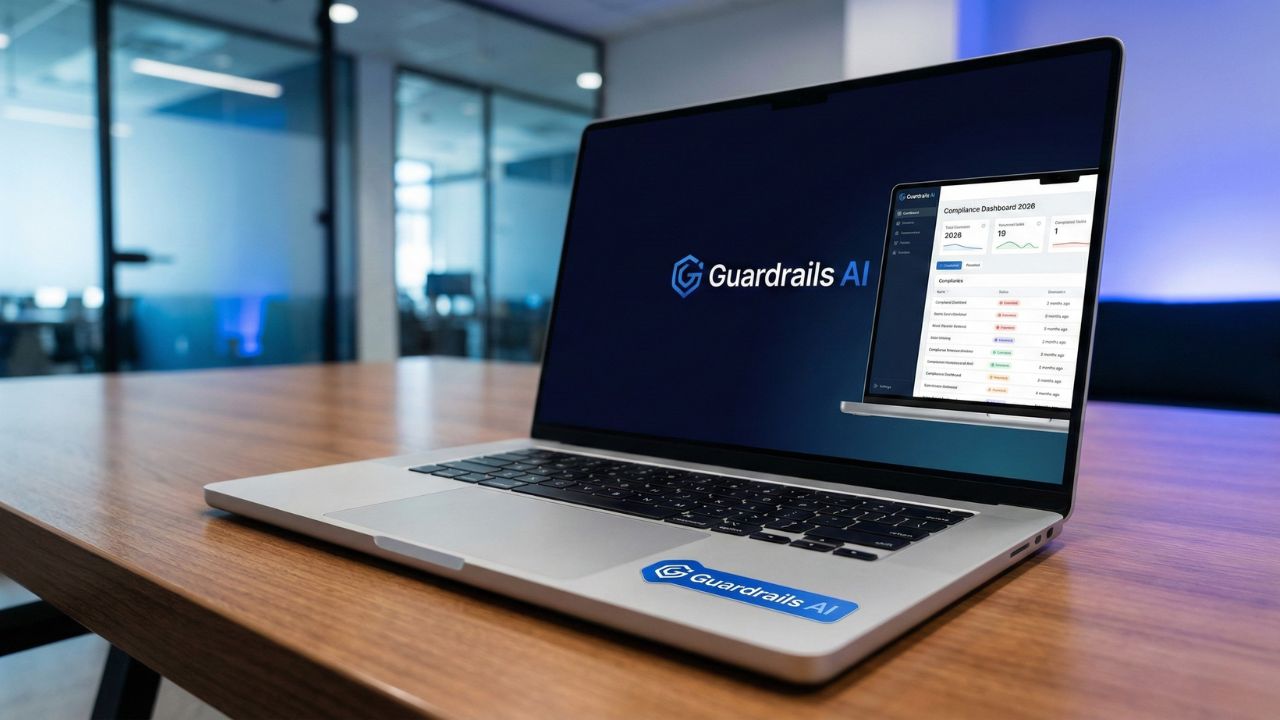
- Tools: Platforms like Guardrails AI and NVIDIA NeMo are the industry standard for this layer.
2. The "Local Loophole" for GDPR
The biggest friction point in 2026 is sending customer data to US-based cloud providers (OpenAI, Google, Anthropic).
EU regulators view this as "Data Export," triggering complex legal reviews.
The Solution: Deploy open-weights models locally. By running a model like DeepSeek R1 or Llama 3 on your own infrastructure, data never leaves your legal jurisdiction.
We analyzed the financial upside of this approach in our guide on Cost of Running LLM Locally vs Cloud: The 2026 ROI Analysis for CFOs, but the compliance upside is arguably even higher.
3. Traceable Chain of Custody
It is no longer enough to know what the AI decided. You must know why.
If your AI denies a loan application or segments a user for a sensitive ad category, you must be able to trace that decision back to the specific training data or prompt context.
Implementation Steps:
- Version Control: Every prompt and model weight must be versioned (v1.0 vs v1.1).
- Logging: Use tools like LangSmith or Arize Phoenix to log the exact "thought process" (Chain of Thought) the agent used.
- Attribution: Ensure your RAG (Retrieval Augmented Generation) pipelines cite the specific internal document used to generate an answer.
4. Is It Legal? Identity Graphing & Consent
Marketing AI relies on stitching together user identities.
However, in 2026, creating a "Golden Record" of a customer without explicit consent for AI processing is a violation of the EU AI Act's "profiling" clauses.
The New Rule: You need a comprehensive privacy-first data strategy.
Just because a user accepted "Marketing Cookies" does not mean they consented to "Generative AI Profiling."
Update your CMP (Consent Management Platform) immediately to capture granular consent, ensuring that your AI audience resolution methods remain compliant with the strictest interpretations of the law.
Conclusion
A strong enterprise AI governance framework 2026 does not slow you down, it speeds you up.
By automating compliance through code and local deployment, you remove the fear that paralyzes many organizations.
You can unleash your autonomous agents knowing that the "circuit breakers" are active and your data sovereignty is secure.
Compare Market Intelligence Tools. Try SimilarWeb

We may earn a commission if you buy through this link. (This does not increase the price for you)
Frequently Asked Questions (FAQ)
It is a structured set of policies, automated guardrails, and software tools designed to ensure AI systems are ethical, legal, and reliable across an organization.
Use libraries like Guardrails AI to define Python-based validators (e.g., DetectPII, CheckHallucination) that automatically intercept and block bad inputs/outputs in real-time.
Yes. Hosting models locally (on-premise) keeps data entirely within your control, solving data residency issues and eliminating third-party data processor risks.
Use "Watermarking" tools for code generation and strictly enforce RAG (Retrieval Augmented Generation) architectures that force the model to cite the specific internal document ID for every claim.
The main risk is "Unlawful Profiling." Using AI to infer sensitive attributes (health, political views) from non-sensitive data without explicit consent is now a major violation under the EU AI Act.
Sources & References
- Live Leaderboard 2026: Gemini 3 Pro vs. DeepSeek vs. GPT-5
- The Cookie Killer: AI Audience Resolution
- EU AI Act Official Text
- NVIDIA NeMo Guardrails Documentation
Internal Analysis:
External Analysis: