On-Prem vs Cloud SLM TCO: The 18-Month Break-Even
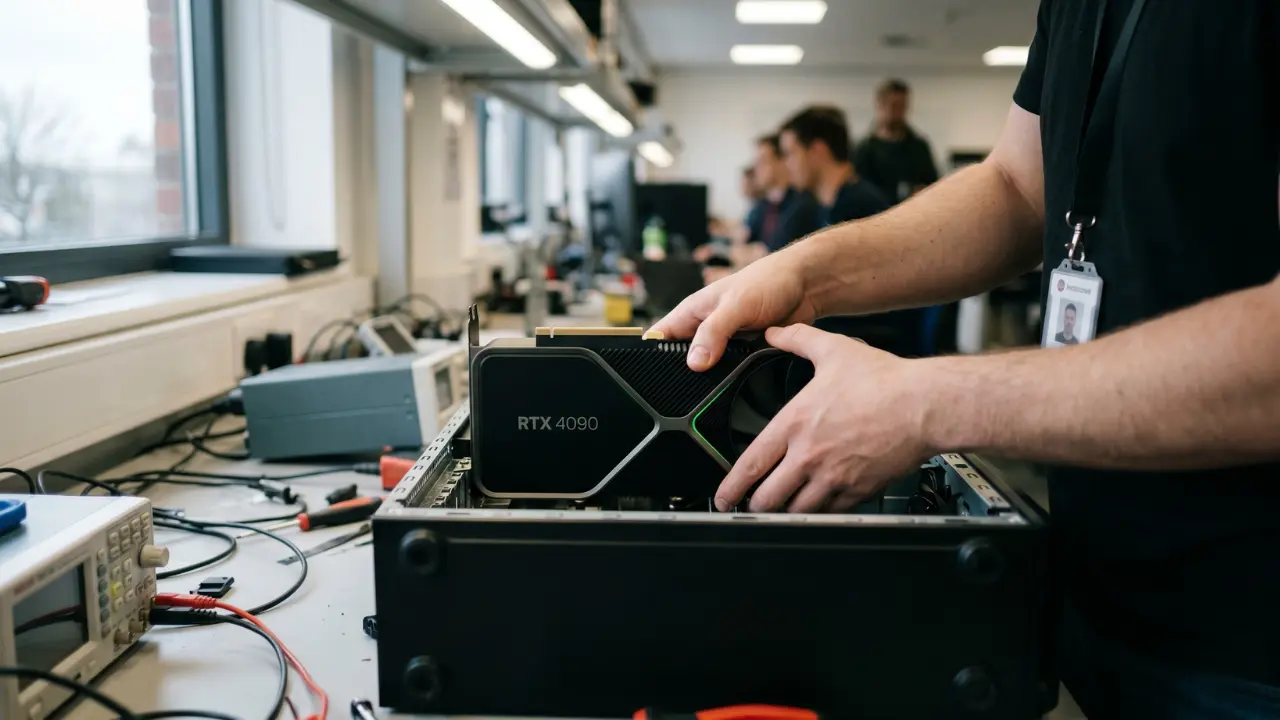
- The 18-Month Rule: Self-hosting an SLM typically crosses the financial break-even point against cloud inference costs within an 18-month window.
- Hidden Colocation Traps: Facility rental fees, specialized GPU cooling, and heavy power draw routinely shock CFOs who only budget for raw hardware.
- CapEx vs OpEx: On-prem architectures definitively shift AI from an unpredictable per-token marginal cost to a fixed, amortized physical investment.
- Hardware Floors: Scaling economically often means choosing strategically between consumer-grade RTX 4090s and enterprise H100s based entirely on your concurrency needs.
Your CFO is likely miscalculating your organization's AI infrastructure trajectory.
While engineering teams debate the marginal API costs of frontier models, the highest-performing enterprises are shifting aggressively to self-hosting to cap their spending.
This transition to small language models changes inference from a variable operational expense into a highly predictable, manageable capital investment.
If your team is already configuring local development environments utilizing our ai developer toolkit guide for India, you possess the baseline infrastructure knowledge to accurately model full production costs.
The 18-Month Break-Even Math
When evaluating an on-prem vs cloud SLM TCO breakdown, the timeline is the most critical variable.
The structural arithmetic drastically favors self-hosting once your token volume crosses a continuous usage threshold.
Cloud API pricing operates as a pure marginal cost: every single token your users generate adds to your monthly, unavoidable bill.
In stark contrast, self-hosted infrastructure relies heavily on fixed hardware amortization, typically modeled over a standard three-year hardware lifespan.
For most mid-to-large enterprises running continuous workloads, the financial break-even point—where fixed hardware costs undercut recurring cloud tokens—occurs definitively at the 18-month mark.
Cloud Inference Cost vs AI Capex
Procurement teams must completely reframe how they buy AI infrastructure. You are no longer purchasing a frictionless software subscription;
you are building out physical, localized computing capability.
To accurately compare these divergent billing models against your current API spend, you must utilize our enterprise SLM vs GPT-5 cost calculator to map your exact token volume against physical hardware depreciation.
The Hidden Colocation Costs CFOs Miss
Buying the GPUs is only the very first phase of your total cost of ownership (TCO) model.
The true hidden costs lie securely inside the data center.
Electricity and Thermal Management: High-performance inference servers draw massive amounts of continuous power and require specialized cooling infrastructure.
CFOs frequently miscalculate these ongoing, compounding utility rates.
Maintenance and Redundancy: Hardware eventually degrades. Your 3-year TCO model must account for the specialized engineering headcount required to maintain 99.9% uptime, replace failing components, and manage cluster network switching.
Indian Colocation Pricing and GPU Hosting
Regional facility pricing alters the entire TCO equation. Indian colocation pricing is increasingly competitive, heavily accelerating the break-even timeline for local startups and regulated fintechs operating within the country.
However, procurement teams must carefully balance cheaper physical facility space against the notably higher regional import costs of enterprise silicon like the H100 versus consumer cards like the RTX 4090.
RunPod vs On-Premises Architecture
If managing physical hardware and colocation contracts is completely outside your organizational capability, hybrid cloud GPU providers offer a compelling middle ground.
Services like RunPod provide on-demand access to bare-metal GPUs without requiring a rigid 3-year physical hardware commitment.
This allows you to host your SLM privately while maintaining strict OpEx flexibility.
However, over a definitive 36-month horizon, owning the metal outright in a colocation facility still yields the lowest possible TCO, provided you maintain the engineering talent to support it.
Conclusion & CTA
Stop bleeding budget to marginal cloud token fees. Building an accurate 36-month TCO model is the highest-leverage activity your engineering leadership can execute this quarter.
Review our comprehensive models to secure your local infrastructure, calculate your break-even point, and permanently cap your inference spend.

Frequently Asked Questions (FAQ)
On-prem hosting beats cloud TCO when your organization processes high, continuous token volumes. Because self-hosting is a fixed cost, utilizing the hardware heavily drives the per-token cost down, eventually undercutting cloud providers' marginal pricing models entirely.
For most enterprise workloads running continuous inference, the typical break-even point lands squarely at 18 months. After this timeline, the amortized cost of the hardware and colocation becomes significantly cheaper than continuing to pay monthly cloud API bills.
GPU colocation costs vary heavily by region and power density. In 2026, enterprise facilities charge premiums for high-kilowatt racks capable of cooling dense GPU setups. You must budget for rack space, premium network transit, and metered power draw.
In the short term, yes. RunPod avoids massive upfront capital expenditures. However, if you model costs over a strict three-year horizon with high utilization, buying and colocating your own H100s ultimately yields a significantly lower total cost of ownership.
The most common hidden costs include high-density electrical power, specialized thermal cooling, network egress fees, hardware replacement for degraded components, and the dedicated DevOps salaries required to maintain continuous uptime and security patching.
You must aggregate the initial capital expense of the servers, divide it over 36 months, and add your monthly operational expenses: colocation rack fees, power consumption, network bandwidth, and the percentage of engineering headcount dedicated to cluster management.
Yes. Indian colocation facilities often offer lower per-rack rental rates and power costs compared to Western hubs. This regional pricing advantage frequently accelerates the break-even timeline, making self-hosting highly attractive for domestic enterprises.
It depends on scale. RTX 4090s offer an incredibly cheap hardware floor for lower-concurrency workloads. However, for massive, concurrent production serving at enterprise scale, H100s offer superior memory bandwidth and reliability, justifying their higher initial price tag.
Inference GPUs consume massive wattage under load. Electricity is the largest ongoing operational expense in a self-hosted setup. Fluctuating utility rates can severely impact your TCO calculations if your colocation contract does not lock in power pricing.
While highly dependent on market scarcity, GPUs retain measurable residual value. Factoring in a conservative 20% to 30% resale value at the end of a 3-year cycle further reduces the net cost of your initial capital hardware investment.