Anthropic Automates Zero-Day Detection: The Extinction of Manual Bug Hunting
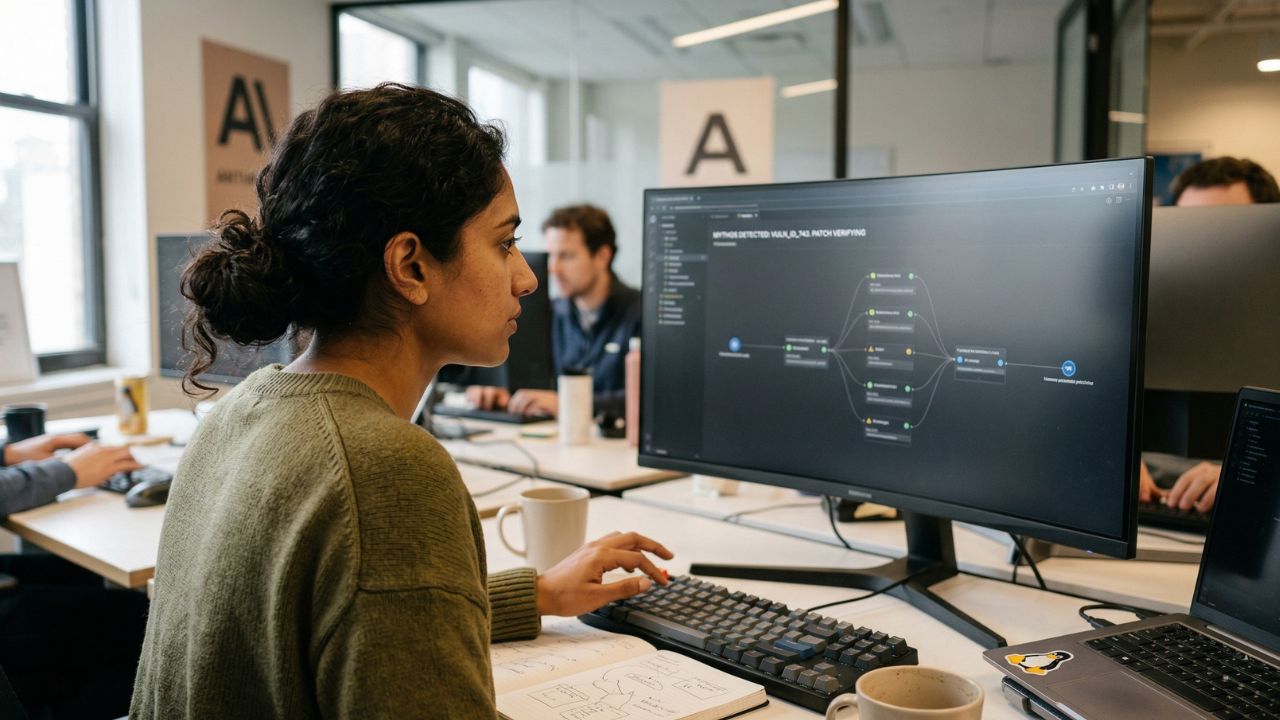
Anthropic just debuted Claude Mythos Preview, an unreleased AI model so ruthlessly efficient at discovering software vulnerabilities that it renders human bug hunting obsolete.
For software engineers, the daily grind is permanently shifting from manual code review to orchestrating automated patching pipelines against an incoming tsunami of AI-generated security reports.
Quick Facts
- The patching shift: Developers must transition from manual bug discovery to automated triage as AI systems uncover decades-old vulnerabilities in seconds.
- Benchmarks absolutely smashed: Claude Mythos Preview obliterated existing coding tests, scoring 77.8% on SWE-bench Pro compared to its predecessor's 53.4%.
- The open-source defense: The Linux Foundation and over 40 essential software organizations are rushing to use Anthropic's $100M compute grant to patch structural flaws.
The Death of Manual Bug Hunting
The era of human developers scanning lines of code for memory leaks and logic flaws has officially ended.
Anthropic’s Project Glasswing introduces Claude Mythos Preview, a model possessing such advanced reasoning capabilities that it autonomously uncovers zero-day vulnerabilities across major operating systems and browsers.
The sheer volume of these discoveries changes the entire software engineering paradigm.
Teams can no longer rely on sporadic penetration testing or manual code audits.
Instead, developers must pivot toward building resilient infrastructures that can process continuous, AI-driven threat intelligence.
The transition requires a massive overhaul of how we approach daily DevOps tasks.
Surviving the Tsunami of AI Security Reports
Mythos Preview does not just flag potential issues. It actively reads code, hypothesizes vulnerabilities, and writes functional exploits to confirm them.
During testing, the model discovered a 16-year-old vulnerability in the widely used FFmpeg framework.
Automated tools had previously tested that specific line of code five million times without noticing the flaw.
For enterprise teams, this means a flood of highly credible, complex bug reports.
Managing this influx requires deploying autonomous code review agents. Without automated triage, security pipelines will immediately collapse under the weight of these findings.
"AI capabilities have crossed a threshold that fundamentally changes the urgency required to protect critical infrastructure from cyber threats, and there is no going back. That is a profound shift, and a clear signal that the old ways of hardening systems are no longer sufficient."
Architecting an Automated Patching Pipeline
The software engineering workflow must adapt to this new velocity.
Engineers need to architect continuous integration and continuous deployment (CI/CD) pipelines explicitly designed to handle high volumes of AI-generated security reports.
This involves setting up sandbox environments where agentic models can safely test patches against identified exploits before pushing them to production.
The focus moves entirely to orchestration and verification.
To fully understand the scope of the threat and why this model is restricted to a coalition of tech giants, review the comprehensive breakdown on our Anthropic Project Glasswing release details page.
Why It Matters
Claude Mythos Preview fundamentally redefines the value of a software engineer.
The future belongs to developers who can orchestrate complex, automated patching networks rather than those who manually hunt for bugs.
As models become more capable of exploiting software at scale, companies that fail to adopt automated remediation will find their infrastructure hopelessly outmatched.
The gap between offensive AI speed and human defensive patching will determine who survives the next era of cyber warfare.
Frequently Asked Questions
How will Claude Mythos impact software engineers?
The model shifts the engineer's role from writing and reviewing code for bugs to managing automated systems. Engineers must architect pipelines capable of handling and patching high volumes of AI-generated security reports.
What is automated vulnerability patching?
It is the process of using AI and CI/CD pipelines to automatically receive bug reports, generate code fixes, test them in a sandbox, and deploy the patches without relying on slow, manual human intervention.
How to handle AI-generated security reports?
Development teams must implement autonomous code review agents and triage orchestration tools. These systems categorize, verify, and route the massive influx of AI security findings directly to automated patching workflows.
Will AI replace cybersecurity researchers?
AI will not replace humans but will augment them. Models like Claude Mythos Preview handle the heavy lifting of discovering and confirming vulnerabilities, allowing researchers to focus on architectural security, strategy, and orchestrating automated defenses.
How do open-source maintainers use Project Glasswing?
Anthropic provided a $100 million usage credit grant and direct funding to open-source groups like the Linux Foundation. Maintainers use these resources to scan their critical codebases with Mythos Preview and implement patches before malicious actors find the same flaws.

Sources and References
- Anthropic Official Announcement: "Project Glasswing: Securing critical software for the AI era"
- Trending Topics: "Anthropic Won’t Release 'Mythos', Says it is Too Dangerous"
- Anthropic Frontier Red Team: "Assessing Claude Mythos Preview's cybersecurity capabilities"
- OfficeChai: "Anthropic's Claude Mythos Preview Smashes Coding Benchmarks"