Why OpenAI’s JioStar Hire Just Made Your GCC Obsolete
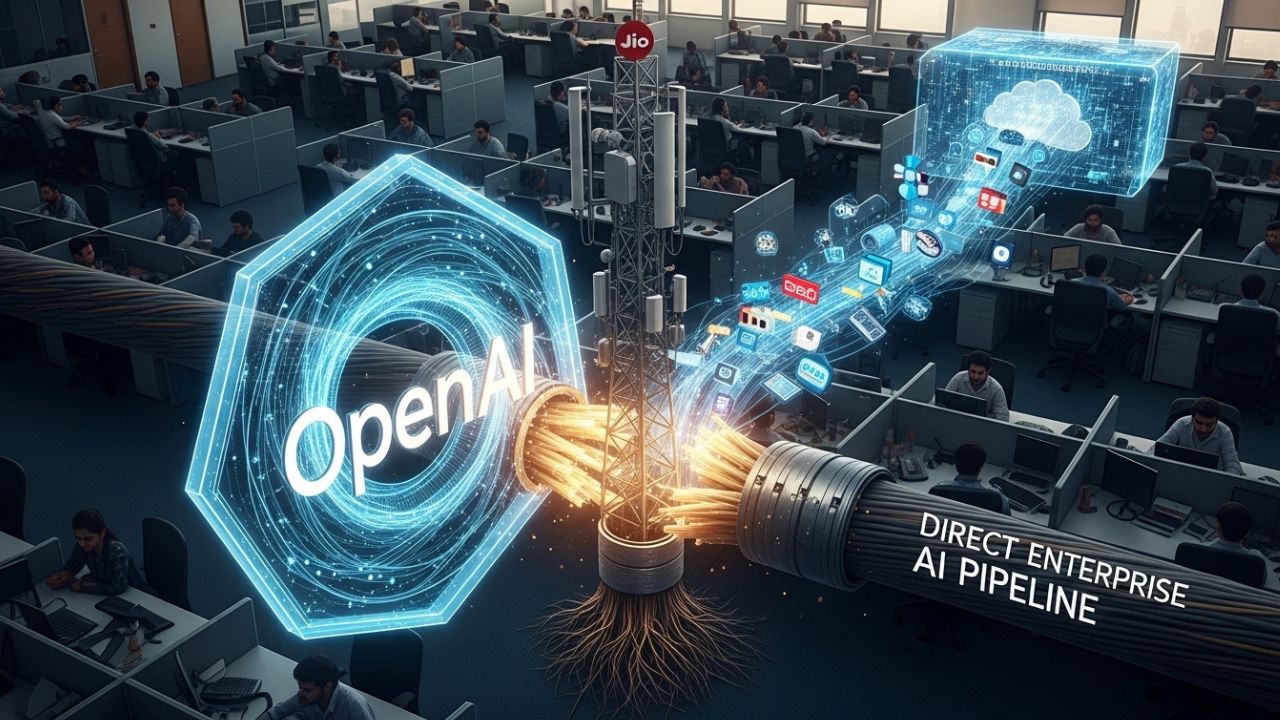
OpenAI just poached JioStar's digital CEO Kiran Mani to run its entire Asia-Pacific operation, signaling a ruthless pivot from selling basic API wrappers to embedding generative AI directly into India's telecom infrastructure.
This strategic media-executive hire immediately bypasses traditional Indian IT services, leaving standard Global Capability Centers scrambling to justify their existence.
The Retention Box
- The executive move: OpenAI hired former JioStar CEO Kiran Mani as APAC Managing Director starting June 2026.
- The telecom pipeline: This hire signals a shift toward embedding AI into telecom and media networks.
- The GCC threat: Offshore IT centers must pivot to AI infrastructure orchestration or face extinction.
- The enterprise impact: The direct-to-enterprise pipeline fundamentally changes Indian AI outsourcing.
The AI ecosystem just experienced a tectonic shift that threatens the very foundation of India's tech outsourcing model.
OpenAI confirmed the appointment of Kiran Mani, the former digital chief at JioStar, as its new Managing Director for Asia-Pacific.
Operating out of Singapore and reporting directly to Chief Strategy Officer Jason Kwon, Mani takes the reins in June 2026. This is not a standard corporate reshuffle.
Bringing a media and streaming titan into the world's most aggressive AI company reveals a calculated strategy to pipe AI compute directly to the consumer and enterprise edge.
The Direct-to-Telecom Pipeline
For decades, Indian IT services and Global Capability Centers thrived on building middleware.
They acted as the necessary bridge between Western enterprise software and global execution. The Mani appointment shatters this historical model.
By leveraging executive experience from platforms like JioHotstar, OpenAI is positioning itself to embed generative AI directly into India's massive telecom and media pipelines.
This approach cuts out the middlemen who currently rely on traditional offshore billing methods.
"OpenAI hiring a JioStar veteran isn't just an executive shuffle; it's a calculated move to embed generative AI directly into India's massive telecom and media pipelines."
The Extinction Event for Middleware
This pivot forces a brutal reckoning for every offshore technology hub.
If AI models are distributed directly via telecom monopolies, the basic infrastructure built by traditional GCCs becomes redundant.
Engineers currently writing JSON-parsing architectures or basic text integrations will find themselves displaced rapidly.
The demand is shifting aggressively toward orchestrating localized AI infrastructure instead of maintaining legacy systems.
Leaders must recognize that this direct-to-enterprise distribution bypasses traditional Indian IT services entirely.
To survive the shift, centers must rapidly adopt an AI-Native Global Capability Center operating model.
Why It Matters
The golden age of Indian IT middleware is dead. As OpenAI locks in regional distribution through high-bandwidth channels, the localized enterprise ecosystem will integrate AI natively without requiring sprawling third-party IT contracts.
For developers, understanding the new multimodal developer architecture is no longer optional.
Meanwhile, technology officers rushing into these new direct pipelines must remain vigilant against the localized API cost trap.
The companies that survive will be those that stop building basic integrations and start orchestrating sovereign compute environments.
Frequently Asked Questions
1. What is OpenAI's new APAC strategy in India?
The company is aggressively shifting to embed AI compute natively into local media and telecom networks.
2. How will OpenAI's JioStar hire impact Indian IT services?
This executive move directly threatens traditional IT outsourcing by establishing a direct-to-enterprise AI distribution pipeline.
3. Are Indian GCCs threatened by localized AI distribution?
Yes. Bypassing offshore IT effectively forces centers to pivot from basic middleware to localized infrastructure management or face obsolescence.
4. What does a media executive mean for OpenAI's enterprise expansion?
Bringing in a streaming titan signals a focus on massive-scale digital distribution and high-bandwidth consumer delivery rather than traditional software sales.
5. How can Indian GCCs pivot to an AI-first operating model?
Centers must immediately transition from handling legacy integration tasks to orchestrating complex, localized AI environments.
6. Why is OpenAI partnering with Indian telecom networks?
Leveraging existing telecom monopolies allows the company to rapidly deploy high-bandwidth AI tools directly to end users.
7. Will OpenAI offer subsidized localized API pricing in India?
Market indicators suggest the company may use telecom bundles to temporarily lower compute costs and crowd out local alternatives.
8. How does sovereign AI compute affect offshore outsourcing?
Because sovereign models require data to stay in-country, offshore hubs must adapt to managing isolated, highly secure local hardware.
9. What are the AI skill requirements for Indian developers in 2026?
Software engineers must move away from text-based API wrappers and master real-time multimodal streaming protocols.
10. How will the Indian enterprise ecosystem integrate OpenAI natively?
Businesses will bypass third-party IT service vendors, opting to consume AI directly through bundled telecom and media subscriptions.