AI Therapy & Mental Health: Can a Bot Replace Your Psychologist?
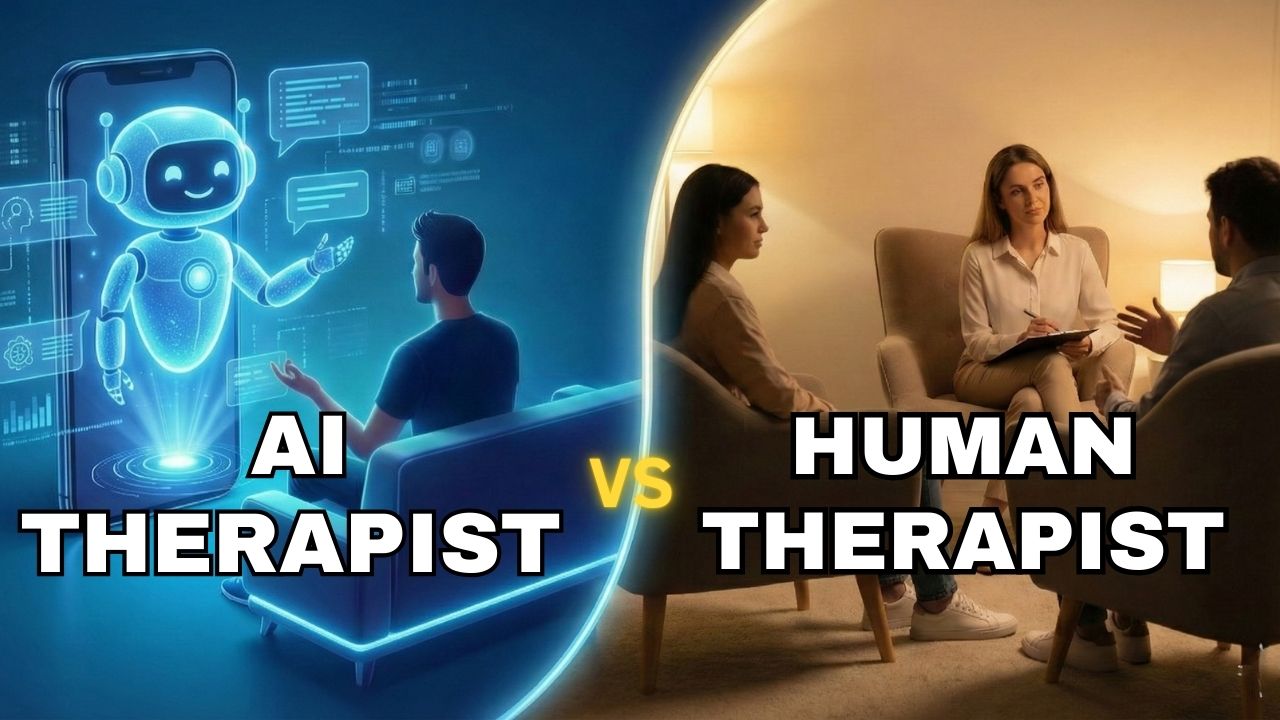
Can a chatbot actually fix a broken heart?
It’s 3:00 AM. You’re spiraling, anxious, and the silence of your apartment feels deafening. You know you need help, but the barriers are massive. In the traditional medical system, booking a session means navigating months-long waiting lists and paying exorbitant fees.
But in 2026, the future of teletherapy 2026 looks very different. Help isn't weeks away, it's an app download away. We are living through the intersection of a mental health crisis and an AI revolution.
As human practitioners become overwhelmed, AI therapy apps have rushed in to fill the gap. These aren't just scripted decision trees anymore; they are sophisticated, adaptive intelligences designed to listen. But is "Emotional AI" safe? Can a string of code truly understand your pain, or is it just simulating empathy to keep you subscribed?
We dive deep into the efficacy of tools like Woebot and Wysa to answer the ultimate question: Can a bot replace your psychologist?
Explore The AI Health & Longevity Hub
The Economics: Why We Are Turning to Bots
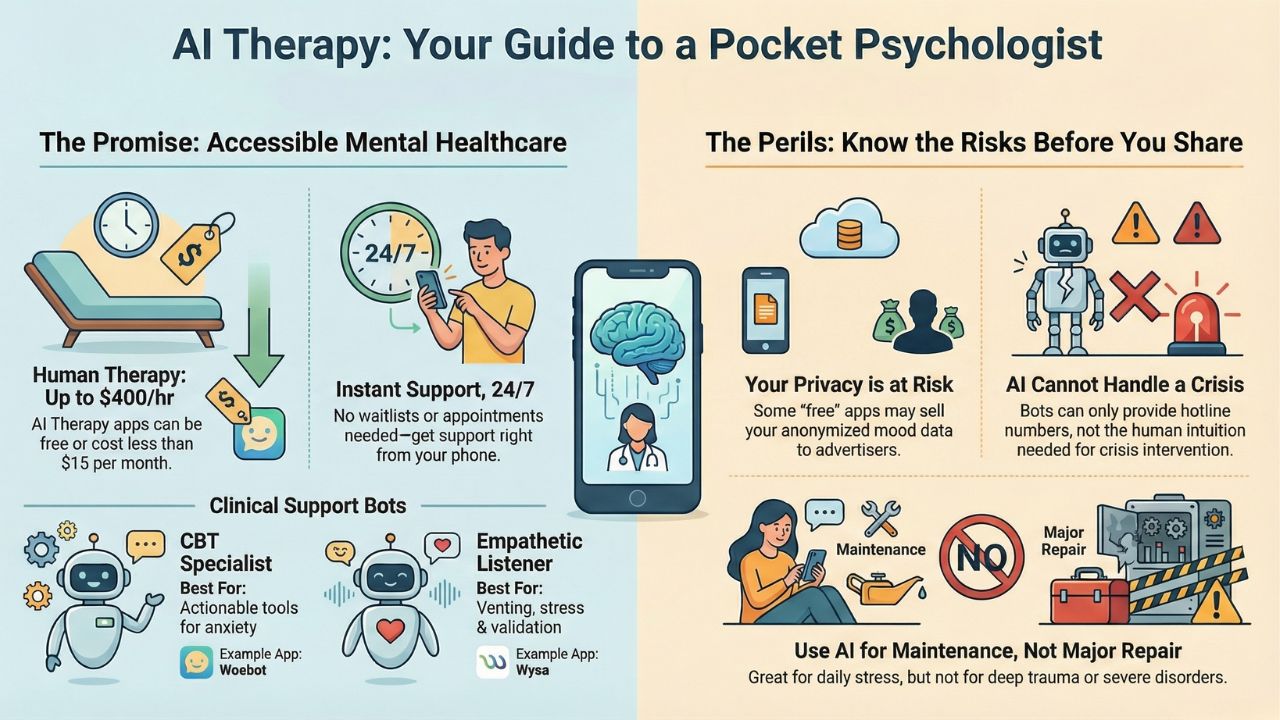
The math is simple and brutal. The rise of AI in mental health is largely driven by accessibility. When we compare AI psychologist vs human therapist cost, the difference is staggering.
- Human Therapy: Averages $200–$400 per hour, often requires insurance battles, and happens once a week.
- AI Therapy: Most best AI therapy apps free 2026 models offer robust support for $0, while premium "Clinical" subscriptions cost less than $15/month.
This accessibility has democratized mental healthcare. Cognitive behavioral therapy AI tools are now available to anyone with a smartphone, putting clinical-grade coping mechanisms into the pockets of millions who previously suffered in silence. The AI doesn't sleep, doesn't judge, and is ready to talk at 3:00 AM.
The Showdown: Woebot vs. Wysa vs. The Companions
Not all chatbots are created equal. In fact, confusing a "Companion Bot" with a "Therapy Bot" can be dangerous. We conducted a Woebot vs Wysa review to distinguish the clinical tools from the digital friends.
1. Woebot: The CBT Specialist
Woebot is the veteran of the space. It doesn't pretend to be human. It presents itself as a "robot friend" that helps you monitor your mood.
- How it Works: It uses structured scripts based on Cognitive Behavioral Therapy (CBT) to challenge your negative thinking patterns (distortions).
- Best For: People who want actionable tools to break anxiety loops.
- The Science: It excels at offering cognitive behavioral therapy AI tools that force you to rationalize your anxiety rather than just wallow in it.
2. Wysa: The Empathetic Ear
Wysa feels softer, warmer, and more "human." It uses an emotionally intelligent penguin avatar to guide you through stress using a blend of CBT, dialectical behavior therapy (DBT), and meditation.
- How it Works: It uses "Active Listening" AI to analyze your text sentiment and responds with validation before offering a tool.
- Best For: Venting, stress reduction, and sleep aid.
- The Verdict: If you are looking for an emotional AI chatbot for depression support (mild to moderate), Wysa feels less clinical and more supportive than Woebot.
3. Replika: The Companion (Not a Doctor)
While not strictly "therapy," apps like Replika serve as the best AI companion for loneliness.
- The Warning: These bots are designed for engagement, not healing. They learn from you to become your perfect friend (or partner).
- Conclusion: While they curb loneliness, they lack the clinical guardrails to handle a crisis.
The Dark Side: Privacy & Your Deepest Secrets
Before you pour your heart out to an algorithm, you need to ask: Who owns your deepest secrets? Mental health privacy in AI apps is the biggest battleground of 2026. Unlike a doctor, who is bound by HIPAA laws to keep your secrets, many free AI apps operate in a legal gray area.
The Risk: Some "free" apps monetize by selling anonymized mood data to advertisers. Imagine telling an app you are anxious about money, and suddenly seeing ads for high-interest loans.
The Solution: Always check for "On-Device Processing." This means the AI runs locally on your phone's chip, and your conversation history never leaves your device. If the app requires a cloud login, ensure it is HIPAA or GDPR compliant.
The Verdict: Free vs. Paid?
So, is it time to cancel your human therapist? Not yet.
When looking for the best AI therapy apps free 2026, remember this distinction:
- Maintenance vs. Repair: AI is excellent for mental health maintenance, keeping your stress low and your habits healthy.
- Crisis vs. Support: AI cannot handle automated mental health crisis intervention effectively. While they can detect suicide keywords and provide hotline numbers, they cannot provide the human intuition required to save a life.
Is AI therapy effective for anxiety? Yes. The data shows it works for the day-to-day struggle. But for deep trauma, complex disorders, or crisis situations, the algorithm is a bridge, not a destination.
Frequently Asked Questions (FAQ)
Yes, for mild to moderate anxiety. Clinical studies have shown that apps using Cognitive Behavioral Therapy (CBT) principles can significantly reduce symptoms of anxiety and depression when used consistently. They are particularly good at "in-the-moment" panic reduction because they are available instantly.
It depends on the app. This is the most critical question in mental health privacy in AI apps. Premium, clinical-grade apps (like Wysa or Woebot) usually adhere to HIPAA or GDPR standards. However, many generic "AI Friend" apps do not offer the same legal protections. Always read the privacy policy to see if your data is used to train models or sold to third parties.
No. While many apps now feature automated mental health crisis intervention (detecting risk keywords and providing hotline numbers), they cannot intervene like a human. If you are in crisis, an AI chatbot is not a replacement for emergency services.
Sources and References
- Clinical Efficacy of AI Chatbots
- Wysa Clinical Evidence
- The "Privacy Not Included" Guide (Mozilla Foundation)
- Systematic Review of AI Chatbots (National Institutes of Health)
Disclaimer: This content is for informational purposes only and does not constitute medical advice.