Neo Robot vs Optimus: Which Humanoid Will Move Into Your Home First?
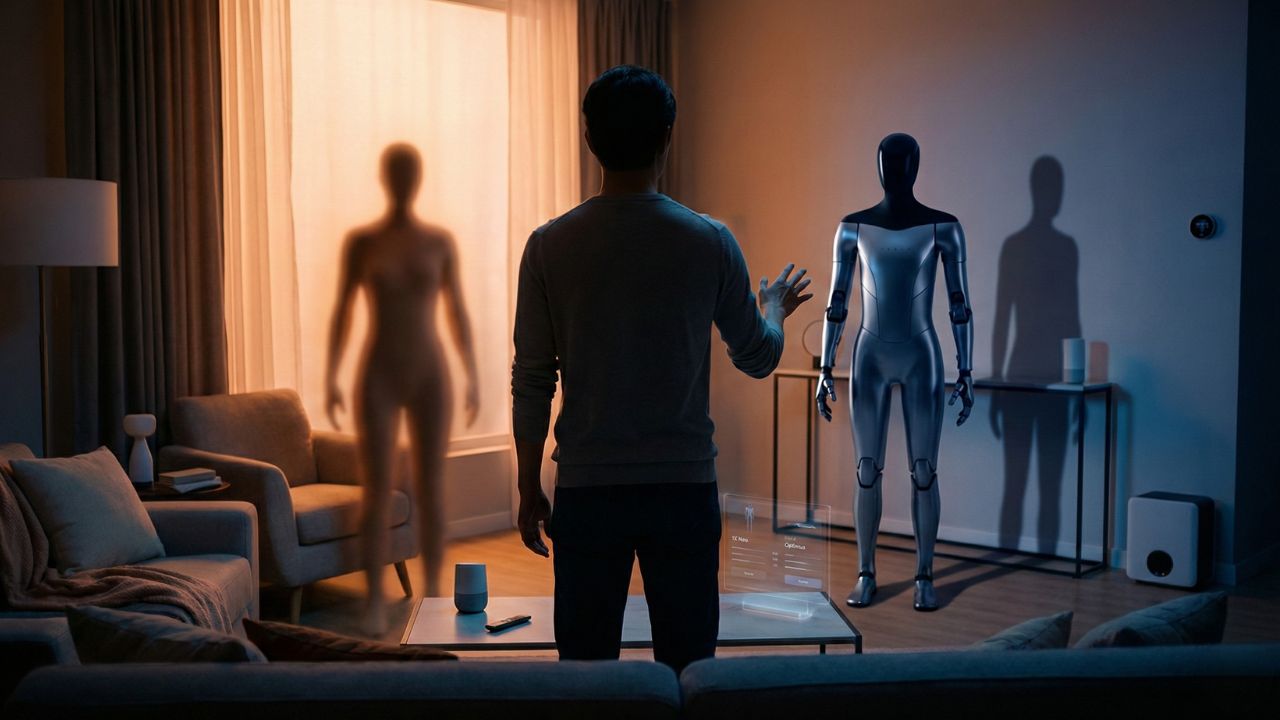
Key Takeaways: The 2026 Showdown
- Design Philosophy: 1X Neo uses "bio-inspired" soft muscles for safety, while Tesla Optimus utilizes a rigid metal skeleton for strength.
- Safety: Neo is designed specifically to not injure humans during accidental contact; Optimus relies on vision sensors to avoid contact entirely.
- Availability: Both are moving from industrial pilots to consumer waitlists in 2026.
- Best For: Choose Neo for safe interaction in tight spaces (kitchens/nurseries). Choose Optimus for heavy lifting and garage work. To ensure your kitchen is robot-ready, try redesigning the layout with AI Interior Design Tools to eliminate navigation hazards.
The Battle for the Living Room
The year 2026 marks the end of the prototype phase and the beginning of the "Android Era." But for the average homeowner, the choice isn't simple. You aren't just choosing a gadget; you are choosing a roommate.
In the high-stakes battle of neo robot vs optimus, we are witnessing a clash of two very different philosophies. One believes a robot should be a soft, organic extension of the home. The other believes it should be a precise, industrial machine adapted for domestic life.
This deep dive is part of our extensive guide on AI Living 2026: From Chatbots to Humanoids & Smart Cities. If you are ready to reclaim your time from household chores, you need to know which machine is safe enough to sleep in your house.
1X Neo: The "Soft-Body" Revolution
1X Technologies has taken a radically different approach with Neo. Unlike traditional robots, Neo does not use rigid hydraulics or gears for every joint. Instead, it utilizes a "muscle-like" anatomy. This is the defining feature of the neo robot vs optimus debate.
Why "Soft" Matters?
Impact Safety: If Neo bumps into you, it yields. It feels like bumping into a person, not a metal pole.
Silence: The tendon-driven system is whisper-quiet compared to industrial servos.
Appearance: It wears a "suit" that hides the mechanics, making it look less like a science experiment and more like a helper.
For families with pets or small children, this "soft-body" design is currently challenging Tesla’s dominance for peace of mind.
Tesla Optimus: The Metal Powerhouse
Tesla’s Optimus (Gen 2 and beyond) is an engineering marvel born from the factory floor. Elon Musk’s vision was to solve labor shortages, and that DNA is evident in the robot's design. It is built to lift, carry, and endure.
The Optimus Advantage:
Raw Strength: Optimus generally outperforms in lifting capacity, making it ideal for carrying groceries, moving furniture, or working in the garage.
Vision AI: Leveraging the same FSD (Full Self-Driving) computer used in Tesla cars, Optimus has world-class spatial awareness.
Manufacturing Scale: Tesla knows how to mass-produce. This could make repairs and parts more accessible long-term.
However, the question remains: Do you want a metal powerhouse walking near your furniture? For a detailed breakdown of the weight and lifting differences, check out our analysis on 1X Neo vs Optimus specs.
Hand Dexterity: Who Folds Better?
The "iPhone moment" for robotics isn't walking; it's manipulating objects. If a robot can't fold a shirt or crack an egg, it's useless in a home.
Tesla Optimus: Uses tactile sensors in fingertips to "feel" pressure. Demos have shown it handling eggs and folding shirts, though often tele-operated during training.
1X Neo: Relies on data-driven "embodied AI." Because its hands are compliant (soft), it naturally grips objects more like a human hand, allowing for a higher margin of error without breaking things.
The Verdict: Cost and Release
The race is neck-and-neck. While Tesla captures headlines, 1X is quietly targeting the consumer subscription model. Many analysts predict that while Optimus may cost $20,000+ upfront, Neo might offer a "Robot-as-a-Service" model to lower the barrier to entry.
Curious about the monthly costs? Read our breakdown of the 1X Neo robot price. If you are waiting for the Tesla drop, keep an eye on our tracker for the Tesla Optimus Gen 2 release date.
Conclusion
The neo robot vs optimus showdown isn't just about specs; it's about trust. If you want a heavy-duty worker for the garage and yard, Tesla Optimus is the clear winner.
But if you want a gentle companion that can safely navigate a crowded kitchen, 1X Neo’s soft-body design makes it the frontrunner for the sentient home of 2026. Whichever you choose, the future of home robotics 2026 is finally here.
Optimize Your AI Workflow. Try Survey Monkey AI

We may earn a commission if you buy through this link. (This does not increase the price for you)
Frequently Asked Questions (FAQ)
The main difference is the physical construction. 1X Neo uses a "soft-body" muscle-like system designed for safe human interaction, whereas Tesla Optimus uses a rigid metal skeleton with electromechanical actuators designed for industrial precision and strength.
Generally, yes. Neo’s lightweight and compliant (soft) design means that accidental collisions are less likely to cause injury. Optimus is heavier and harder, relying heavily on software and sensors to prevent accidents rather than physical softness.
Both are highly capable, but they achieve it differently. Optimus uses advanced tactile sensors to regulate pressure. Neo uses compliant gripping, meaning its hands naturally conform to the shape of objects (like dishes or laundry), which can be more forgiving for delicate household chores.
Optimus typically leads in raw lifting capacity and battery endurance due to its industrial roots. Neo leads in power-to-weight ratio and safe operational speed in confined spaces.
Yes. 2026 is projected to be the year these robots move from waitlists to actual shipping products for early adopters, though initial quantities may be limited.