AI Likeness Rights: Why Using a "Deepfake Spokesperson" Might Bankrupt You
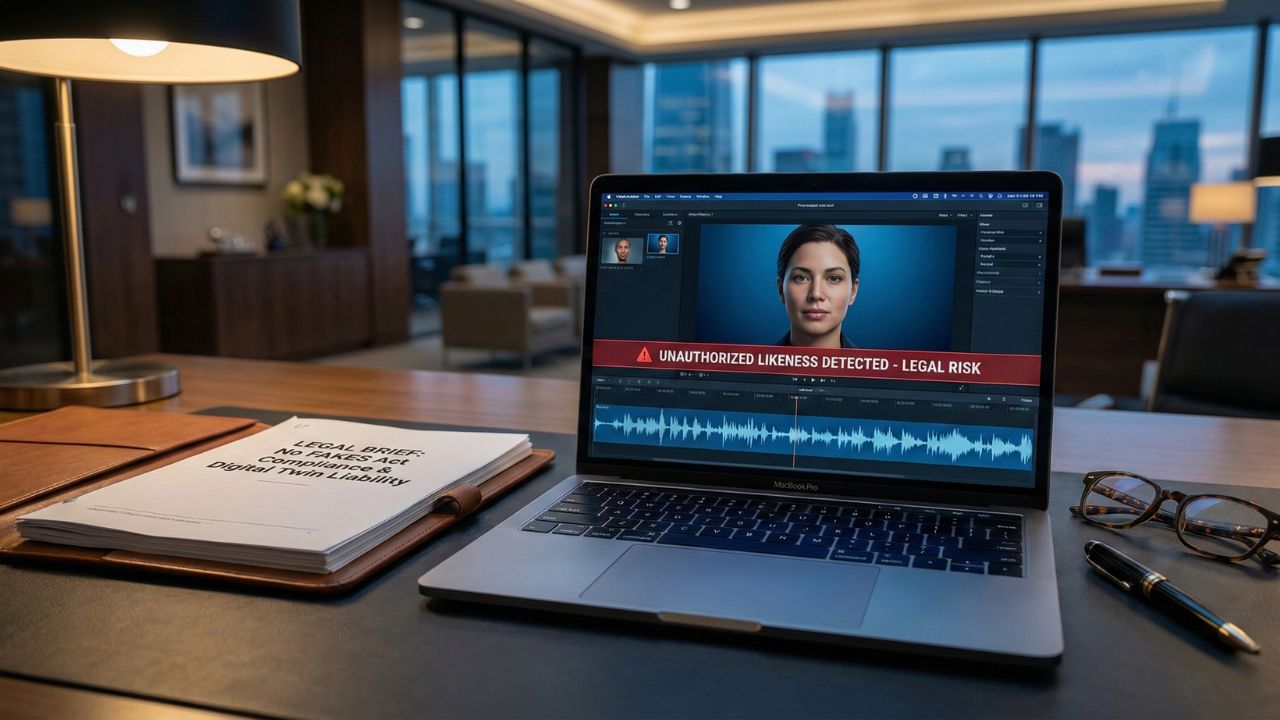
Quick Summary: Key Takeaways
- Your Face is Property: In 2026, your voice and image are distinct intellectual property assets known as "Digital Twins."
- The No FAKES Act: New federal laws make it a felony to use an unauthorized digital replica of a human (living or dead) for commercial gain.
- Strict Liability: You are liable even if you didn't know the AI voice was cloned from a celebrity.
- Contract Traps: Never sign a "perpetual" rights deal for your own digital twin; restrict it to specific projects.
- Post-Mortem Rights: The "right of publicity" now extends decades after death, meaning you can't just resurrect Elvis for a YouTube intro.
The technology to clone a voice or face is now free and instant. However, the legal permission to use it is incredibly expensive.
If you are navigating the complex world of AI likeness rights and personal digital twin law, you are walking through a minefield.
A single unauthorized "deepfake" in your marketing campaign can lead to a lawsuit that wipes out your entire business.
This deep dive is part of our extensive guide on Best AI Passive Income Ideas 2026.
While tools like ElevenLabs or HeyGen allow you to create "virtual spokespeople," the law has caught up. Ignorance is no longer a defense. You must understand the boundaries of identity rights to keep your passive income streams safe.
The No FAKES Act: The New Law of the Land
For years, deepfakes were a legal gray area. That ended with the No FAKES Act (Nurture Originals, Foster Art, and Keep Entertainment Safe Act).
This legislation standardized AI likeness rights and personal digital twin law at the federal level.
What this means for you:
- Consent is Mandatory: You cannot use a "sound-alike" voice that intentionally mimics a celebrity (the "Tom Waits" or "Scarlett Johansson" precedent).
- Labeling is Insufficient: Putting "AI Parody" in the title does not protect you if the content is commercial (i.e., you are making money from ads or sales).
- Platform Liability: YouTube and TikTok will ban your channel instantly to avoid being sued themselves.
If you are unsure if your content crosses the line, reviewing the broader Ethics of AI-Generated Assets is a critical next step.
The "Digital Twin" Contract Trap
Are you a creator licensing your own face? Many "UGC" (User Generated Content) agencies now ask creators to sign away their digital twin rights.
Read the fine print:
- Scope: Does the contract say "perpetual, universe-wide"? Strike that out. Limit it to "1 year, specific campaign only."
- Exclusivity: If you sign an exclusive deal, you might be legally barred from using your own face on your own YouTube channel.
Protecting your personal brand is just as important as protecting your wallet.
For financial safeguards, consider exploring AI Content Liability & Indemnity to see how insurance can cover these contract disputes.
Post-Mortem Rights: The "Zombie Celebrity" Rule
One of the most tempting "passive income" ideas is using historical figures to narrate history channels. Stop immediately.
The right of publicity often extends 70+ years after death.
- Elvis Presley: Owned by a specific estate.
- Marilyn Monroe: Heavily litigated.
- Generic Voices: You can use a generic "1950s News Anchor" voice, but you cannot market it as a specific person.
Verification Protocols for 2026
To operate safely, you need a "Clean Chain of Title."
- Voice Banks: Only use AI voices from platforms that pay royalties to the original voice actors (e.g., ElevenLabs "Iconic" tier).
- Written Consent: If you clone a friend's voice for a podcast, get a signed "Digital Replica Release Form."
- No "Sound-Alikes": Do not prompt the AI with "Make it sound like Morgan Freeman." Use generic descriptors like "Deep, authoritative, warm."
Conclusion
The era of the "wild west" deepfake is over. Mastering AI likeness rights and personal digital twin law is the only way to build a sustainable media brand.
The technology allows you to be anyone, but the law requires you to be authorized. Don't let a 30-second AI clip cost you a lifetime of earnings.

Frequently Asked Questions (FAQ)
The No FAKES Act is a federal proposal/law that creates a standardized intellectual property right in one's voice and likeness. It allows individuals (or their estates) to sue anyone who creates, hosts, or shares an unauthorized digital replica of their voice or visual likeness.
Generally, no. Most states recognize "post-mortem rights of publicity," meaning the estate of the deceased controls their likeness for decades after death. Using an AI clone of a deceased celebrity for commercial gain without a license is illegal.
You do, initially. However, many AI platforms or modeling agencies include clauses in their contracts that attempt to transfer these rights to them. Always verify if you are licensing your twin or selling it.
You must obtain a specific "Digital Rights Release." This contract should define exactly how the AI avatar can be used (e.g., "social media ads only"), for how long (e.g., "6 months"), and prohibits the creation of offensive or defamatory content using the replica.
Penalties can be severe, including statutory damages (fines per violation), disgorgement of all profits made from the content, and payment of the victim's legal fees. In some jurisdictions, intentional unauthorized deepfakes are becoming criminal offenses.
Sources & References
- Best AI Passive Income Ideas 2026
- Ethics of AI-Generated Assets
- AI Content Liability & Indemnity
- View Repository on GitHub
- Congress.gov: S. 4875 - NO FAKES Act of 2024 (Text/Status)
- U.S. Patent and Trademark Office (USPTO): Inventorship Guidance for AI-Assisted Inventions
Internal Resources:
External Authorities: