Generative AI for DevOps Pipeline Automation: From Incident to Resolution in Seconds.
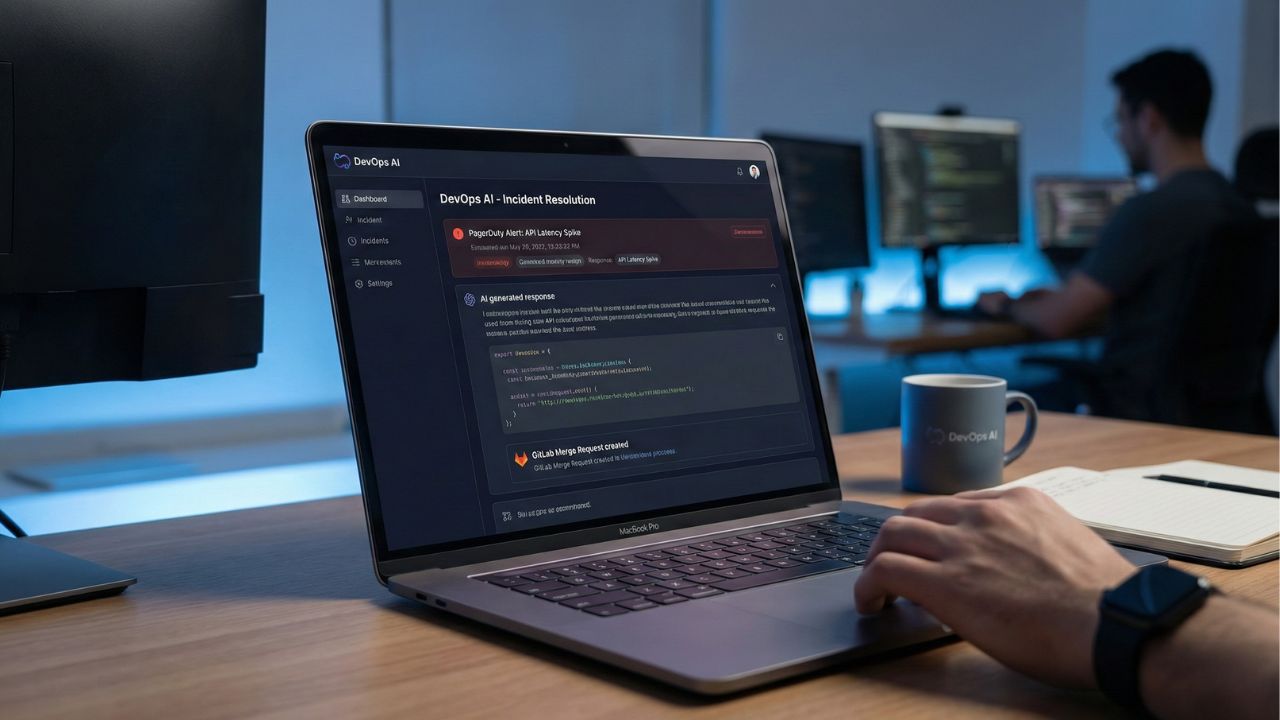
Quick Summary: Key Takeaways
- Instant Incident Response: Eliminate late-night firefighting by allowing AI to instantly diagnose and resolve server outages.
- Automated IaC Scripts: Effortlessly generate flawless Terraform and Kubernetes configurations using natural language prompts.
- Proactive Cloud Savings: Dramatically lower your monthly AWS or Azure bills with AI-driven, real-time resource scaling.
- Self-Healing Infrastructure: Deploy autonomous CI/CD pipelines that automatically rollback or patch themselves during failed deployments.
Managing complex cloud infrastructure manually is a direct path to engineering burnout and catastrophic downtime.
Today, mastering generative AI for DevOps pipeline automation is the ultimate strategy to maintain 99.99% uptime while cutting operational overhead.
This deep dive is part of our extensive guide on AI and Gen AI Tools for Productivity and Decision Making in IT Software and Product Development.
By completely modernizing your operations, your team can go from a critical incident to full resolution in mere seconds.
The End of Manual Incident Resolution
When a production server goes down, every second counts. Historically, Site Reliability Engineers (SREs) had to manually parse through millions of lines of logs to find the root cause.
Modern AI tools eliminate this bottleneck by scanning vast datasets and highlighting the exact line of code causing the failure.
AI-Powered Log Anomaly Detection
Generative AI does not just find errors; it understands context.
It continuously monitors your system's baseline performance, instantly flagging unusual traffic spikes or latency issues.
This allows DevOps teams to proactively address vulnerabilities before they escalate into full-blown customer outages.
Automating Infrastructure as Code (IaC)
Writing and updating Infrastructure as Code is notoriously repetitive and prone to syntax errors.
AI agents act as elite co-pilots, translating simple English commands into complex, production-ready deployment scripts.
Whether you need to provision a new database or configure a load balancer, AI handles the syntax perfectly.
Eliminating Documentation Debt
A major pain point in DevOps is keeping infrastructure documentation accurate as environments rapidly evolve.
AI solves this by automatically generating clear, highly detailed documentation directly from your codebase.
For a complete architectural overview, you can pair this with AI tools for software architecture diagramming and documentation to instantly visualize your cloud setup.
Building Self-Healing CI/CD Workflows
The ultimate goal of DevOps is to create a deployment pipeline that requires zero human intervention.
AI enables "self-healing" workflows that can automatically detect a broken build, diagnose the error, and apply a patch.
If a patch fails, the AI gracefully rolls back the deployment to the last stable version without disrupting users.
Cloud Cost Optimization
Wasted cloud resources quietly drain enterprise budgets every single month.
Generative AI continuously audits your multi-cloud usage, identifying idle instances and recommending highly specific downsizing strategies.
This financial control aligns perfectly with AI-driven decision making tools for it leadership, ensuring your tech stack remains completely cost-efficient.
Conclusion
The future of cloud operations belongs to teams that embrace radical automation.
Clinging to manual monitoring and manual scripting will only lead to slower releases and higher cloud costs.
By implementing generative AI for DevOps pipeline automation, you guarantee secure, cost-effective, and highly resilient infrastructure for years to come.
Scale Securely with Proven Tools. Try Similarweb

We may earn a commission if you buy through this link. (This does not increase the price for you)
Frequently Asked Questions (FAQ)
Generative AI is used in DevOps to completely automate repetitive administrative tasks, rapidly analyze complex server logs, and write infrastructure scripts. It acts as an intelligent assistant that helps SREs deploy code faster, troubleshoot production incidents instantly, and optimize continuous integration workflows.
Yes, advanced AI coding assistants can generate highly accurate Terraform and Pulumi scripts from simple natural language prompts. Engineers can describe the cloud architecture they need, and the AI will instantly output the correct syntax, complete with security best practices and standardized resource tags.
You can integrate AI-driven observability tools directly into your centralized logging platforms, like Datadog or Splunk. The AI establishes a baseline of normal system behavior and immediately alerts your team the moment it detects subtle deviations, hidden error spikes, or unusual resource consumption.
Top AI tools for cloud cost savings include platforms like CloudHealth, AWS Cost Explorer's machine learning insights, and Spot.io. These tools use predictive analytics to analyze your historical usage, automatically scale down over-provisioned resources, and recommend the most cost-effective server instances.
Absolutely. Generative AI tools can read your existing Infrastructure as Code repositories and instantly generate comprehensive, human-readable documentation. This ensures that your deployment guides, network configurations, and security policies are always up-to-date, perfectly matching your actual production environment.
Sources & References
- AWS: Generative AI for DevOps Operations
- Datadog: The Future of AI in Observability
- HashiCorp: Automating Terraform with AI Copilots
- AI and Gen AI Tools for Productivity and Decision Making in IT Software and Product Development
- AI Tools for Software Architecture Diagramming and Documentation
- AI-Driven Decision Making Tools for IT Leadership
External Sources:
Internal Sources: