How to Get Cited in ChatGPT Search: Why "Information Gain" is the Only Moat Left
Key Takeaways
- Standard SEO is dead: Copycat content and skyscraper techniques no longer work in the Generative Engine era.
- Information Gain is your shield: AI models prioritize unique, proprietary data points over regurgitated consensus content.
- First-party data is king: Original research, user surveys, and proprietary benchmarks form an unbreakable brand data moat.
- Semantic proximity matters: Your unique facts must closely align with the core entity to be considered relevant by LLMs.
- Extraction is the goal: The true objective is to force answer engines to synthesize your proprietary facts into their direct responses.
If you are wondering how to get cited in ChatGPT search, you must completely rethink your content strategy.
The old playbook of rewriting the top ten Google results will now guarantee your invisibility.
Today, AI answer engines are looking for the "aha!" factor, data that simply doesn't exist anywhere else.
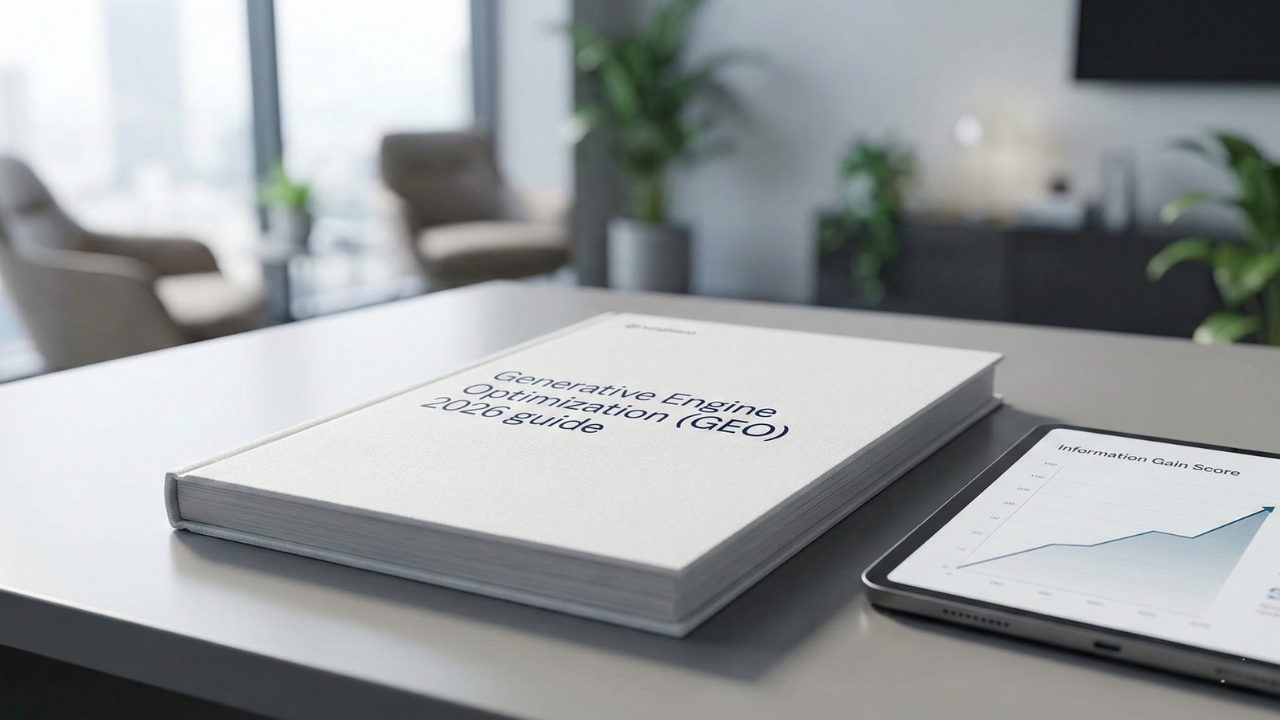
This deep dive is part of our extensive guide on Generative Engine Optimization (GEO) 2026 guide.
We will explore exactly how to build a brand data moat that forces LLMs like SearchGPT and Perplexity to use your website as their foundational truth.
The Death of Consensus Content
For years, marketers relied on consensus content. They aggregated what everyone else was saying, made it slightly longer, and called it a day.
AI models process consensus content in milliseconds. If your page simply repeats what the knowledge graph already knows, you will be skipped.
To win in 2026, you must introduce net-new information to the algorithmic ecosystem.
What is Information Gain?
In the context of AI search, Information Gain is a score that measures how much new, non-redundant insight your content adds to a specific topic.
If an LLM has ingested 10,000 articles on digital marketing, your article must provide the 10,001st unique perspective to be deemed valuable.
This is the only way to avoid being filtered out as derivative noise.
Building Your Brand Data Moat
A brand data moat is a defensive wall of proprietary information that competitors, and AI bots, cannot easily replicate.
It forces answer engines to cite you because you are the exclusive source of that specific data point.
First-Party Surveys and Data
You must become a primary source. Stop quoting other people's statistics and start generating your own.
- Run customer surveys: Ask your user base highly specific, niche questions.
- Publish product usage stats: Anonymize and aggregate your own platform data.
- Conduct expert interviews: Capture fresh quotes from verified industry leaders.
When you consistently publish original research, your Author Entity Optimization efforts naturally compound, making your brand a recognized node of authority.
Proprietary Benchmarks
Nothing attracts an LLM's attention quite like a proprietary benchmark or framework.
Create custom grading systems or unique performance metrics specific to your industry.
When users prompt ChatGPT asking for industry standards, the AI will pull your proprietary benchmark, citing your domain as the definitive source.
Structuring Unique Facts for AI Citations
Having unique information is useless if the AI cannot parse it. You must structure your facts for immediate extraction.
Semantic Proximity
Your unique facts must remain highly relevant to the core topic.
Do not add random information just to artificially boost your uniqueness score.
Ensure that your proprietary data points are semantically close to the main entity the user is searching for.
The Fact-to-Word Ratio
Fluff is the enemy of Generative Engine Optimization. AI models prioritize density.
- Trim the fat: Remove lengthy introductions and redundant transitions.
- Front-load data: Put your most unique statistics in the first three paragraphs.
- Use bolding: Highlight the specific, unique entities you want the AI to extract.
Once your data is highly structured, tracking its performance becomes critical.
You can learn more about measuring this impact in our guide on AI Search Performance Tracking Metrics.
Conclusion
The era of lazy content creation is officially over. If you want to know how to get cited in ChatGPT search, the answer lies in becoming a primary source of truth.
By embracing an Information Gain content strategy, executing first-party research, and building an impenetrable brand data moat, you guarantee your place in the generative search results of 2026 and beyond.
Scale Securely with Proven Tools. Try Landing AI

We may earn a commission if you buy through this link. (This does not increase the price for you)
Frequently Asked Questions (FAQ)
ChatGPT and SearchGPT prioritize sources that offer the highest Information Gain, meaning they cite websites that provide unique facts, original research, or proprietary data that cannot be found in consensus content.
Information Gain is a metric that evaluates how much new, non-redundant information a specific webpage adds to a topic compared to all previously published content on that exact subject.
To be deemed useful by AI, your content must introduce net-new entities to the knowledge graph, such as proprietary benchmarks, fresh expert quotes, or unique first-party survey data.
Yes, original research is heavily prioritized because it represents the highest possible Information Gain score, making it a highly attractive source for LLMs trying to provide comprehensive answers.
While there is no exact number, aiming for a high fact-to-word ratio is crucial. You should feature at least 3-5 highly unique, proprietary data points or expert insights per sub-topic.