Session Overview
Bias, Accountability, and the Case for Regulating AI.
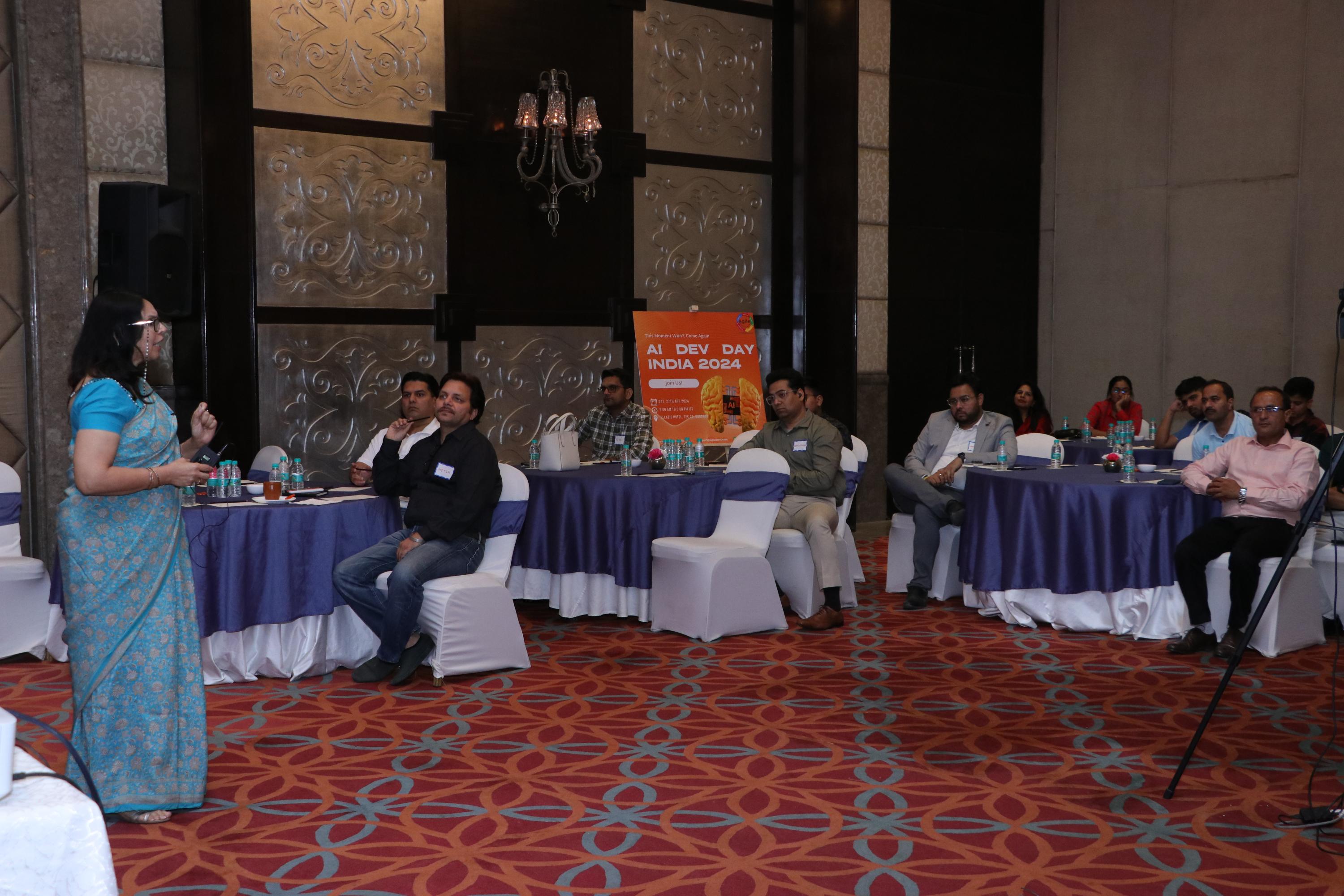
While most conversations about AI focus on the long-term fear of job loss, Sangeeta Bharadwaj redirected attention to risks that are already here — malicious actors cloning family members' voices for extortion scams, and damaging deepfakes affecting politicians, celebrities, and ordinary people alike. From there, she dug into a core structural problem: many AI models, especially neural networks, operate as a "black box," making decisions like rejecting a loan or a resume without explaining why — creating a serious accountability gap for incidents like autonomous-vehicle crashes or hacked medical devices.
She explained how AI trained on historical data inherits and scales society's existing biases, turning what used to be individual acts of discrimination into wide-scale, hard-to-trace harm. She framed these issues as true "ethical nightmares" rather than simple dilemmas — spanning loss of privacy and freedom through flawed facial recognition, the weaponization of AI to manipulate elections and erode trust in democracy, and a widening gap between nations that control AI and those that don't. She also named the uncomfortable bind business leaders face: AI's tireless, 24/7 capability puts pressure on companies to replace human workers just to stay competitive.
She closed with concrete guardrails — building explainable AI so decisions can be understood and audited, enforcing strict data governance under frameworks like India's DPDP Act and the GDPR, and setting up dedicated AI governance committees. Her strongest closing point: AI's risks may ultimately require the kind of strict, coordinated global regulation the world uses for nuclear weapons.
Key Takeaways & Concepts
Session Highlights