Session Overview
Vector Databases, a Bollywood Demo, and Taking RAG to Production.
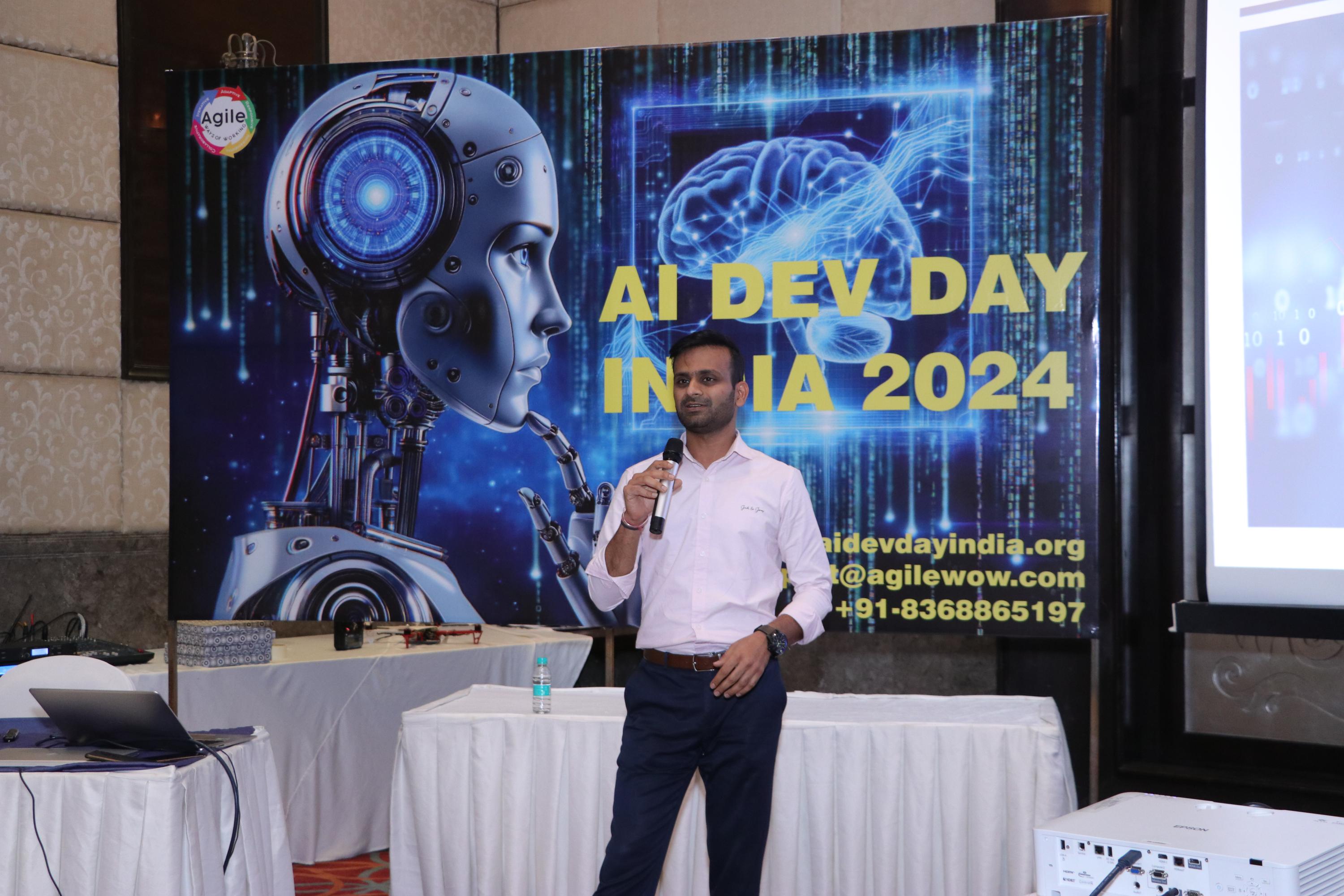
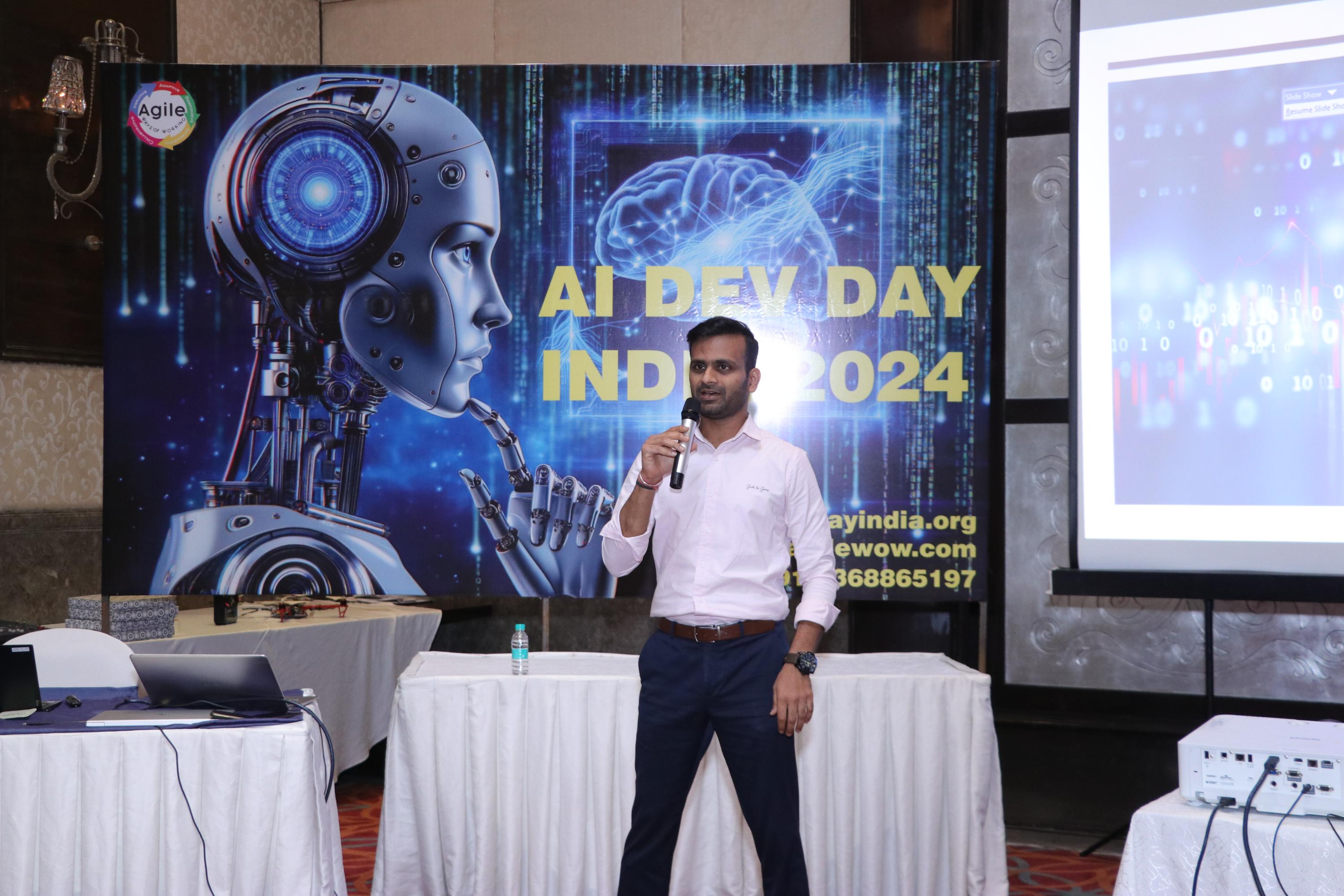
Picking up right where Sumit Mathur's storytelling left off, Vineet Saini demystified the actual technical machinery behind RAG. He explained how vector databases — tools like Elastic Search, Pinecone, or Chroma DB — act as a system's "non-parametric memory," using semantic embeddings to convert text into numbers that capture real contextual meaning rather than just matching keywords. Once data is stored this way, efficient retrieval algorithms like Facebook's FAISS pull the exact relevant documents and hand them to the LLM, producing an answer that's both contextualized and traceable back to its source.
To make it concrete, he walked through a live Python Jupyter Notebook built for a very relatable use case: answering specific fan questions about the talk show Koffee with Karan. Since those episode transcripts aren't part of what models like ChatGPT are trained on, he used AWS Transcribe to digitize the episodes and fed them into a RAG pipeline. Asked whether Ranveer Singh asked Deepika Padukone's parents before proposing, the RAG system retrieved the exact transcript and answered correctly — that Ranveer didn't ask initially because he felt he lacked the maturity at the time.
He closed by pulling back to the bigger picture: turning a RAG demo like this into a real enterprise production system is a different challenge entirely. Teams need to weigh managed APIs against self-hosted models for infrastructure cost, lock down data security and privacy, and continuously monitor hallucination rates, latency, and resource utilization once the system is live.
Key Takeaways & Concepts
Session Highlights