Agent-to-Agent Wallet Security for Machine Economy: When Your Bot Starts Writing Its Own Checks
By Sanjay Saini | Last Updated: May 16, 2026
What's New in This Update
- Coinbase Agentic Wallets: Added technical analysis of the February 2026 launch and its impact on autonomous custody.
- x402 Protocol Expansion: New data covering the x402 standard surpassing 50 million machine-to-machine transactions.
- Pact-Scoped Authority: Expanded breakdown of how MPC architecture handles programmatic spending boundaries.
Quick Summary: Key Takeaways
- Master agent-to-agent wallet security for machine economy to safely enable autonomous micro-transactions.
- Learn how to give your AI agents financial autonomy without risking your corporate treasury.
- Smart Contract Wallets and MPC (Multi-Party Computation) are the baseline for secure AI funds.
- Gasless transactions on the Base blockchain allow agents to interact frictionlessly.
- ERC-7007 ensures verifiable AI-generated transactions and smart contract integrity.
The Dawn of the Machine-to-Machine AI Economy
When your autonomous agents start negotiating and transacting, the financial game completely changes. The era where artificial intelligence simply generated text or recommended purchases ended in early 2026. Today, bots execute transactions instantly, establishing economic relationships with other software systems.
This deep dive is part of our extensive guide on Agent-to-Agent A2A communication protocols. We will explore exactly how to establish secure, programmable treasuries for your digital workforce.
Historically, an AI lacked a sovereign identity; any transaction required a human to click a final "approve" button on a MetaMask popup. That manual dependency proved fatal for high-frequency agent-to-agent communication workflows. Building an entirely new financial stack designed exclusively for non-human actors became mandatory.
However, granting an agent autonomy introduces severe risks. Without strict security, a compromised agent could instantly drain its allocated budget or initiate unauthorized transfers. If an enterprise deploys an agent with unrestrained purchasing power, they invite immediate financial ruin.
Securing the AI Treasury: MPC and Smart Contract Wallets
Giving an AI a standard private key is a catastrophic security risk. If a language model stores a seed phrase in its context window or local storage, a simple prompt injection attack can expose it.
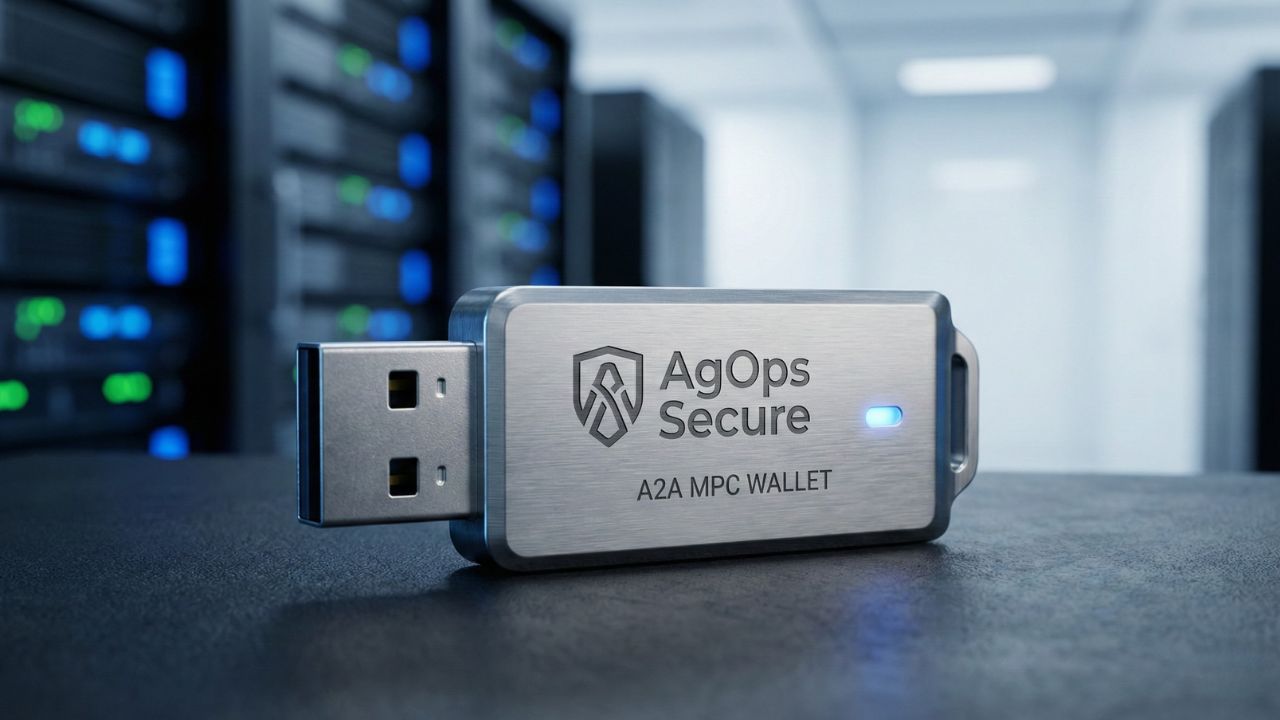
Instead, developers rely on MPC (Multi-Party Computation) wallets to distribute access. MPC ensures the AI agent never holds the complete private key, eliminating single points of failure. When a transaction requires a signature, the agent computes its cryptographic share, while a secure external infrastructure (like an AWS Nitro Enclave) computes the remaining share. The full private key is never reconstructed .
The Impact of Coinbase Agentic Wallets
In February 2026, the landscape shifted dramatically when Coinbase Developer Platform launched Agentic Wallets . This infrastructure provides agents with an MPC-secured wallet backed by programmable session caps, per-transaction limits, and native x402 payment support .
Smart Contract Wallets add another vital layer of programmable security. You can encode strict spending limits, whitelist specific merchant addresses, and freeze accounts instantly. For instance, an operator running trading agents can configure each wallet with a 10 USDC per-transaction limit and an allowlist of three decentralized exchange router addresses . The wallet enforces these constraints before the enclave signs; even if the agent hallucinates a transfer to an attacker, the wallet refuses to produce a signature .
To coordinate these complex financial agents securely, you must choose one of the best AI agent orchestration frameworks 2026. Correct orchestration ensures that legal liability for AI agent actionsremains minimized by cryptographically binding agents to their approved logic.
The Role of Base and Gasless Transactions
AI agents require high-speed, low-cost networks to conduct thousands of micro-transactions. Traditional mainnets possess prohibitive gas fees that destroy the economics of machine-to-machine commerce.
The Base blockchain has emerged as a premier layer-2 solution for these agentic economies. It supports gasless transactions, meaning the AI doesn't need to hold volatile native tokens just to pay network fees. Developers sponsor the gas programmatically using a Paymaster contract, allowing the agent to focus entirely on its objective.
This architecture is fueled by the x402 protocol, an open payment standard designed specifically for AI-to-AI transactions . As of 2026, the x402 protocol has processed more than 50 million transactions, proving that machines can pay machines without human intervention . An AI researcher can automatically pay a data provider for proprietary signals, creating a continuous stream of value exchange .
Defending Against "Wallet Draining" Attacks
If an agent has purchasing power, it becomes a prime target for malicious actors. Attackers will attempt to use prompt injection to trick the bot into sending funds to unauthorized wallets. The goal is to bypass the agent's logic and hijack the execution layer.
To fully understand this attack vector, read our guide on semantic malware and prompt injection worms in A2A. Stopping these attacks requires a multifaceted approach.
Using cryptographic standards like ERC-7007 helps verify that an AI's output and subsequent transaction intent are authentic. Furthermore, implementing circuit breakers for autonomous AI agent swarmsensures that if an agent begins exhibiting anomalous transaction velocity, its wallet access is immediately severed.
Strict semantic routing and hardware isolation prevent rogue prompts from accessing the execution environment. By combining MPC isolation, smart contract spending caps, and automated anomaly detection, you create an impenetrable financial fortress around your swarm.
Conclusion
The future of commerce is invisible, automated, and driven by intelligent agents. By mastering agent-to-agent wallet security for the machine economy, you unlock massive operational efficiencies.
You must move beyond simple API wrappers and embrace multi-agent orchestration patternsthat bake security directly into the protocol layer. Empower your bots to write their own checks safely, and watch your digital enterprise scale.
Scale Securely with Proven Tools. Try Proton AI

We may earn a commission if you buy through this link. (This does not increase the price for you)
Frequently Asked Questions (FAQ)
AI agents hold money using Smart Contract Wallets or MPC (Multi-Party Computation) wallets. These decentralized wallets allow the agent to manage funds programmatically via APIs without exposing a vulnerable, single private key to the AI model itself.
A machine-to-machine payment occurs when two autonomous systems, like AI agents, negotiate a service and transfer funds directly to each other. This happens instantly, without any human approval, using automated cryptographic protocols and blockchain networks.
You secure an AI's wallet by using multi-party computation (MPC) to fragment the private key. Additionally, you must implement smart contract guardrails, such as daily spend limits and whitelisted recipient addresses, to prevent unauthorized fund transfers.
The best MPC wallets for A2A integrate seamlessly with major orchestration frameworks and support programmable spending policies. Solutions like Coinbase's Agentic Wallets or specialized Web3 infrastructure providers offer robust SDKs specifically designed for autonomous AI agents.
An AI agent cannot legally open a traditional bank account in its own name. However, organizations can issue them secure, programmable virtual credit cards or provision them with dedicated crypto wallets linked to the corporate treasury.
Agents negotiate fees using pre-defined logical parameters and real-time market data analysis. They query competing A2A service providers, compare the costs against their programmed budget, and autonomously sign the transaction that offers the best value.
The Base blockchain provides a high-speed, low-cost layer-2 environment ideal for A2A micro-transactions. Its ecosystem heavily supports smart accounts and gasless transactions, allowing AI agents to interact frictionlessly without managing complex network fees.
Prevent wallet draining by isolating the AI's reasoning engine from the transaction execution layer. Implement strict policy engines that require secondary cryptographic verification, and never expose the wallet's signing capabilities directly to the language model's prompt interface.
Agentic payments are operating within sandbox environments and existing digital payment frameworks in India. While there is no AI-specific banking law yet, payment aggregators are launching authorized AI payment systems that comply with current RBI security and tokenization guidelines.
Because A2A transactions largely occur on blockchain networks or via API-driven virtual cards, every transaction is cryptographically logged. You can audit an agent's spending history using block explorers or dedicated AgOps dashboard tools that track real-time ledger data.
Sources & References
- Agent-to-Agent A2A Communication Protocols
- Best AI Agent Orchestration Frameworks 2026
- Semantic Malware and Prompt Injection Worms in A2A
- Multi-Party Computation (MPC) & AI Wallets: Coinbase Developer Platform: Introducing Agentic Wallets
- Ethereum Improvement Proposals: ERC-7007 (Verifiable AI-Generated Content Token)
Internal References:
External References: