Best AI for Image to Video (April 2026): Breathe Life Into Your Photos With One Click.

Data Verified: April 2, 2026
Quick Answer: Key Takeaways
- The Leaderboard Shift: Grok and Google Veo 3.1 have surged to the top of crowdsourced image-to-video rankings.
- Total Motion Control: Revolutionary "motion brushes" let you paint exactly where and how an image moves.
- Cinematic Audio & Physics: Newest models upscale resolution while natively generating perfectly synced background audio.
- Cost-Efficiency: Open-source MoE architectures and rapid iterations are driving down API costs significantly.
Are you an AI novice or a 2026 expert? Test your knowledge with our 15-question professional certification prep. Estimated time: 5 minutes.
Start the AssessmentWhether you are a digital marketer animating product shots, a filmmaker building a storyboard, or a creator wanting to breathe life into historical archives, static imagery is no longer enough to capture attention in today's fast-paced feeds. You need motion.
Discover the Best AI for image to video in April 2026 as we rank the cutting-edge tools that provide the most realistic, physics-based, and controllable animation for your still images. This deep dive is part of our extensive guide on Best AI Models 2026.
How We Analyzed the Best Image-to-Video Generators
Gone are the days of cheesy, warping photo animations that look like cheap smartphone filters. To find the true market leaders, we evaluated the latest models based strictly on data from the definitive LMArena (LMSYS) Image-to-Video Leaderboard. We completely bypass static benchmarks in favor of this live, crowdsourced human-preference testing, focusing heavily on temporal coherence, physics simulation, and 3D geometric understanding.
| # | Video AI Model | Key Strength | Pricing |
|---|---|---|---|
| 1 | Grok Imagine Video | Currently holds the #1 overall Elo score, lightning-fast rendering | X Premium |
| 2 | Google Veo 3.1 | Cinematic realism, 1080p photorealism, and native synced audio | Free / Paid API |
| 3 | Sora 2 | Ultra-realistic physics, cause-and-effect reasoning, and 25-second scenes | ChatGPT Plus / Pro |
| 4 | Vidu Q3 Pro | High-fidelity generation with incredibly precise subject control | Freemium |
| 5 | Kling V3 Pro | Photoreal faces, deep 3D depth, and highly emotional cinematic visuals | Freemium / Credits |
| 6 | Wan 2.6 (I2V) | Unmatched cost-efficiency powered by advanced MoE architecture | Free / Cheap API |
| 7 | Seedance v1.5 Pro | Flawless human movement and consistently high temporal coherence | Proprietary / API |
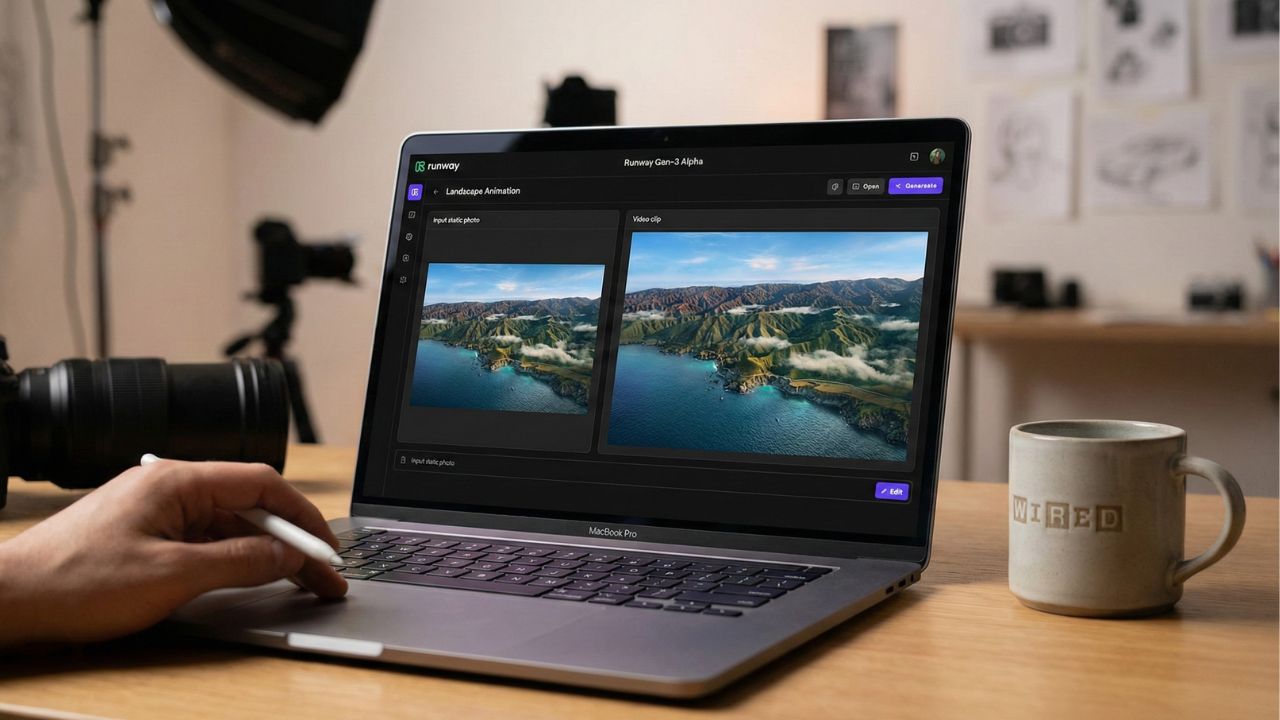
| 8 | Runway Gen-4 Turbo | Industry-leading motion brushes and precise Act-Two motion transfer | Paid Subscription |
| 9 | Luma Dream Machine (Ray 3) | Best-in-class multi-shot continuity and dramatic camera fly-throughs | Freemium |
| 10 | PixVerse V5.6 | Hyper-realism with rapid algorithmic evolution for professional creators | Freemium / API |
Deep Dive: The 2026 Image-to-Video Landscape
1. Grok Imagine Video (xAI)
In a massive upset to the legacy giants, xAI's Grok Imagine Video currently holds the absolute #1 Elo score on the Arena AI Image-to-Video leaderboard. It has won the favor of the community by excelling in highly responsive, high-fidelity conversions, offering both 720p and ultra-fast 480p outputs that interpret static images with remarkable precision.
2. Google Veo 3.1
Ranked just inches behind Grok, Veo 3.1 is Google's state-of-the-art cinematic engine. It translates base images into stunning 1080p shots with coherent depth-of-field. Its standout feature is its ability to natively render synchronized dialogue and ambient soundscapes alongside the generated motion, entirely eliminating the need to score the video in post-production.
3. Sora 2 (OpenAI)
Sora 2 remains an industry titan, heavily focusing on physical plausibility and cause-and-effect relationships. If you animate an image of a glass falling, Sora 2 accurately simulates the physics of the shatter. Pro users can also generate extended, highly cohesive 25-second cinematic shots directly from a single starting frame.
4. Vidu Q3 Pro
Shengshu's Vidu Q3 Pro frequently trades blows in the top 10 rankings. The community favors it for its robust temporal coherence, ensuring that complex subjects don't awkwardly melt or distort as the camera pans around them.
5. Kling V3 Pro
Kling consistently performs at the very top tier of blind evaluations. It is highly regarded by creators for producing photorealistic faces and deep cinematic emotional resonance from otherwise flat, lifeless starting images.
6. Wan 2.6 (I2V)
Alibaba's Wan suite is shaking up the economics of AI video. By utilizing industry-first open-source Mixture-of-Experts (MoE) architectures, Wan models balance high-definition 720p output with unmatched cost-efficiency. It frequently ranks in the top 15 on leaderboards while costing a fraction of premium APIs.
7. Seedance v1.5 Pro
Bytedance's proprietary model is a powerhouse for human movement. If your starting image contains human subjects, Seedance accurately maps their skeletal structure to provide fluid, highly coherent animations rather than robotic, stiff panning.
8. Runway Gen-4 Turbo
Runway remains the ultimate tool for professional filmmakers demanding precise control. Beyond their famous motion brushes, the new Act-Two feature allows you to record yourself acting out a scene and flawlessly transfer that exact motion to the subjects in your AI-generated image.
9. Luma Dream Machine (Ray 3)
Animating an image isn't just about moving the subjects; it's about moving the viewer. Luma's Ray 3 model excels at 3D depth estimation, calculating the physical distance between foreground elements and background horizons in your flat photo. This allows you to apply dramatic cinematic camera pans and zoom-throughs.
10. PixVerse V5.6
PixVerse V5.6 has earned massive praise, notably ranking #2 globally on Artificial Analysis's independent blind-test leaderboards. It is widely recognized for its hyper-realism—delivering advanced lighting and texture fidelity—alongside highly competitive, scalable pricing for enterprise creators.
Conclusion
Static photos are rapidly becoming a thing of the past in high-engagement media. By utilizing the Best AI for image to video in 2026, you can instantly transform any standard photo into a captivating cinematic experience. Start animating today, master the motion brush tools, and leave flat, lifeless imagery behind forever.
Scale Securely with Proven Tools.
Try Blackbox AI

About Sanjay Saini
Sanjay Saini is an Enterprise AI Strategy Director specializing in digital transformation and AI ROI models. He covers high-stakes news at the intersection of leadership and sovereign AI infrastructure. Connect with Sanjay on LinkedIn.
Frequently Asked Questions (FAQ)
The leading platforms in April 2026 utilize advanced motion brush technology and deep spatial awareness to animate photos without distorting the original subjects. Models that prioritize temporal coherence rank the highest for clean animations.
You can use specialized avatar animation AI that analyzes the facial structure of your portrait. It perfectly syncs the lips, head movements, and micro-expressions to any uploaded audio track, creating a highly realistic talking head.
Models that focus on 3D depth estimation are best for cinematic moves. They calculate the distance between foreground and background elements, allowing you to add dramatic zooms, pans, and tilts that mimic a real camera moving through a 3D space.
Yes, the latest generation of tools features precise keyframe controls and directional motion brushes. This allows you to dictate exactly which elements move, what direction they flow in, and at what speed the animation occurs.
Currently, top-tier platforms like Runway offering dedicated director modes dominate the motion brush space. They give creators granular, pixel-perfect control over fluid dynamics, wind effects, and isolated subject movement without breaking the background.
Sources & References
- Stanford HAI Artificial Intelligence Index Report - Deep insights into the evolution of temporal coherence and 3D depth estimation in generative AI.
- Arena AI Image-to-Video Leaderboard - The definitive live tracker for crowdsourced human preference evaluations in video generation.
- Best AI Models 2026 (Pillar Guide)
- Best AI for Text to Image 2026
- Best AI for Text to Video 2026
External Sources:
Internal Guides: