Best AI for Visual Understanding (April 2026): The AI That Can Finally "See" Like a Human.

Data Verified: April 2, 2026
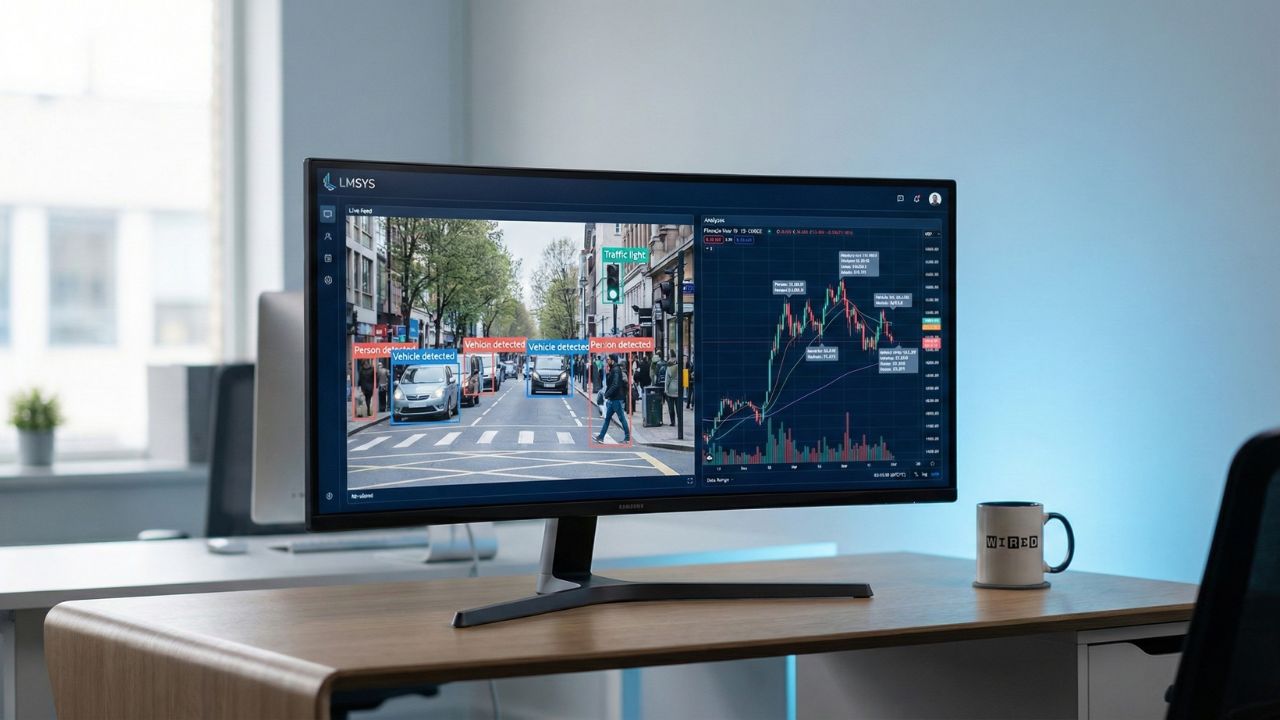
Quick Summary: Key Takeaways
- Multimodal Supremacy: The newest frontier models natively process images, video, and text simultaneously for flawless context.
- Zero-Shot Precision: Complex chart analysis and graph reading no longer require specialized fine-tuning.
- Spatial Awareness: 2026 models perfectly map out spatial relationships and coordinate bounding boxes in 3D environments.
- Real-Time Video Parsing: Live, frame-by-frame understanding is rapidly replacing traditional, static image OCR.
Are you an AI novice or a 2026 expert? Test your knowledge with our 15-question professional certification prep. Estimated time: 5 minutes.
Start the AssessmentThe era of AI simply labeling a photo as "dog" or "car" is over. Today's models actually understand the nuance, geometry, and deep context of what they are looking at.
Discover the Best AI for visual understanding in April 2026 as we compare the multimodal powerhouses that are redefining how machines interpret images and video. This deep dive is part of our extensive guide on Best AI Models 2026.
How We Analyzed the Visual Intelligence Market
To accurately rank these highly complex multimodal systems, we moved past standard multiple-choice tests. We aggregated the latest massive datasets from the LMSYS Vision Arena Leaderboard—which captures millions of crowdsourced, blind A/B tests—and combined it with performance metrics from independent benchmarks targeting real-world use cases, including complex document parsing and spatial geometry.
| # | Vision AI Model | Key Strength | Pricing |
|---|---|---|---|
| 1 | Gemini 3 Pro | Undisputed #1 on Vision Arena, unparalleled 2M+ context window | Freemium / API |
| 2 | GPT-5.2 | Exceptional spatial reasoning, object detection, and zero-shot accuracy | Paid Subscription / API |
| 3 | Claude 4.5 Opus | Industry-best complex chart interpretation and financial UI parsing | Paid Subscription / API |
| 4 | Dola-Seed 2.0 Preview | Proprietary powerhouse excelling in temporal video frame analysis | Enterprise / API |
| 5 | Qwen3-VL 235B | Absolute leader in open-weights multilingual OCR and layout mapping | Apache 2.0 |
| 6 | Moonshot Kimi K2.5 | Integrates "thinking" reasoning tokens specifically for visual math puzzles | Modified MIT |
| 7 | Gemini 3.1 Flash Image | Lightning-fast, highly cost-efficient real-time video feed analysis | Freemium / API |
| 8 | Pixtral 12B | Lightweight multimodal drop-in replacement outperforming massive models | Free (Open Source) |
| 9 | Hunyuan Vision 1.5 | Deep reasoning integration for highly nuanced image comprehension | Proprietary / API |
| 10 | Llama 4 Scout (10M Context) | Accessible open-weights baseline for building custom visual agents | Llama 4 License |
Deep Dive: The 2026 Multimodal Landscape
1. Gemini 3 Pro
Google's Gemini 3 Pro currently sits at the absolute #1 spot on the LMSYS Vision Arena leaderboard. It achieves cutting-edge scores across language, vision, and video benchmarks largely due to its native multimodal architecture. Its showpiece is an astounding 2,000,000-token context window, allowing users to upload hours of video or massive spatial datasets for deep analysis without any context degradation.
2. GPT-5.2
Ranking tightly alongside Gemini on crowdsourced leaderboards is OpenAI's GPT-5.2. It is renowned for its phenomenal spatial reasoning and zero-shot object detection. When asked to locate specific items in a cluttered room or understand physical layouts from a 2D photo, GPT-5.2 demonstrates near-human accuracy, making it incredibly versatile for robotic and agentic vision workflows.
3. Claude 4.5 Opus
Anthropic's Claude 4.5 line remains a heavy favorite among enterprise users for complex chart interpretation. Financial analysts and researchers rely on it to instantly pull raw, accurate data directly from screenshots of dense scatter plots, complex dashboards, and overlapping bar graphs without losing spatial context.
4. Dola-Seed 2.0 Preview
A rapidly rising proprietary powerhouse from Bytedance, Dola-Seed 2.0 has surged into the top ranks of the Vision Arena. It is particularly noted for its strength in temporal video frame analysis, expertly tracking object permanence and action sequences across moving frames rather than just analyzing static snapshots.
5. Qwen3-VL 235B
Alibaba's massive Qwen3-VL model is the definitive leader in open-weights high-accuracy OCR. It excels at extracting text from heavily degraded documents and preserving complex structural formatting. Crucially, it natively outputs spatial coordinates and bounding boxes, allowing developers to build robust object detection systems locally.
6. Moonshot Kimi K2.5
Moonshot's Kimi K2.5 brings a unique architectural approach by integrating extended "thinking" or reasoning tokens directly into visual workflows. This makes it exceptionally powerful at solving highly complex visual math problems and geometric puzzles that require multi-step logic before returning a final answer.
7. Gemini 3.1 Flash Image
When speed and cost-efficiency are paramount, Gemini 3.1 Flash Image delivers top-10 vision capabilities with incredibly low latency. It is the ideal backbone for applications requiring real-time video feed analysis, anomaly detection, and fast agentic routing.
8. Pixtral 12B
Mistral's Pixtral 12B proves that smaller models can punch far above their weight class. It substantially outperforms open models around its scale and approaches the performance of much larger, 70B+ models on real-world benchmarks. It acts as a highly efficient, drop-in multimodal replacement for standard text-only deployments.
9. Hunyuan Vision 1.5
Tencent's Hunyuan Vision 1.5 consistently secures a spot on the competitive leaderboards. It integrates deep reasoning pathways to excel at highly nuanced image comprehension, making it a reliable choice for intricate visual workflows.
10. Llama 4 Scout (10M Context)
Meta's Llama 4 series continues to dominate as the default open-weights choice. The Llama 4 Scout model provides an accessible, highly capable foundation for developers worldwide who need to build, fine-tune, and self-host custom visual agents with broad modality support.
Conclusion
The landscape of multimodal AI has permanently shifted from basic object detection to deep, contextual comprehension. By strategically choosing the Best AI for visual understanding, you can automate your most complex visual tasks with unprecedented accuracy.
Stop relying on outdated, single-purpose OCR tools and upgrade your workflow to the native VLM architectures that truly understand what they are looking at.
Scale Securely with Proven Tools.
Try Blackbox AI

About Sanjay Saini
Sanjay Saini is an Enterprise AI Strategy Director specializing in digital transformation and AI ROI models. He covers high-stakes news at the intersection of leadership and sovereign AI infrastructure. Connect with Sanjay on LinkedIn.
Frequently Asked Questions (FAQ)
Currently, models built with native Vision-Language Model (VLM) architectures lead the pack. They excel at identifying exact data points on complex scatter plots and overlapping bar graphs without losing spatial context.
Yes, Gemini 3 Pro's massive context window is uniquely suited for heavy visual tasks. It allows users to process hours of video, massive image datasets, and lengthy PDFs simultaneously for deep analysis.
The LMSYS Vision Arena leaderboard is highly competitive and frequently updates. Frontier models from companies like Google, Anthropic, and OpenAI consistently fight for the number one spot in blind, crowdsourced visual reasoning tests.
For extracting text from heavily degraded documents, handwritten notes, or complex tables, modern multimodal AI significantly outperforms traditional OCR software by utilizing deep spatial awareness to read formatting, not just letters.
Absolutely. The latest multimodal architectures are optimized to ingest and analyze video feeds frame-by-frame, allowing them to accurately answer user questions about live events and temporal actions as they unfold.
Sources & References
- LMSYS Vision Arena Leaderboard - The definitive crowdsourced benchmark for visual reasoning and human preference.
- Stanford HAI Artificial Intelligence Index Report - Tracking the rapid global advancement of multimodal AI capabilities.
- Best AI Models 2026 (Pillar Guide)
- Best AI for Coding & DevOps 2026
- Best AI for Image to Video 2026
External Sources:
Internal Guides: