Automating User Stories? Why AI Scrum Masters Fail Agile
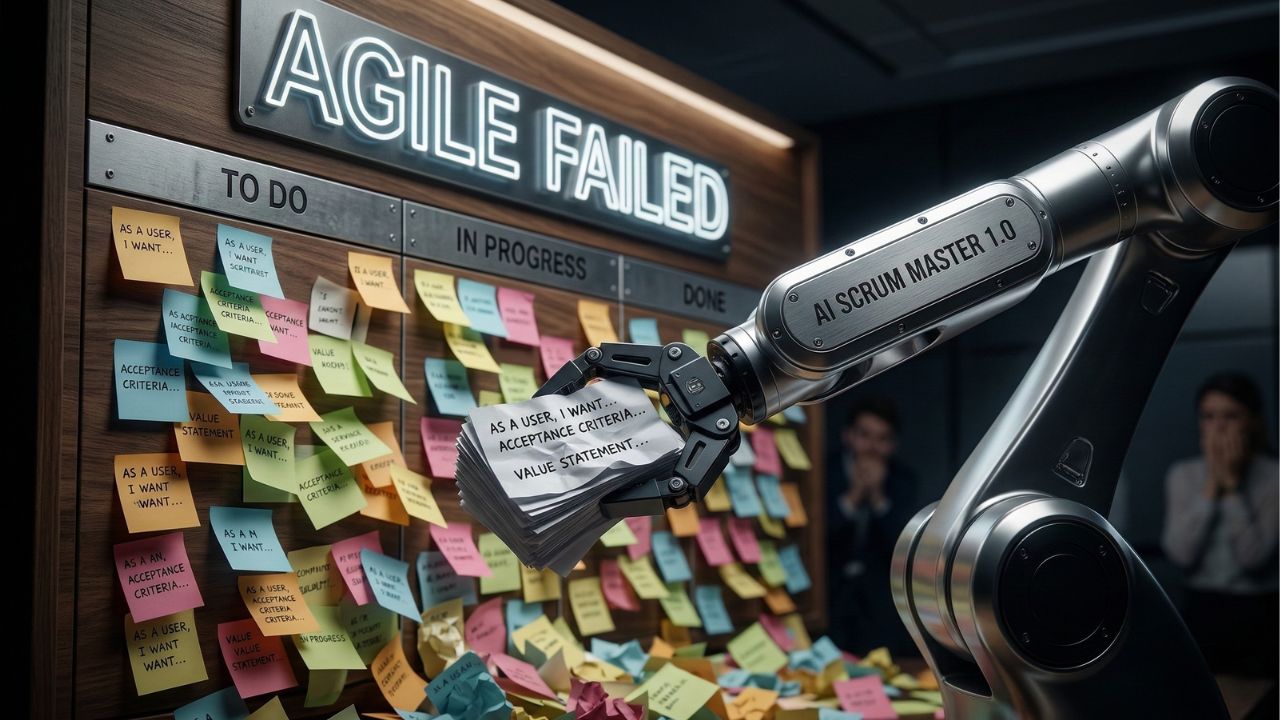
Executive Snapshot
- The Compliance Gap: Unregulated AI backlog generation can violate GDPR Article 22 regarding automated individual decision-making.
- The Quality Trap: GPT-5.1 lacks the "architectural empathy" required to write stories that don't result in massive technical debt.
- The Solution: Use AI as a "Co-Pilot" for story drafting, ensuring all acceptance criteria are audited against your core framework.
- Key Metric: 100% of AI-generated stories must have a human-in-the-loop sign-off to maintain SOC 2 compliance.
Filing your Scrum Master and letting GPT-5.1 write your user stories is a one-way ticket to feature factory hell.
Letting a bot dictate your backlog carries serious alignment risks and potential GDPR Article 22 violations.
Here is the legally sound, high-performance way to automate your agile workflows without sacrificing architectural integrity.
The Feature Factory Trap: Why GPT-5.1 Isn't Your Scrum Master
The allure of AI Scrum Master: Automating user stories with GPT-5.1 is the promise of an infinite backlog.
However, the reality is often "hallucinated requirements" that satisfy the prompt but break the system architecture.
As detailed in our master guide on Why "Vibe Coding" Is Destroying Your Codebase?, speed without governance leads to "vibe coding", where logic is written based on superficial prompts rather than deep understanding.
When applied to the backlog, this results in user stories that are technically feasible in isolation but catastrophic for the codebase at scale.
Comparison: Human vs. Pure AI Backlog Management
| Feature | Human Scrum Master | Pure GPT-5.1 Backlog |
|---|---|---|
| Contextual Awareness | Understands legacy debt and team velocity. | Limited to the provided prompt context. |
| Conflict Resolution | Facilitates stakeholder trade-offs. | Struggles with nuanced human priorities. |
| Acceptance Criteria | Based on business logic and edge cases. | Often generic or repetitive boilerplate. |
| Compliance | Ensures GDPR and SOC 2 alignment. | Risks "black box" decision-making. |
The Hidden Trap: "Context Window Collapse" in Agile
The most dangerous error teams make is assuming GPT-5.1 understands the entire product history.
In reality, as the backlog grows, "context window collapse" occurs. When a bot generates a new story, it may have already "forgotten" the architectural constraints established in earlier sprints.
This leads to conflicting requirements that force developers into complex refactoring cycles later.
Without a human Product Owner to bridge these gaps, your AI-generated backlog will eventually contradict itself, burying you in unmaintainable debt.
Expert Insight: AI is excellent at synthesizing data but terrible at strategic rejection. A bot will never tell a stakeholder "No" because it doesn't understand the long-term cost of a feature. Use AI to draft, but use humans to delete.
Implementing Legally Sound Agile Automation
To stay compliant with GDPR Article 22, which governs automated individual decision-making, your AI-driven backlog must include a human authorization layer.
A 3-Step Framework for AI Story Drafting
- The Prompt Foundation: Never ask an AI to "write a story" in a vacuum. Provide technical constraints identified in your How to audit AI-generated code in Scrum sprints workflow.
- The Acceptance Criteria Audit: Use a secondary AI agent to check for logic flaws, then have a human PO perform the final edit.
- The Jira Integration: Feed approved stories into your project management tool, tagging them as AI-Generated to ensure they undergo a more rigorous audit before merging.
Conclusion: Balancing Velocity and Governance
Automating your backlog with GPT-5.1 offers undeniable productivity gains, but it cannot replace the strategic oversight of a human Scrum Master.
By treating AI as a drafting tool rather than a decision-maker, you can harness its speed without falling into "feature factory hell" or violating GDPR standards.
The goal is to maintain "architectural empathy" while scaling your output. Ensure your team remains focused on long-term system health by integrating these automated stories into a strict Agile auditing process that prioritizes code provenance and security.
Scale Securely with Proven Tools. Try Survey Monkey AI

We may earn a commission if you buy through this link. (This does not increase the price for you)
Frequently Asked Questions (FAQ)
No. While GPT-5.1 can automate administrative tasks like drafting stories or summarizing meetings, it cannot resolve team conflicts or understand sprint capacity planning with human nuance. It lacks the empathy and strategic foresight required for true Agile leadership and team coaching.
Safe generation requires providing the AI with clear architectural constraints, business goals, and a specific Definition of Ready. Every story must be tagged as AI-generated and reviewed by a Product Owner to ensure it aligns with the broader product vision and technical roadmap.
The best prompt is one that includes Architectural Empathy constraints. You must provide the AI with context on existing system dependencies, specific user personas, and strict formatting requirements for acceptance criteria to prevent context window collapse and hallucinated logic.
Currently, AI lacks the real-time visibility into developer burnout, unrecorded technical debt, and tribal knowledge that impacts velocity. While it can analyze historical data, it cannot account for the human variables that typically cause sprint delays or architectural pivots.
Automation should focus on identifying duplicate stories, summarizing long discussion threads, and drafting initial acceptance criteria. However, the refinement must culminate in a human-led session where the team validates the AI's suggestions against the current codebase reality.
The primary risk is hallucinated logic where the AI suggests criteria that are technically impossible or violate security protocols. This can lead to compliance violations and significant codebase rot if these flawed requirements are rubber-stamped into production.
AI cannot navigate the emotional intelligence required for conflict resolution. While it can provide neutral data on performance metrics, it cannot facilitate the difficult interpersonal conversations needed to maintain a high-performing, psychologically safe Agile environment.
Integration typically involves using APIs or middleware tools to send ticket descriptions to GPT-5.1 for enhancement. However, you must ensure these integrations follow SOC 2 Type II standards to prevent your proprietary backlog data from leaking into public training sets.
Yes, human authorization is mandatory for both quality and legal compliance. Product owners must edit stories to ensure they are not violating GDPR Article 22 and to maintain the human-in-the-loop requirement for critical business logic decisions.
It violates the principle of individuals and interactions over processes and tools if the automation replaces team discussion. To remain Agile, use AI to reduce the drudge work of documentation while spending more time on collaborative discovery and architectural planning.