The Devin Architecture Flaw Exploding Your Tech Debt
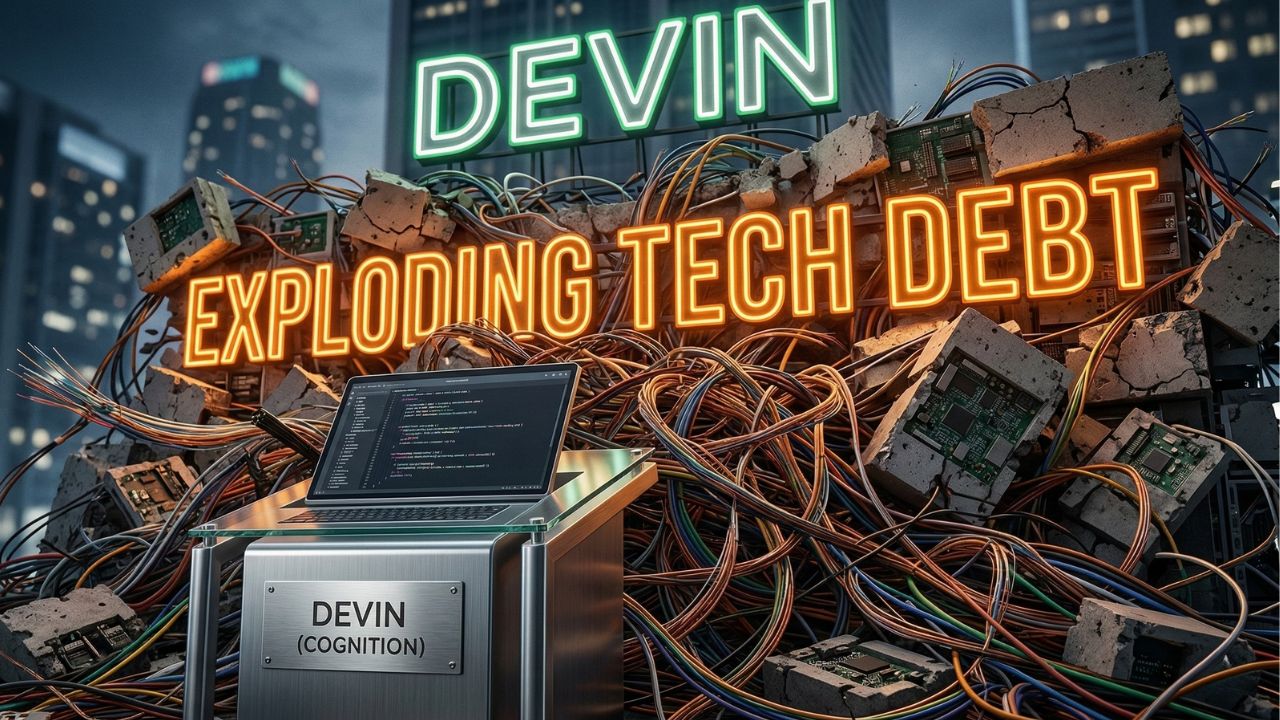
Executive Snapshot: Halting AI Codebase Rot
- The Root Cause: Agentic AI prioritizes immediate execution and short-term fixes over long-term architectural empathy.
- The Security Risk: AI-induced codebase rot directly threatens compliance with CIS Controls v8 (Control 7) for continuous vulnerability management.
- The Metric Shift: Engineering leaders must start tracking "Cognitive Debt" alongside traditional cyclomatic complexity.
- The Solution: Implement rigid, automated structural audits before allowing autonomous agents to merge any refactored code.
Autonomous software engineers like Devin write boilerplate code at unprecedented speeds, but they are quietly filling your repository with unmaintainable loops.
Left unchecked, this rapid code generation completely sacrifices architectural empathy, resulting in legacy spaghetti code that brings continuous vulnerability management to a grinding halt.
As detailed in our master guide on Why "Vibe Coding" Is Destroying Your Codebase, mastering managing technical debt in the age of Devin and Cline is mandatory for CTOs who want to scale safely.
The Hidden Trap: What Most Teams Get Wrong About Agentic ROI
Most engineering leaders mistakenly believe that replacing manual syntax writing with autonomous agents yields a permanent productivity boost.
This is a dangerous illusion. Empirical data shows that while projects experience massive velocity increases, up to a 3-5x increase in lines added, in the first month of AI adoption, those gains completely dissipate after two months.
Why? Because teams misdiagnose the resulting codebase bloat as traditional technical debt, when it is actually "Cognitive Debt."
The AI writes code that functions, but your human developers lose the shared mental model of how it functions.
When a critical bug surfaces, your engineers must reverse-engineer the agent's hallucinated logic.
This architectural flaw explodes your technical debt, making simple feature additions nearly impossible without breaking unexpected, undocumented dependencies.
How Agentic Workflows Impact Long-Term Technical Debt?
Agentic workflows execute complex refactoring tasks across hundreds of files simultaneously.
Unlike simple autocomplete AI, autonomous developers like Devin and Cline operate in isolated, goal-oriented loops.
They patch bugs by adding layers of conditional logic rather than refactoring the core underlying structure.
Over time, this creates severe "Performance Optimization Debt" and "Model-Stack Workaround Debt" that traditional linters fail to catch.
If you don't control the environment these tools operate in, you are handing proprietary business logic to a third-party black box.
To lock down your local environment before deployment, read our breakdown on The Cline vs Continue: Truth No IDE Vendor Admits.
Expert Insight: Do not allow AI agents to clean up their own technical debt without human-in-the-loop oversight.
An LLM tasked with refactoring its own spaghetti code will often just abstract the mess into increasingly obscure, undocumented helper functions, actively worsening your cognitive debt.
3 Steps to Refactor Code Generated by Cline or Devin
To stop vibe coding from ruining software architecture, you must integrate specialized workflows into your CI/CD pipeline.
The goal is to align AI output with strict security and architectural compliance mandates.
Step 1: Enforce CIS Control 7 Constraints
You must map your AI code generation to CIS Controls v8 (Control 7: Continuous Vulnerability Management).
AI agents frequently import deprecated or vulnerable libraries to solve immediate errors.
To combat this, automated vulnerability scanning tools must actively run against every autonomous pull request before a human even reviews it.
Step 2: Restrict Cross-File Refactoring
Limit your agent's context window permissions. Force autonomous software engineers to write code in highly modular, isolated components.
If Devin attempts to rewrite a core routing file to fix a superficial UI bug, the PR must be automatically rejected by your pipeline.
Step 3: Measure AI-Specific Debt Metrics
You cannot manage what you do not measure. Engineering managers must stop tracking "lines of code written" and start tracking "PR review duration" and "AI code churn" to assess true productivity.
Data Table: Human vs. Autonomous Technical Debt Metrics
| Debt Category | Human Developer Origin | Autonomous Agent Origin | Required Management Tactic |
|---|---|---|---|
| Architectural Bloat | High coupling due to lazy planning | Deeply nested, unmaintainable loops | Enforce hard cyclomatic complexity limits |
| Vulnerability Origin | Misunderstood security protocols | Hallucinated library imports | Continuous Vulnerability Management (CIS Control 7) |
| Cognitive Debt | Siloed knowledge (the "Bus Factor") | Complete loss of shared codebase theory | Mandate strict AI-to-Human documentation requirements |
Conclusion: Take Back Control of Your Architecture
Autonomous developers like Devin are phenomenal at writing boilerplate code, but terrible at long-term architectural empathy.
If you do not actively manage the cognitive and technical debt they introduce, your repository will become permanently unmaintainable.
Mastering managing technical debt in the age of Devin and Cline requires strict vulnerability tracking and IDE-level governance.
To secure your stack at the source, explore our deep dive on The Cline vs Continue: Truth No IDE Vendor Admits today.
Enhance your learning platforms. Try SurveyMonkey AI

We may earn a commission if you buy through this link. (This does not increase the price for you)
Frequently Asked Questions (FAQ)
Devin AI writes overly complex code because it prioritizes immediate task completion over long-term maintainability. Instead of refactoring underlying structural issues, it often adds deep, unmaintainable conditional loops to bypass immediate errors, drastically inflating your codebase's cyclomatic complexity.
Agentic workflows impact long-term technical debt by introducing massive "Cognitive Debt." While the code may compile, human engineers lose the shared theory of how the architecture functions. Developers must reverse-engineer hallucinated logic before safely making future architectural changes.
The primary signs of AI-induced codebase rot include a sudden, persistent 30% spike in static analysis warnings, a drastic 41% increase in cyclomatic complexity, and PR review times that take longer than writing the code manually. Silent dependency failures are also red flags.
To safely refactor code generated by Cline or Devin, you must isolate the hallucinated logic into modular components. Implement continuous vulnerability management, write robust human-authored unit tests around the AI's output, and manually strip away unnecessary abstractions and redundant helper functions.
AI agents are currently poor at cleaning up their own technical debt. When tasked with refactoring, they typically hide the complexity by abstracting messy logic into undocumented helper files rather than actually simplifying the core architecture, actively worsening your team's cognitive debt.
Measuring technical debt caused by LLMs requires tracking specific dynamic metrics: the ratio of code churn within 30 days of an AI merge, the exact time human developers spend deciphering AI pull requests, and the absolute increase in cyclomatic complexity across agent-touched files.
The ROI of using Devin is highly deceptive. Teams typically see a massive 3-5x velocity spike in lines of code added during the first month, but this ROI violently dissipates by month three as engineers become bogged down managing AI-induced architecture flaws.
No, AI agents rarely write adequate unit tests. They tend to write "tautological" tests that merely confirm their hallucinated logic does what it currently does, rather than testing edge cases, boundary failures, or genuine architectural requirements. Human oversight remains strictly necessary.
To stop vibe coding from ruining software architecture, engineering teams must abandon autopilot development. You must enforce strict CIS Controls v8 (Control 7) compliance, limit agent access to core routing files, and require human engineers to thoroughly document the logic before merging.
Engineering managers must track AI code churn, automated static analysis warning trends, and PR review duration. Tracking raw "lines of code generated" is a vanity metric that actively encourages autonomous agents to introduce unmaintainable bloat and severe cognitive debt into the repository.
Sources & References
- Center for Internet Security (CIS): CIS Controls v8 (Control 7: Continuous Vulnerability Management)
- arXiv Preprints: Speed at the Cost of Quality? The Impact of LLM Agent Assistance on Software Development (2025)
- Why "Vibe Coding" Is Destroying Your Codebase
- The Cline vs Continue: Truth No IDE Vendor Admits
External Sources
Internal Sources