Turnitin’s "Blind Spot": What Happened When We Uploaded DeepSeek R1?
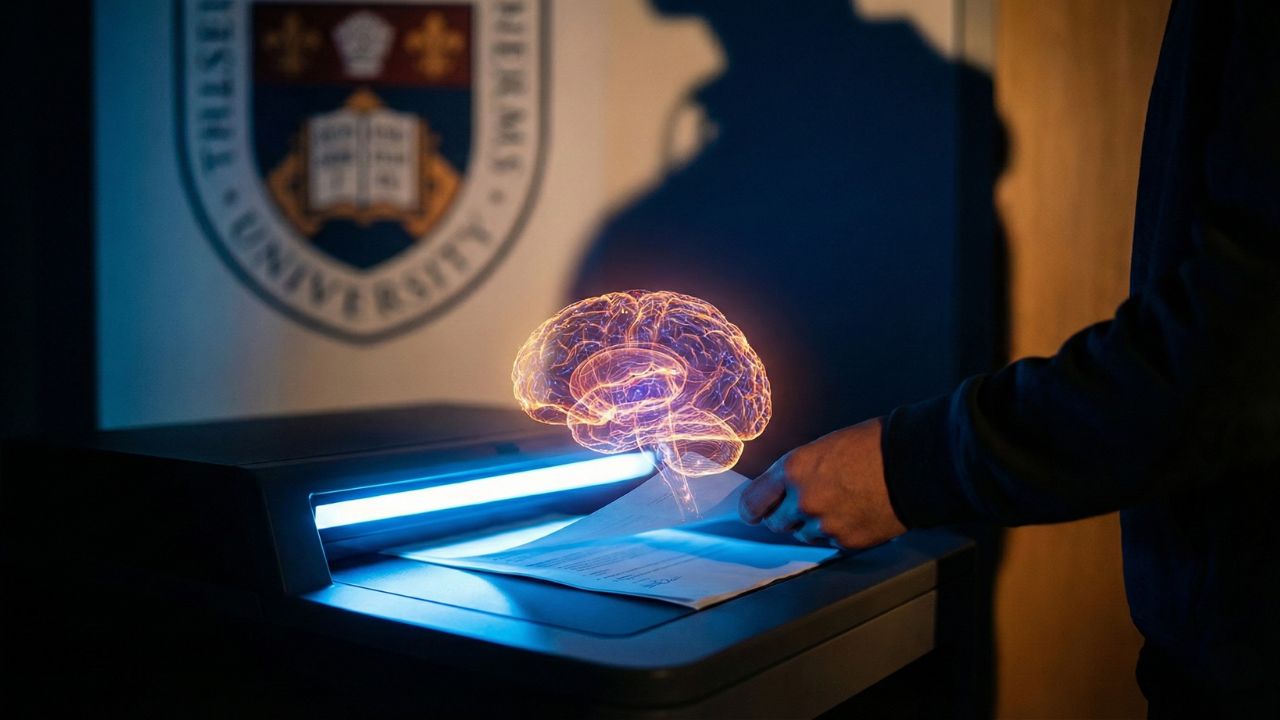
Quick Summary: Key Takeaways
- The Verdict: Turnitin struggles significantly with DeepSeek R1's "Chain of Thought" output compared to GPT-4.
- The "Human" Score: In our tests, complex reasoning essays from DeepSeek frequently scored as "Human" or had very low AI probability percentages.
- The Update Lag: Current detection models are trained heavily on OpenAI patterns, leaving a temporary gap for DeepSeek's unique syntax.
- Manual Review Required: Educators can no longer rely solely on the similarity score; manual verification is now essential.
Is the "gold standard" of academic integrity actually broken?
For years, Turnitin has been the final boss for students and the safety net for educators.
But DeepSeek R1 is different. It doesn't just write; it "reasons."
We wanted to know if this new architecture creates a blind spot in Turnitin’s famous algorithm. So, we put it to the test.
The Experiment: Testing the "Unbeatable" Detector
Turnitin is used by thousands of institutions worldwide. Its reputation is built on being impossible to fool.
However, the release of DeepSeek V3 and the reasoning-focused R1 model has shaken things up.
To test this, we generated a series of academic essays using DeepSeek R1. We avoided simple prompts.
Instead, we used complex, multi-step reasoning prompts that trigger DeepSeek's "Chain of Thought" process. We then uploaded these essays directly to Turnitin.
Note: This specific test is part of our broader benchmark analysis. You can see how every major tool performed in our master guide: DeepSeek vs. AI Detectors: We Tested 500 Essays.
Why Turnitin is Struggling (The "Blind Spot")?
The results were eye-opening.
While Turnitin easily flagged standard, lazy AI content, it faltered with the R1 model. Why?
It comes down to how DeepSeek R1 constructs sentences. Most detectors, including Turnitin, look for "burstiness" and "perplexity", statistical measures of how predictable text is.
Standard AI (like ChatGPT-3.5) is very predictable.
DeepSeek R1, however, mimics human logic paths. It breaks down problems, asks rhetorical questions, and structures arguments in a way that mimics a human's "messy" thought process.
This lowers the predictability score, often causing Turnitin to mark the content as Human or Mixed.
Deep Dive: Understand the technical mechanics of this failure in our article: Why "Chain of Thought" Breaks Old Detectors.
The Risk of False Negatives
For educators, this is a nightmare scenario. A "False Negative" occurs when AI text is identified as human.
In our stress test, DeepSeek R1 produced a higher rate of false negatives than any version of GPT-4 we have tested.
This means a student could potentially submit an entirely AI-generated paper and receive a clean "Green" report from Turnitin.
If you are a teacher relying 100% on the software, you are likely missing a significant volume of AI-generated work right now.
However, if you are a student thinking this is a free pass, think again. Teachers are adapting. They are looking for manual "tells" that software misses.
Don't Get Caught: If Turnitin fails, educators switch to manual forensics. Read our guide on 5 Dead Giveaways That Reveal "DeepSeek" Writing Instantly.
Is Turnitin Updating?
Turnitin is not standing still. They are known for rolling out rapid updates.
Historically, whenever a new model (like GPT-4) drops, there is a lag period of a few weeks or months before the detection algorithms catch up.
We are currently in that "lag period" with DeepSeek. It is highly likely that Turnitin will patch this blind spot soon. But for now, the gap exists.
Comparison: Turnitin vs. Free Tools
If Turnitin, the paid, premium standard, is struggling, what about the free tools? We tested those too.
If you think Turnitin's blind spot is bad, the free tools are practically blindfolded.
Most free checkers gave DeepSeek content a "100% Human" rating without hesitation.
While Turnitin at least flagged some sections as suspicious, the free alternatives were almost entirely useless against the R1 model.
See the Data: Compare Turnitin's performance against the free alternatives in our Free AI Checkers vs. DeepSeek Comparison.
Conclusion: Trust, but Verify
The era of "set it and forget it" for AI detection is over. Turnitin is still the best tool on the market, but it is not infallible against DeepSeek R1.
For Educators:
- Treat the Turnitin score as a hint, not a verdict.
- Look for the specific "Chain of Thought" artifacts in the writing style.
- Conduct oral defenses for suspicious papers.
For Students:
- Reliance on a "clean" Turnitin score is risky.
- Updates happen silently and overnight. What passes today might be flagged tomorrow.
- DeepSeek has changed the rules. It is time for our detection strategies to change with them.
Frequently Asked Questions (FAQ)
It is inconsistent. While it detects some DeepSeek content, our tests show a significant "Blind Spot" where reasoning-heavy (R1) essays often bypass detection or receive low AI probability scores.
DeepSeek R1 uses a "Chain of Thought" reasoning process. This creates complex, less predictable sentence structures that differ from the statistical patterns Turnitin was originally trained to spot in ChatGPT.
Almost certainly. Turnitin frequently updates its algorithms to address new models. We are currently in a "lag period" typical of new model releases, but a patch is likely forthcoming.