12 Skills to Master in 2026: The AI Systems Architect Roadmap
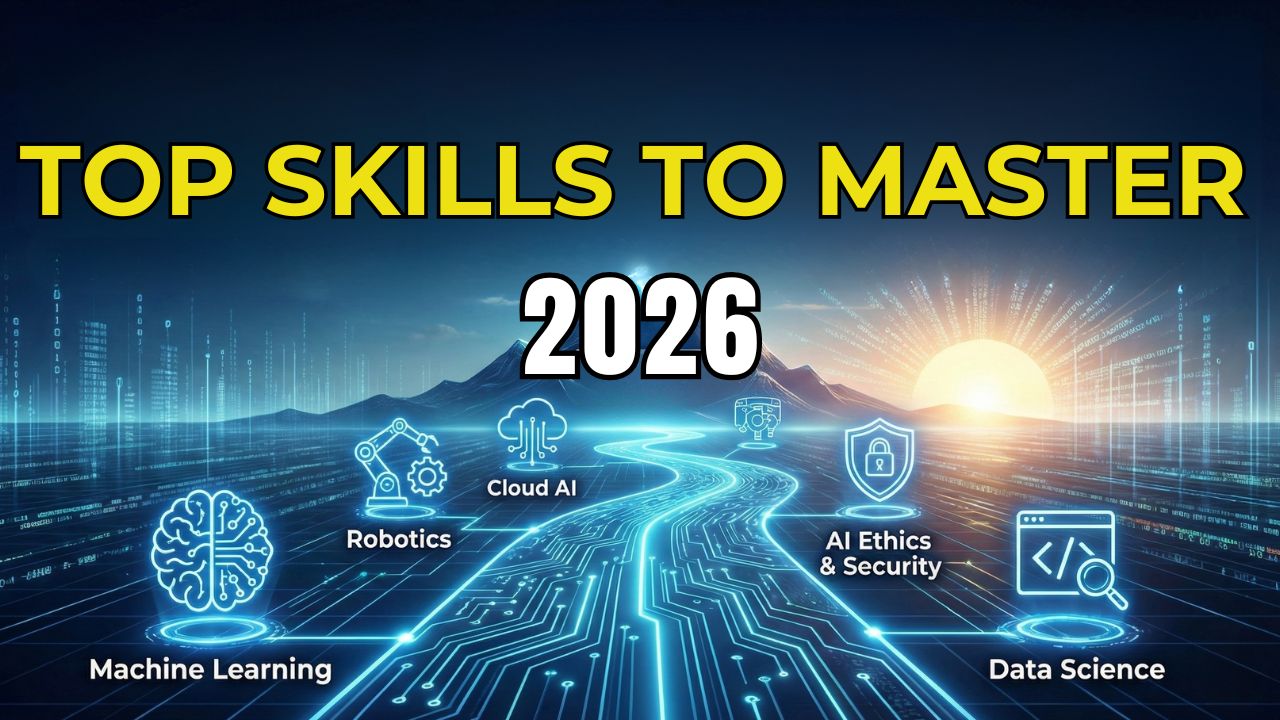
If you are still just "calling APIs" in 2026, you are falling behind.
The job title "Prompt Engineer" is dead. It has been replaced by a much harder, more valuable role: The AI Systems Architect.
In 2024, it was enough to know how to send a request to OpenAI. Today, the game has changed.
You aren't just building chatbots; you are orchestrating "Swarms" of agents, deploying "Sovereign AI" on local hardware, and proving, mathematically, that your system isn't hallucinating. If you want to survive this shift, you need a new toolkit.
Here is your definitive AI systems architect roadmap for 2026.
Explore the Global AI Engineering Handbook
Phase 1: The New Foundations (Code & Math)
Before you build the brain, you must build the body.
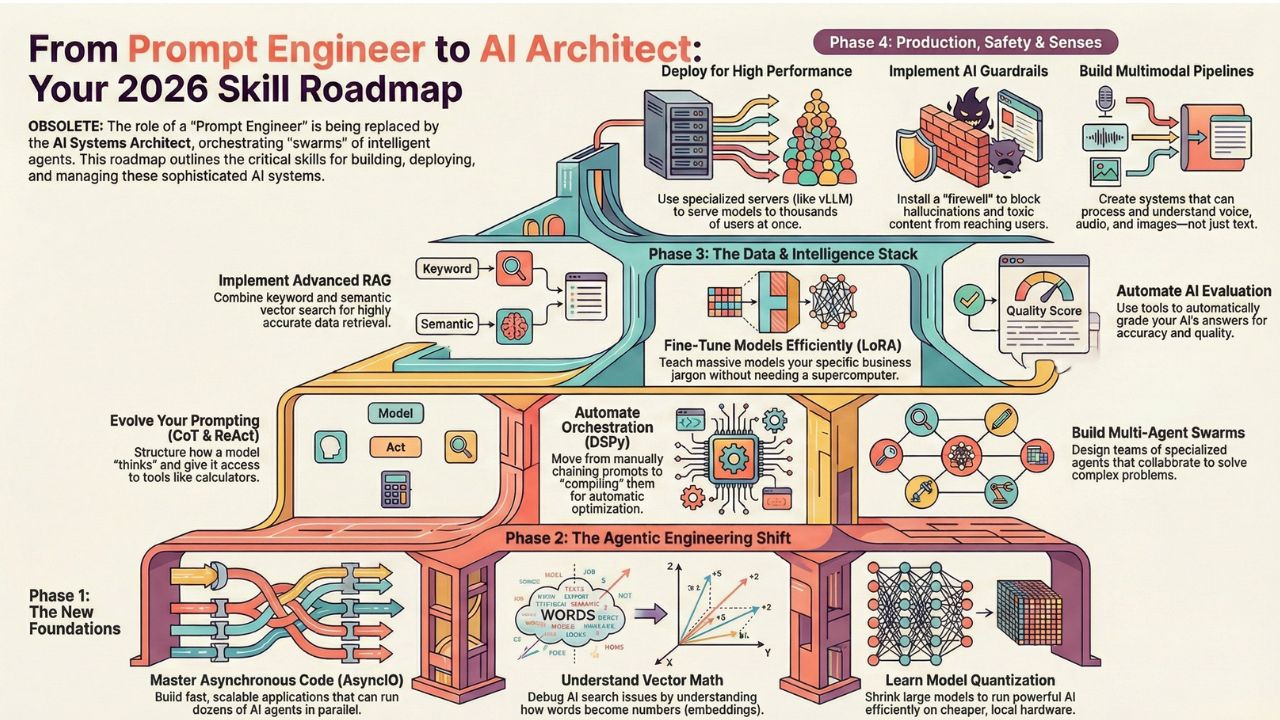
1. Python Profiling & AsyncIO
Agents spend much of their time idle, waiting for the LLM to think, waiting for a database to search, or waiting for a tool to reply. If you write standard synchronous (blocking) code, your agent will be slow, expensive, and unable to scale.
The Skill: You must master asyncio to handle high-throughput agent swarms.
This ensures your application can run dozens of agents in parallel without crashing your server.
2. Math Refresher (Linear Algebra & Embeddings)
You don't need a PhD, but you can't fake this part anymore. To debug a search system, you need to understand "Vector Spaces".
The Skill: Understanding how words become numbers (vectors) is crucial.
When your AI retrieves the wrong legal document, it’s usually a math problem, not a prompt problem. You need a linear algebra refresher to understand how embeddings relate to one another.
3. Hardware Knowledge: Quantization (FP16 vs INT4)
Running a massive model like Llama 4 in the cloud is expensive. The pros know how to shrink models without losing intelligence.
The Skill: Understanding Quantization is key to saving money.
You need to know the difference between FP16 (high precision) and INT4 (low precision) to run powerful AI on consumer hardware.
Phase 2: The Agentic Engineering Shift
Moving from "Prompt Engineering vs Flow Engineering".
4. Prompt Engineering 2.0 (CoT & ReAct)
Writing a "clever prompt" isn't enough anymore. You need to structure how the model thinks, not just what it says.
The Skill: Mastering Chain-of-Thought (CoT) forces the model to show its work before answering.
You must also learn the ReAct (Reason + Act) pattern, which allows agents to pause, use a tool (like a calculator), and then continue speaking.
5. Orchestration: The DSPy Revolution
We used to manually chain prompts together with LangChain. Now, we "compile" them.
The Skill: While LangChain is still useful, DSPy (Declarative Self-Improving Language Programs) is the "new hotness".
It treats prompts like weights in a neural network that can be optimized automatically.
Action: Search for a DSPy programming tutorial to see how you can stop hand-writing prompts and start "programming" them.
6. Agentic Workflows (Multi-Agent Systems)
One brain is good; a team is better. Single agents are brittle, but swarms are resilient.
The Skill: You need to learn agentic engineering by building systems where multiple agents collaborate.
Using frameworks like CrewAI or AutoGen, you can build a "Swarm" where a "Researcher Agent" passes data to a "Writer Agent" to finish a complex task.
Phase 3: The Data & Intelligence Stack
Memory is intelligence.
7. Advanced RAG: The Hybrid Stack
Simple vector search misses specific keywords. Complex search misses meaning. You need both.
The Skill: Building a RAG Stack that uses Hybrid Search.
This combines Keyword search (for exact matches like "Error 404") with Semantic Vector search (for concepts like "login failure"), stored in vector databases like Pinecone or Milvus.
8. Fine-Tuning (LoRA & QLoRA)
Sometimes, general models aren't smart enough about your specific business data.
The Skill: Using LoRA & QLoRA adapters allows you to fine-tune a massive model on a simple Colab notebook.
This lets you teach a model your company's specific jargon without needing a supercomputer.
9. Evaluation (The "Unit Tests" of AI)
How do you know if your chatbot is getting dumber with every update? You need to grade it.
The Skill: This is called LLM evaluation engineering ragas.
Tools like Ragas or Arize act as automated professors, grading your LLM's answers for accuracy and faithfulness so you don't have to check them manually.
Phase 4: Production, Safety & Senses
Shipping it without breaking the world.
10. Deployment (Sovereign Cloud)
Your Python script works on your laptop, but it can't handle 1,000 concurrent users.
The Skill: Learning sovereign cloud deployment skills using vLLM or TGI (Text Generation Inference).
These are specialized engines designed to serve models insanely fast, far more efficiently than standard web servers.
11. Responsible AI (Guardrails)
You cannot let your bank's AI start giving erratic investment advice or hallucinating policies.
The Skill: Implementing Guardrails (like NeMo Guardrails). These act as a firewall that sits between the user and the AI, blocking hallucinations or toxic content before it ever gets displayed.
12. Voice & Multimodal Pipelines
Text is boring. The future sees and hears.
The Skill: Building pipelines that process audio and images, not just text.
This is the frontier where AI steps out of the chatbox and into the real world, capable of seeing through a camera or hearing a voice command.
Frequently Asked Questions (FAQs)
You cannot ship what you cannot measure. As agents become autonomous, you need automated "Evals" to grade their performance and prevent hallucinations before they reach production.
This is a technique often used in Evaluation and Fine-Tuning. Instead of collecting expensive real-world data, you use a strong model (like Llama 4) to generate high-quality training examples for a smaller model. It is a key keyword in modern engineering.
Prompt engineering focuses on writing the perfect text query. Flow Engineering (or Agentic Workflow) focuses on designing the process, how data flows from one agent to another to solve a problem. In 2026, Flow Engineering is the more valuable skill.