Cybersecurity for Solopreneurs: Protecting Data from Deepfakes
As a public-facing founder, your identity is your brand. In the era of the "AI Solopreneur," you are likely publishing videos, podcasts, and social media content daily. This visibility builds trust, but it also creates a new vulnerability. In 2026, hackers don't just steal passwords; they steal faces.
Standard antivirus isn't enough anymore. This article covers essential protection strategies against deepfakes, ransomware, and identity theft to ensure your "Zero-Employee Enterprise" stays safe.
Explore the AI Solopreneur Hub
- The AI Solopreneur: Guide to One-Person Enterprise
- Top 10 AI Agents That Replace Marketing Agencies in 2026
- Best AI CRM Tools for Solopreneurs: Salesforce vs. HubSpot AI
- AI Chatbots vs. Virtual Assistants: The Support Battle
- AI Bookkeeping: Automate Your Business Taxes
- Best Business Credit Cards for AI Startups
- Using Predictive AI for Stock Market Analysis
- Cloud Hosting for AI: GPU vs. CPU Servers
- Do You Need Business Insurance for an AI Agency?
- How to Build a $10k/Month Business with $0 Upfront Cost
- Case Study: I Let AI Run My Dropshipping Store for 30 Days
- The Death of 9-5: Agentic AI & The Solopreneur Boom
1. The New Threat: Deepfakes and Identity Theft
Imagine a video of "you" asking a client to wire money to a new bank account. That is the reality of deepfake technology. For a solopreneur, identity theft protection for business owners is now about protecting your biometric data (your voice and face).
The Solution: You need deepfake detection software for companies. These tools analyze audio and video streams to verify authenticity.
Strategy: Establish a "safe word" or offline verification protocol with your high-value clients so they know it is really you.
2. Locking the Doors: Endpoint Protection
You might be working from a coffee shop in Bali or a home office in London. Your laptop is your headquarters. You need enterprise grade endpoint protection for remote workers.
What it does: Unlike free antivirus software, endpoint protection (like CrowdStrike or SentinelOne) uses AI to detect suspicious behavior before it executes.
Why you need it: It provides ransomware protection for small business. Ransomware attacks do not discriminate by company size; automated bots will lock your files and demand payment. A good endpoint tool stops this instantly.
3. Compliance and Privacy
If you use AI to handle customer data (emails, credit cards), you are a target. Using data privacy compliance software tools is no longer optional. These tools ensure you are meeting GDPR or CCPA standards.
They scan your systems to make sure you aren't accidentally exposing sensitive client data to the public web.
4. Secure Connections Anywhere
The "AI Solopreneur" is mobile. But public Wi-Fi is a playground for hackers. You must use the best VPN for secure remote access.
A VPN (Virtual Private Network) encrypts your internet connection, making your data invisible to others on the same network.
Recommendation: Look for VPNs with a "Kill Switch" that cuts your internet if the secure connection drops, ensuring zero data leaks.
5. Building Your Security Stack
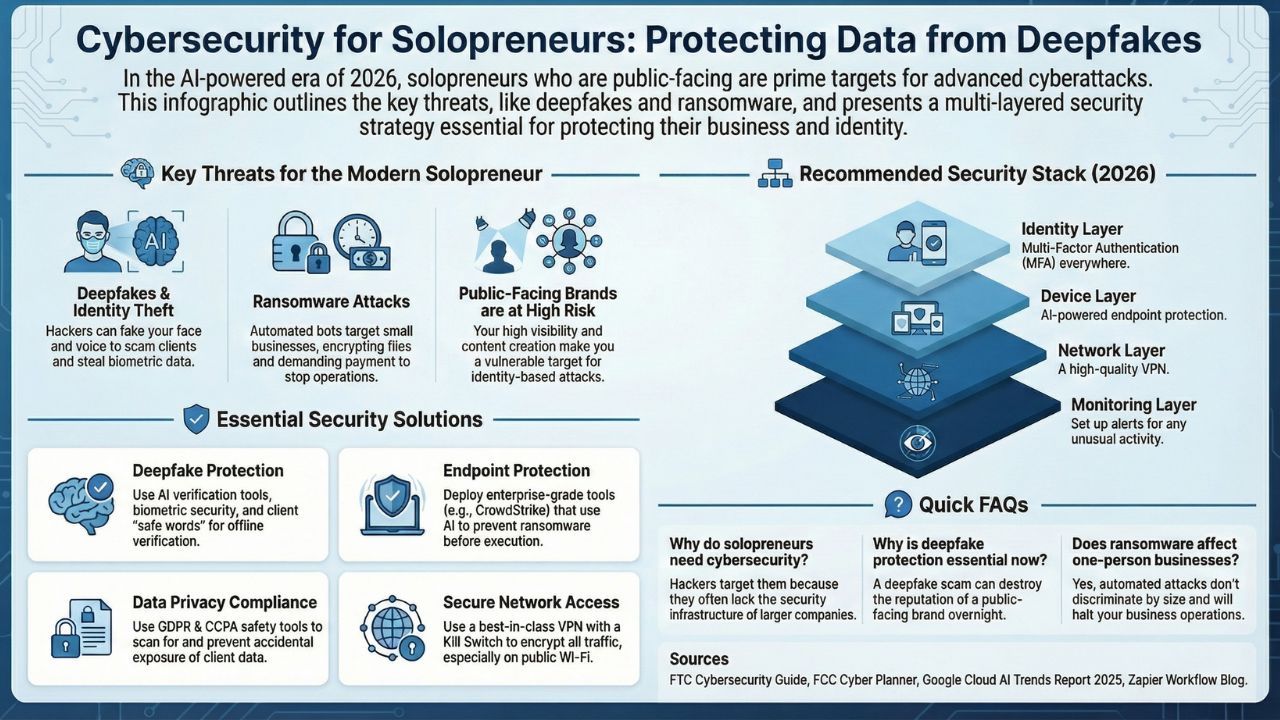
To build a robust small business cybersecurity solution 2026 plan, focus on these layers:
- Identity: Multi-Factor Authentication (MFA) on everything.
- Device: Endpoint protection to stop ransomware.
- Network: A high-speed VPN.
- Monitoring: Alerts for suspicious login attempts.
Frequently Asked Questions (FAQs)
Solopreneurs are common targets for cyberattacks because they often lack the security infrastructure of large corporations. Hackers know you are busy and likely unprotected.
Yes. If you use your face to sell products, a deepfake scam can destroy your reputation overnight.
Absolutely. Automated attacks (ransomware) do not discriminate by company size. If your data is encrypted, your business stops running.